

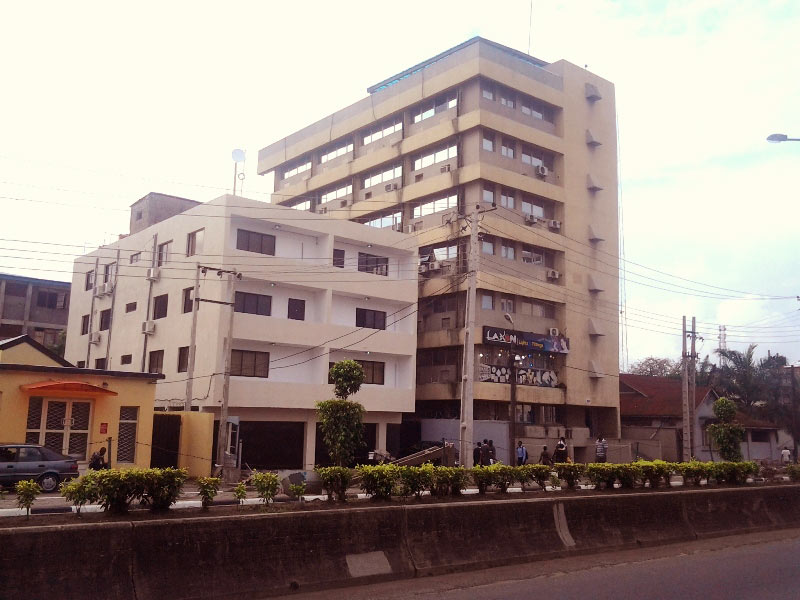
Yaba, on the mainland of Lagos, is no longer just a university district. Today it is one of Nigeria’s most visible technology clusters, and its growth is changing the economics of nearby housing.
The shift started more than a decade ago. Founded in 2010, Co-Creation Hub (CcHUB) helped turn Yaba into a hub for founders, developers, investors and digital businesses. The advantages of the area were obvious: proximity to the University of Lagos and Yaba College of Technology, a large pool of young talent, reasonably central access to Lagos Island and Ikeja, and a ready stock of modestly priced buildings that could be converted into offices.
Since then, co-working operators, accelerators, and tech companies have also moved into the neighborhood. The CcHUB innovation centre and other providers of shared workspaces have created a daily market for desks, meeting rooms, cafes, short-term offices and serviced apartments. This produces a new kind of urban demand: people may not choose to live in Yaba because they work for a traditional local employer but because their clients, teams and professional networks are there.
That demand is becoming housing.
Landlords in and around Yaba tend to make more money by converting older residential properties into offices, short-let apartments or shared accommodation. Where housing is still residential, proximity to workplaces and transport can help higher asking rents. The pressure is especially obvious in places like Onike, Sabo and parts of Ebute Metta where the commercial expansion of Yaba overlaps with long-established low- and middle-income communities.
But we shouldn’t overstate the relationship between co-working spaces and rents. Nigeria does not publish a detailed residential rent index at the neighbourhood level for Yaba. Online property listings are useful for tracking asking prices, but are not the same as completed transactions. Not all rent hikes can be attributed to technology. There’s also a wider housing shortage in Lagos. Rising costs of construction, inflation, transport issues and population growth. In 2023, Nigeria had a national housing deficit of some 28 million units, the country’s housing minister said, a yardstick of the structural imbalance the nation faces.
But a more defensible conclusion is that co-working spaces have hastened Yaba’s evolution from a largely residential and educational district into a mixed-use business centre. That transition increases land values and investment opportunities, but also raises questions about who can still afford the neighborhood.
And for growth to be inclusive, planning has to be in step. The area requires reliable power, drainage, parking and public transport, and protection against indiscriminate displacement. Without such measures, the tech success of Yaba could bring about a familiar Lagos paradox: a neighbourhood famous for innovation becoming less and less accessible to its people who built its social and economic foundation.