

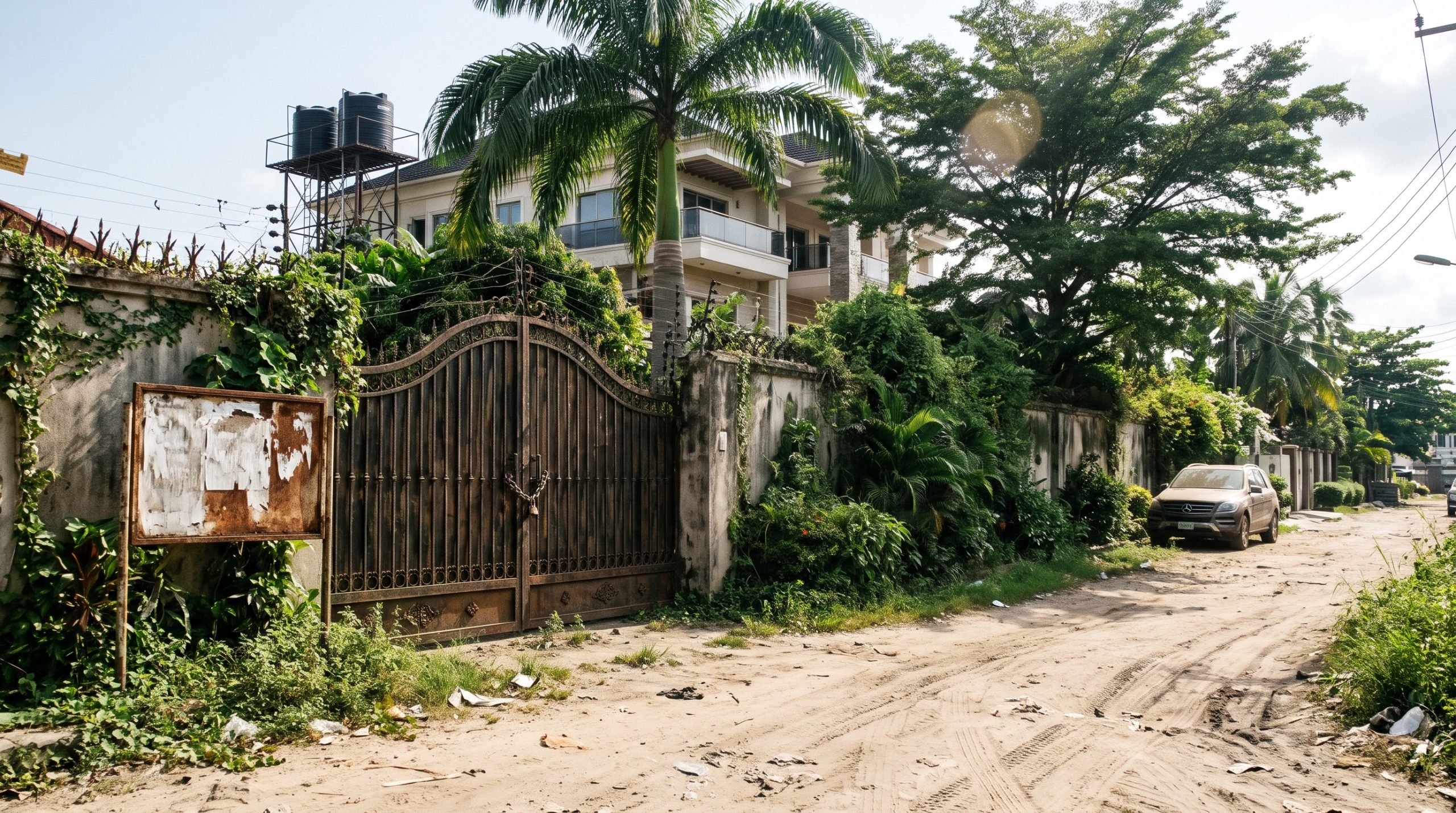
In Lagos’s prime property market, the best homes are sold through relationships and discretion and carefully guarded information, not listings.
When you search for property in Lagos, you will get thousands of results. But plenty of the city’s most valuable homes and development sites will never be listed on a major property website.
That is not necessarily a sign of a looming crisis. It’s like the market working.
Owners in neighborhoods like Ikoyi, Banana Island, Victoria Island and sections of Lekki tend to prefer a controlled sale. Some are big names who don’t want pictures of their home, addresses or personal assets going up on the internet. Others are investors quietly testing the waters, willing to sell only if the buyer is right.
Trading privately can be more efficient for agents, too. A broker with a great network may already know which buyers can move fast, have proof of funds and can meet a seller’s terms. Public advertising will generate many casual inquiries, bargain hunters and competing agents but it won’t guaranty a sale.
This is made possible by the Lagos brokerage. Unlike markets with an established centralized multiple-listing service, property information in Nigeria is scattered across individual agents, developers, family offices, lawyers and personal networks. A property could be “in play” through a broker’s WhatsApp contacts or an investor’s circle well before or instead of being listed online.
There is another reason, uncertainty. In Lagos, land and property transactions involve careful checking of ownership and government approvals. Depending on the asset, buyers may have to do some due diligence through documents such as a Certificate of Occupancy, Governor’s Consent, deeds, survey plans and building approvals. The Land Use Act places land administration under state control, but key parts of the documentation and approval process are handled by Lagos’s land registry and planning authorities.
That complexity makes a public listing risky. An online advert can simplify a property’s status when the legal reality is more complicated. A home may have attractive architecture but unresolved title issues, planning violations, unpaid charges or restrictions on its use. Serious agents often prefer to release details only after they have established the buyer’s credibility and assembled the relevant documents.
The absence of a listing, however, should not be romanticised. “Off-market” does not mean superior, and secrecy is not proof of exclusivity. It can also reduce price transparency and make it harder for buyers to compare similar properties. In a market where fraud remains a concern, discretion must be matched by independent due diligence.
For buyers, the best route is usually a combination of reputable agents, lawyers, surveyors and direct networks. They should verify title at the appropriate government offices, confirm planning status, inspect the property and avoid paying substantial sums before documentation is reviewed.
In Lagos, the most valuable property database is often not a website. It is a trusted network, but trust still has to be tested.