

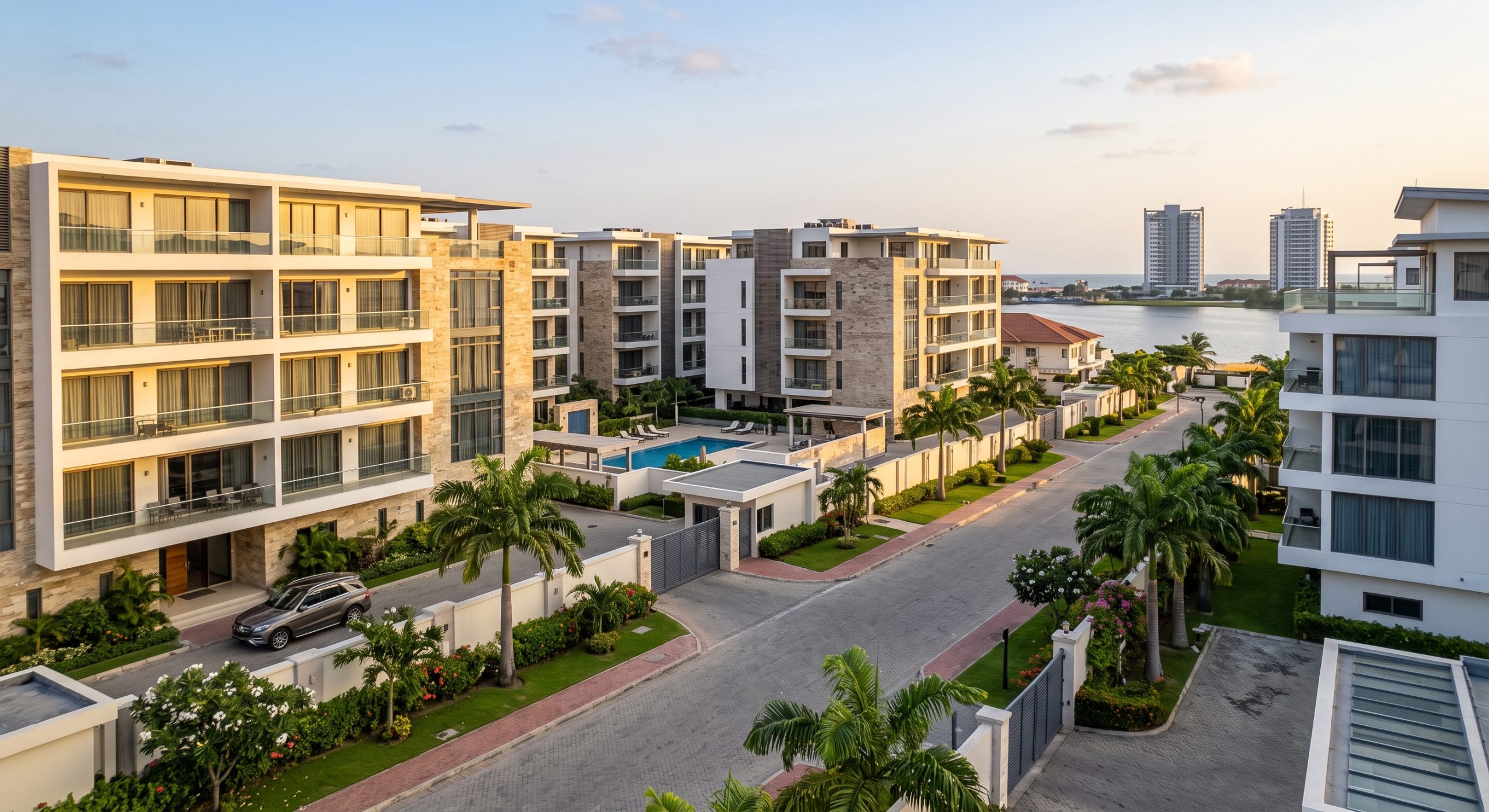
Oniru remains one of the most expensive rental markets in Lagos. The neighbourhood’s appeal is simple, it is situated between Victoria Island and Lekki Phase 1, close to major offices, restaurants and beaches, and is home to a concentration of newer apartment developments. Those benefits don’t come easy.
There is no formal government index for residential rents in Oniru, so the best measure is asking prices across recent property listings, and local agency quotes. Based on market listings and Lagos rental trends for 2024-25 tenants should expect around:
– One-bedroom apartment: ₦5 million–₦8 million per year
– Two-bedroom apartment: ₦8 million–₦14 million per year
– Three-bedroom apartment: ₦12 million–₦20 million per year
– Four-bedroom apartment or duplex: ₦18 million–₦30 million or more per year
That places the practical average for a conventional two- or three-bedroom apartment at roughly ₦12 million–₦15 million annually, although the figure changes sharply with the building, furnishing and level of service.
The highest premiums are paid for serviced apartments. Properties with standby power, water treatment, security, elevators, gyms, pools and maintenance teams can be 20% to 50% more expensive than comparable unserviced units. Even with a modest floor area, fully furnished apartments targeted at expats and corporate tenants can go for over ₦20 million a year.
The headline rent is not the total cost of moving in. Tenants are confronted with agency and legal fees (usually a percentage of the annual rent), caution deposits, service charges and utility deposits. In well-managed developments, annual service charges could run into millions of naira depending on the use of generators, security arrangements and shared facilities. A prospective tenant signing up for a ₦12 million apartment may therefore need much more than ₦12 million upfront.
Oniru’s rents are also very much location dependent. Units nearer the waterfront, major roads and established commercial areas tend to command more. Newer developments with good infrastructure charge more, but older buildings may have cheaper rents but more maintenance risks. Check the flood exposure, traffic access and quality of power supply before you sign.
For prospective tenants, the most accurate definition of “average rent” is not a single number but a band: about ₦8 million to ₦20 million a year for most standard apartments, with luxury and serviced homes well above that range. Buyers and renters should compare at least five similar listings, request a complete fee schedule and confirm whether service charges are fixed or subject to review.