

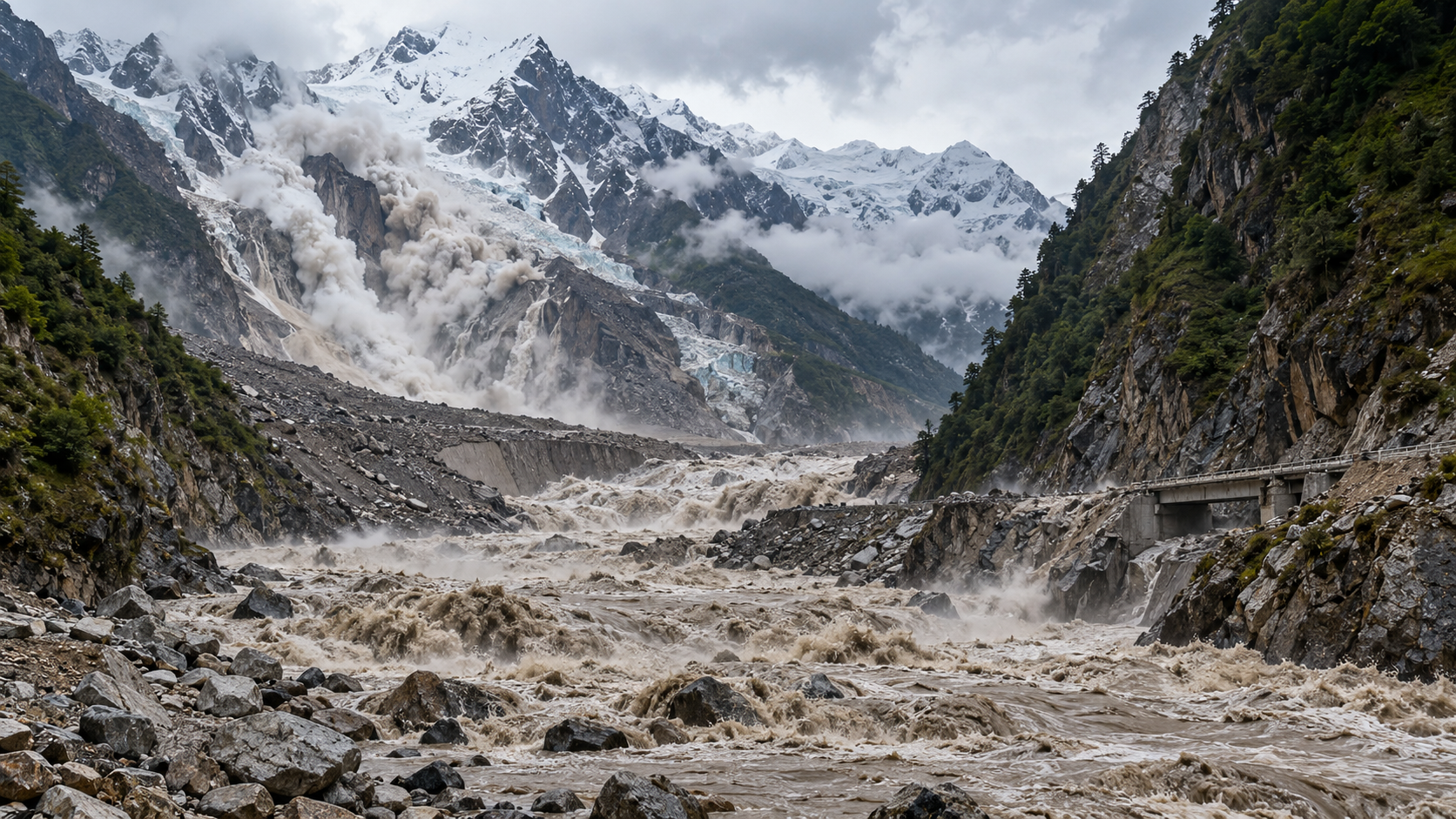
The flash flood in Nepal on 26 August was not caused by any one exceptional storm. It was the result of a familiar but increasingly dangerous combination: torrential monsoon rainfall, steep terrain, saturated ground, and development that has constricted nature’s drainage pathways.
The trigger was a concentrated downpour of monsoon rain. Nepal’s Department of Hydrology and Meteorology said the monsoon system was drawing moist air north from the Bay of Bengal and that heavy rains were widespread across parts of the country. In the mountains, rain can accumulate rapidly in small watersheds. In dry weather, streams and rivers may appear harmless, but heavy rains running off surrounding slopes can cause them to rise within minutes.
The topography made it even worse. Nepal’s hills are steep and many catchments are short so water has a short distance to travel before reaching settlements and roads. Rain may run downhill, instead of slowly soaking into the ground, and carry mud, boulders, trees and road debris with it. This is why a flash flood can occur with little warning, even if rain is not widespread across a district.
The ground was also prepared for rapid runoff. Many areas were waterlogged owing to monsoon rains in the past weeks. When the soil was unable to hold any more water, additional rain ran directly into streams. Saturated slopes also became susceptible to landslides, which can temporarily dam channels and then release sudden surges when the blockage fails.
Man’s changes to the landscape increased the danger. Badly designed crossings, construction on river banks and the removal of vegetation can shift water and destabilize slopes, as can roads built into hillsides. Buildings, walls and paved surfaces in towns and cities prevent infiltration and overload drains. When rubbish or sediment block the culverts, roads become temporary rivers.
The flood should not be called just a “natural disaster”. The rain was natural, exposure and infrastructure decided the size of the damage. Settlements have pushed into floodplains and delicate mountain corridors, often outstripping drainage, warning systems and enforcement of land-use rules.
Climate change is an important part of the broader risk, but it does not prove that climate change alone caused this particular event. The Intergovernmental Panel on Climate Change has determined that a warmer atmosphere can hold more moisture, raising the potential for heavy rainfall.
Nepal’s hydrological agencies and regional researchers have also recorded increasing concern about more volatile rainfall, glacier and snow melt, and cascading flood-and-landslide hazards. A formal attribution study would be required to determine precisely how much climate contributed to the event on August 26th.