

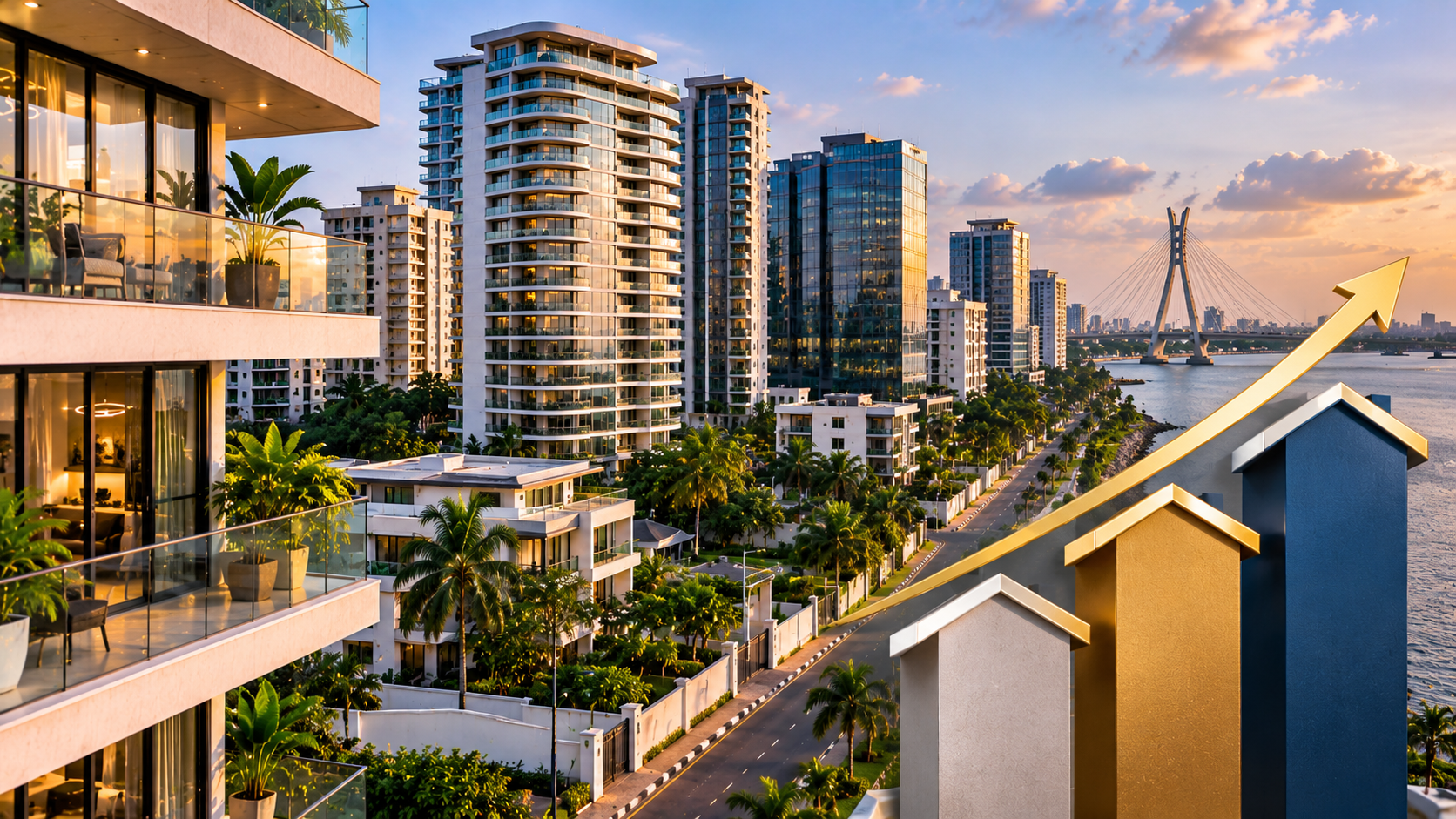
Victoria Island continues to be one of Lagos’s priciest property markets and one of its most resilient. The appeal is simple: the area gives you access to the city’s financial center and waterfront living, international businesses, private hospitals, major hotels, restaurants and a relatively good infrastructure.
But prices are not the same in Victoria Island. The market is divided between older residential streets, new serviced apartments, commercial corridors and premium waterfront developments.
Based on publicly advertized listings by Nigerian Property Center and PropertyPro, as well as recent Lagos market reports by international consultancies like Knight Frank, a conventional three-bedroom apartment in Victoria Island goes for ₦200 million to ₦500 million depending on age, title, location, amenities and level of finishing. Newer serviced apartments with power backup, security, gyms, pools and professional facilities can cost upwards of ₦600 million. Crossing the ₦1 billion barrier are penthouses and ultra-luxury units.
Detached houses sell for quite a bit more. Prime locations for older properties can be marketed from several hundred million naira while renovated homes, redevelopment sites and large plots regularly enter the ₦1 billion-plus arena. Prime commercial plots of land can be priced several billion naira. The asking prices vary widely depending on the size of the plot, the zoning, the title and the frontage.
The rental prices tell a similar story. The annual rents for three-bedroom apartments are usually in the range of ₦15 million to ₦40 million. Note that fully serviced and furnished apartments are higher in price. Penthouses, corporate lets and four-bedroom apartments can fetch more than ₦50 million a year. In many cases, tenants also have to budget for service charges, agency fees, legal fees and refundable deposits – costs that can materially increase the first-year bill.
The market’s strength has been supported by limited land supply, demand from banks, multinational companies, expatriates and high-income Nigerian professionals, and the district’s position beside Ikoyi, Lekki and Eko Atlantic. Inflation and the naira’s depreciation have also pushed up construction and replacement costs, encouraging owners to raise nominal prices.
Yet headline prices require caution. Most publicly visible figures are asking prices, not recorded sale prices. Negotiation remains common, especially for older buildings, properties with weak documentation or developments with incomplete infrastructure. Buyers should verify title, planning approval, service-charge history, drainage, flood exposure and the reliability of power and water systems before committing.
Victoria Island is therefore not simply an expensive neighbourhood. It is a segmented market where location, documentation, building quality and operating costs can make the difference between a sound investment and an overpriced asset.