

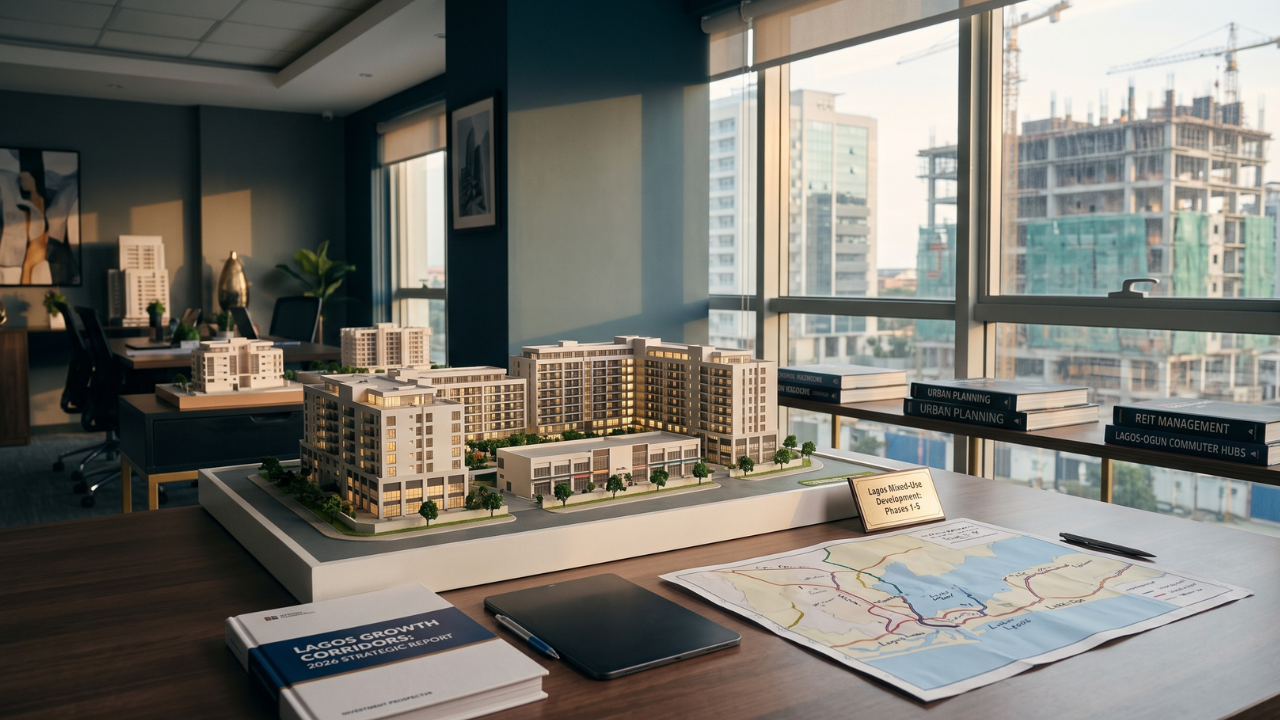
Lagos remains Africa’s most closely watched real estate market and 2026 has sharpened rather than dulled the opportunities on offer for investors willing to do proper homework. This year, five categories are most consistently discussed by developers, brokers and diaspora investment advisors.
For investors who value capital appreciation over immediate income, off-plan purchases in emerging corridors are the top choice. Developers in the Lagos-Ibadan corridor and some parts of Lekki-Epe are still offering flexible 12-24 month payment plans that allow buyers to lock in current prices ahead of completion of infrastructure that has historically resulted in sharp value increases once roads, drainage and utilities are completed.
Short-let and serviced apartments in Victoria Island, Ikoyi and Lekki Phase 1 remain the strongest income-generating category, with well-managed units reportedly achieving net yields in a range that comfortably beats most western property markets, underpinned by steady demand from business travellers, diaspora visitors and the burgeoning local short-stay culture.
The catch is that this part now rewards professional management; an unprofessionally managed unit competing against professionally managed alternatives will usually do significantly worse.
REITs and structured real estate investment vehicles are the lowest friction entry point for investors who want Lagos property exposure without the operational headache of managing a physical asset directly. More Nigerians, especially those in the diaspora, are looking for ways to participate in real estate appreciation without the logistics of property management from afar, which has brought visibility to this category.
The fourth opportunity is commuter-corridor residential development, particularly around rail and road infrastructure connecting Lagos with Ogun State. As prices in the heart of Lagos push buyers further afield, areas advertising themselves as “commuter hubs” are seeing increased demand from young professionals and families pushed out of the traditional Lagos mainland and island markets.
Land banking in gazetted growth areas rounds out the list, but this is the highest-risk, highest-patience category. Investors who buy raw land before it is improved by infrastructure or government development plans can realize large appreciation, but this is also the category where much title fraud and speculative loss occurs, making it the opportunity most requiring professional legal verification before commitment.
Across all five categories, the most consistent theme echoed by market analysts in 2026 is that Lagos is now beyond the era of assuming that any purchase would appreciate by being in Lagos. Diaspora investors, in particular, are increasingly looking at “utility over prestige” buying where the local rental market is actually moving, not where a buyer would personally want to holiday. The biggest commonality for anyone looking at these five categories is a verified title, professional management where appropriate and a strategy aligned with the objective, whether it be income, appreciation or both.