

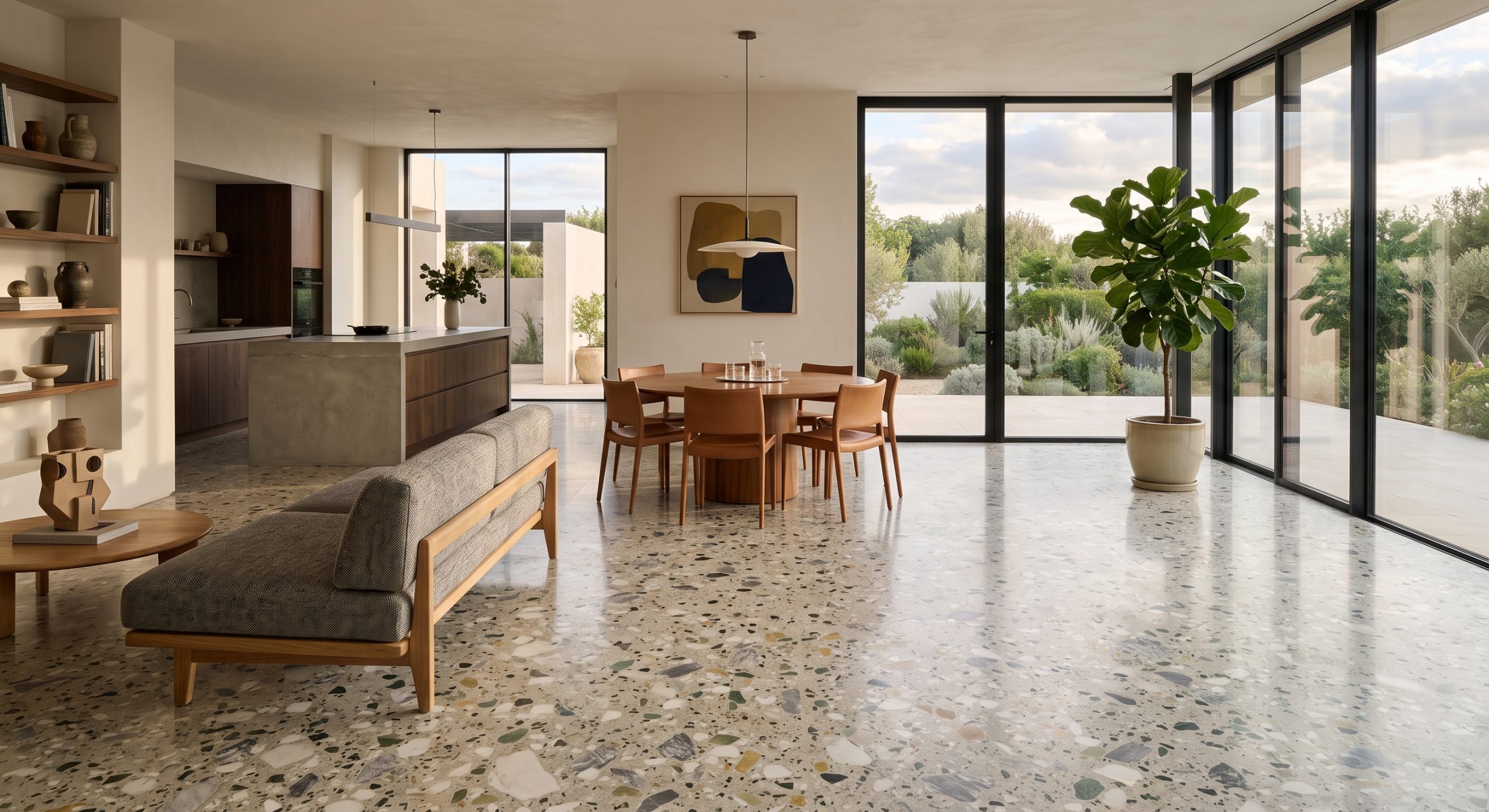
Terrazzo is re-emerging for a second time..
Once tied to Italian palazzos, mid-century civic buildings and institutional corridors, the material is now coming back to private homes in a more precise, architectural form: poured directly on site, then polished to reveal the aggregate as a field of stone suspended in color.
It’s deeply rooted in technique. In the 18th century, Venetian workers created durable floors by setting pieces of marble in cement, which was a cheaper method than laying whole slabs of marble. Modern terrazzo works are based on the same principle: aggregate plus binder, then grinding and polishing. The difference is in the range of materials available today. For a bespoke composition, you can select from marble, granite, quartz, recycled glass, porcelain, shell and even metal fragments.
Terrazzo tile is not the same as pour-in-place terrazzo. Tile is produced off-site and installed as individual units. Site-poured terrazzo provides a seamless surface that allows floors to flow through kitchens, living areas, bathrooms and covered terraces with minimal visual interruption. Divider strips in brass, zinc or aluminum can create a graphic pattern or echo the geometry of a building.
There are two basic systems. Cementitious terrazzo employs a cement binder and usually looks deeper and more substantial. Epoxy terrazzo is thinner, lighter, and can achieve saturated colors and complex aggregate patterns. It is often a preference in renovations where weight or floor height is a consideration. The right system depends on the substrate, moisture conditions, structural movement, and exposure to sunlight. These issues should be reviewed with a terrazzo contractor prior to the finalisation of design decisions.
It’s not just a visual appeal. When properly installed, terrazzo is durable, seamless, and relatively low-maintenance. The dust must normally be mopped regularly and cleaned with a damp cloth; strong acids and abrasive products should not be used. Its durability may also mean it doesn’t need replacing as often as floors with shorter life spans.
But terrazzo isn’t a no-brainer material. Installation depends heavily on substrate preparation. Cracks or movement in the concrete below can telegraph through finished floor and moisture can compromise certain resin systems. It’s dusty and noisy, and labor intensive. Once it’s placed, the material is cured, ground, grouted, honed and polished. That craftsmanship costs money, particularly on small residential jobs. Cement and epoxy also carry their own environmental costs, and not every resin system has the same emissions profile. Product-specific documentation matters more than broad claims.
At its best, contemporary terrazzo makes a floor feel less like a finish than a permanent part of the architecture. It offers the visual complexity of stone without the repetition of slabs, and a rare combination of utility, individuality, and permanence.