

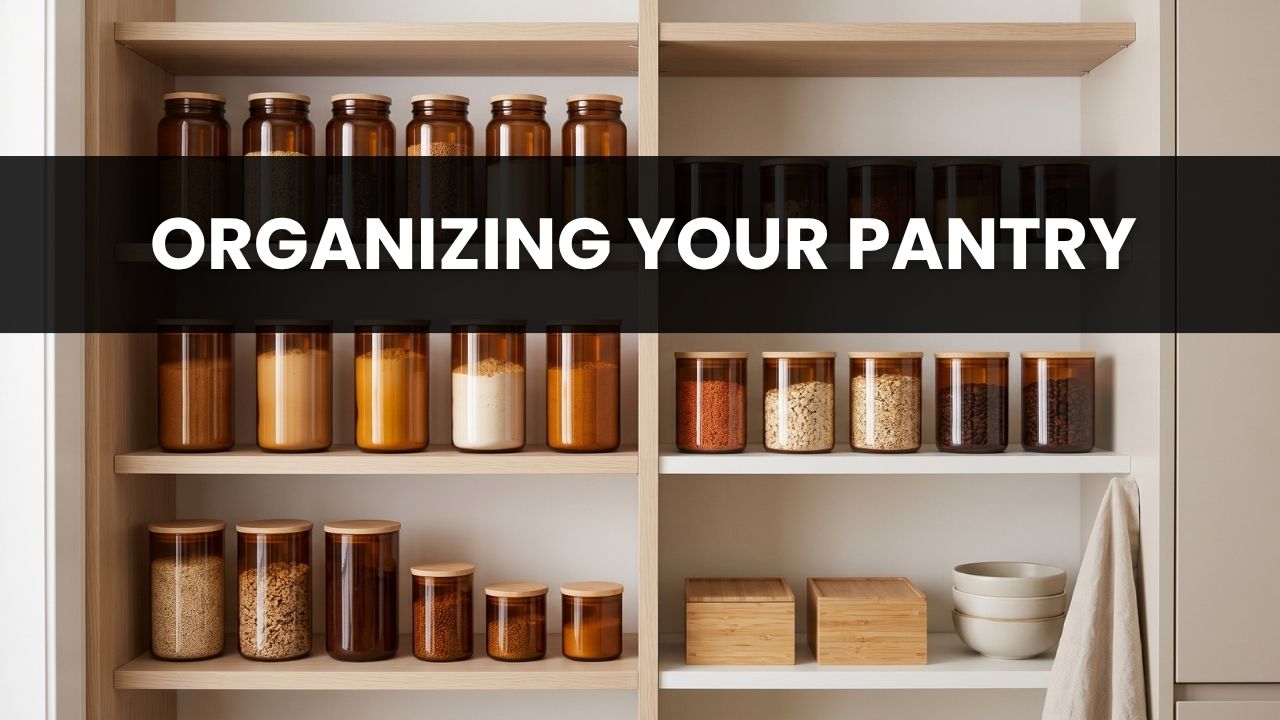
A well-organised pantry is more than just looks. It can save food waste, help keep track of expiration dates and reduce the number of half-used packages taking up space. The best system is the simplest: own fewer things, store them well, and make every staple visible.
1. Clear the shelves
Throw out everything before buying containers. Check dates, toss anything spoiled or infested and put aside duplicates.
Wipe down your shelves with warm, soapy water and dry thoroughly. Never keep containers in a damp pantry. Moisture attracts mould and bugs.
2. Group by usage, not by packaging
Arrange functional areas for grains and pasta, baking supplies, snacks, canned goods, breakfast items, and commonly used oils or spices. Store heavy things low down and everyday staples at eye-to-waist level. Keep food in a steady room temperature away from the oven, dishwasher and direct sunlight. Fluctuations in temperature and humidity can reduce quality and shelf life.
3. Select containers for the food
Some oils, spices, tea, and dried herbs are all light-sensitive ingredients that do well in amber glass canisters. Amber glass filters out much of the ultraviolet and blue light that can accelerate oxidation and colour loss. But it is not a substitute for a cool cupboard and will not keep food forever.
For flour, rice, oats, beans, and sugar, the big priorities are an airtight seal, a wide opening, and a shape that stacks well. Glass is non-porous and does not absorb pigments or odors readily. It is also heavy and fragile, so keep it on solid shelves rather than high cabinets or homes with small children.
Bamboo is best used as a lid, trim, or removable insert and not as the food-contact surface. Some “bamboo” composite products can have melamine or plastic. Bamboo should be kept dry. Never soak bamboo unless the care label says so.
4. Decant selectively
Transfer foods that benefit from visibility and protection, but do not decant everything. Keep original labels, allergen information and cooking instructions accessible, especially for products containing nuts, sesame or gluten. A small label on each canister should include the ingredient name and, when useful, the purchase or opening date.
Avoid mixing old and new batches. Finish the existing supply, wash and dry the container, then refill it. This prevents stale food from hiding beneath a fresh layer.
5. Build in rotation
Arrange products by “first in, first out”: older items in front, newer purchases behind. Review the pantry monthly. Keep only the quantity your household can use within a reasonable period, and store opened whole-grain flours, nuts and seeds in the refrigerator or freezer when recommended; their natural oils can turn rancid at room temperature.
Minimalism is not an empty shelf. It is a pantry where every container earns its place, and every ingredient can be found, identified and used.