

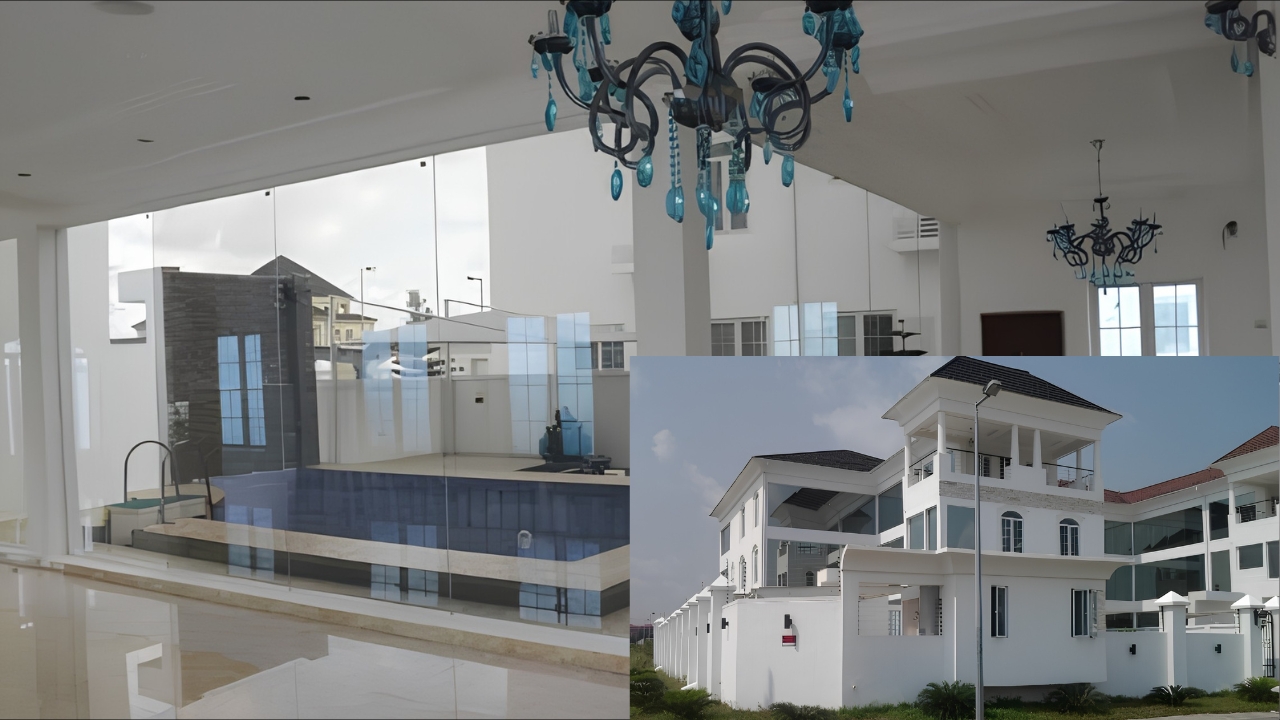
Linda Ikeji’s Banana Island property has one of the more interesting valuation stories in Nigerian real estate media. In 2015 she bought the house for a price reported as anywhere between ₦500 million and ₦650 million depending on the source, and three years later was publicly claiming its value had increased to ₦850 million. That jump, self-reported but broadly consistent with how Banana Island values moved in that period makes the house a useful example of how fast prime Lagos real estate can appreciate when land supply is fixed and demand continues rising.
The property is a three-storey detached home set on circa 700 square metres with six en-suite bedrooms, multiple reception rooms, a cinema room and a media room. It also has a separately built boys’ quarters. The finishing is on the maximalist end of Nigerian luxury interiors of the time, marble floors, ornate ceiling work and statement furniture, reflecting the design language popular with Lagos’ first wave of new-money buyers in the mid-2010s.
It’s worth noting the context around the purchase for anyone studying this market. Linda Ikeji made her money through blogging, when nobody thought digital media could afford a cash buyout of Banana Island. The purchase became a cultural moment precisely because it complicated assumptions about who gets to own property on the island, traditionally the preserve of oil money, banking wealth, and old family fortunes. It ignited a conversation about new wealth from media, entertainment and tech entering Nigeria’s most exclusive postcode.
The appreciation story from a pure real estate perspective speaks for itself. Banana Island land is intentionally scarce, it’s a reclaimed island with a capped number of plots, and each high-profile sale usually resets the market’s price expectations upwards. And even accounting for the fact that valuations are self-reported and may be optimistic, a ₦500 million purchase becoming a ₦850 million asset in three years is a significant annualised appreciation.
By comparing the reported purchase price, the self-reported valuation in 2018, and rough estimates of Banana Island’s price movement since then, it gives readers a concrete, relatable entry point into a market that can otherwise feel abstract.
It also poses a valid question to potential buyers: on an island where land cannot be made, is it possibly wiser to buy a smaller, well-located plot now, than wait for a bigger budget later?