

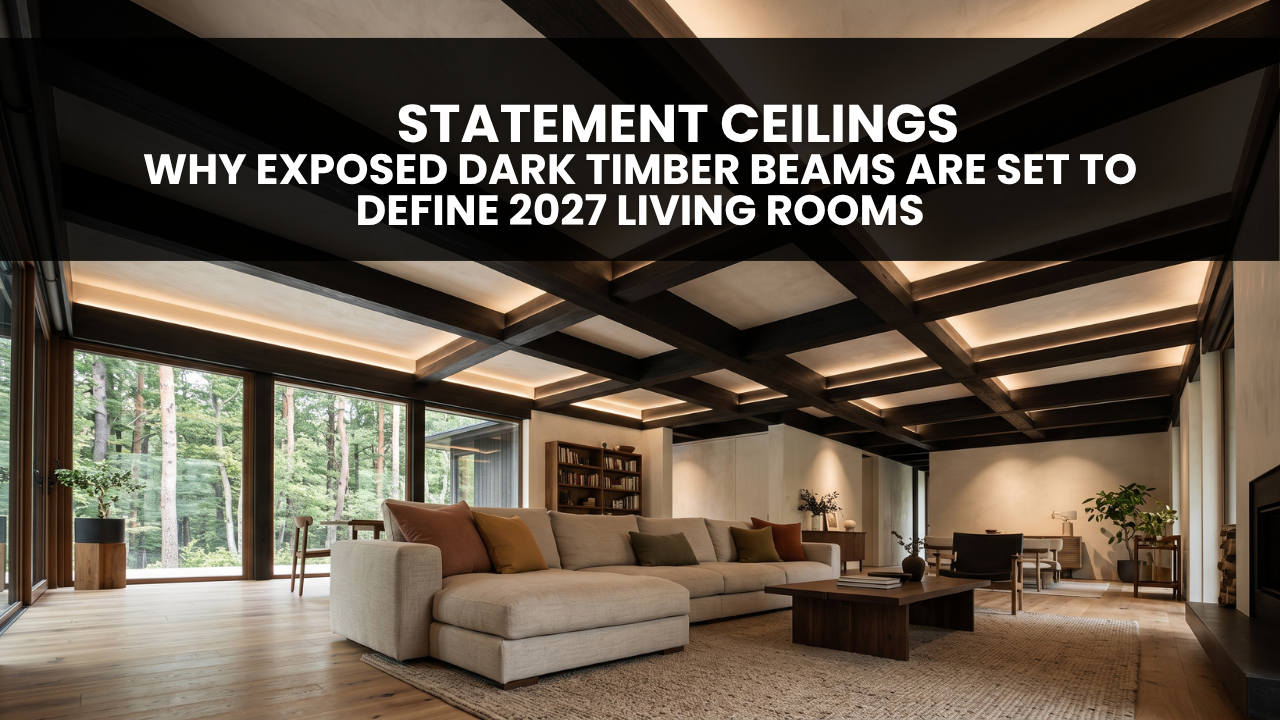
The ceiling used to be treated as a blank fifth wall, painted white, recessed with downlights and largely ignored for years. That hierarchy is likely to change in 2027. The next big living-room statement will be overhead, and in dark timber.
Exposed beams are nothing new. They are found in farmhouses, medieval halls and post-and-beam modernism. What feels contemporary now is how they have been re-interpreted: broad, near-black rafters against limewashed plaster; walnut-toned battens set in disciplined grids; or engineered timber used to give a new-build room the visual weight of an older structure.
There is some psychological drawing. Ceiling height trumps most decorative objects for establishing scale and atmosphere. Dark timber provides contrast, rhythm and a sense of enclosure, making large, open-plan rooms less anonymous. It also works with the warmer palette that has superseded years of cool gray interiors: clay, ochre, olive, russet and undyed linen.
The timing has a practical reason. Designers and homeowners are increasingly seeking interventions that add character without major construction work. A beam-clad ceiling can transform a room without changing its floor, kitchen, or architectural shell. It can also conceal wiring, ductwork, and uneven existing surfaces in renovation projects, though any loss of ceiling height must be carefully considered.
The material’s green credentials require more precision than a simple “natural equals sustainable” argument. Timber stores carbon during its life in use and is a renewable building material when sourced responsibly. But the benefits vary with species, transport, forest management, adhesives, finishes and longevity.
Looks should not get in the way of safety. Decorative beams are often hollow or veneered, not structural. Structural timber must meet local requirements for fire resistance, load and moisture protection. Mass timber performs predictably in fire, as the outer layer chars and protects the material beneath it. But performance is product- and assembly-dependent. A qualified designer will need to decide if a ceiling treatment is structural, decorative or covering services.
The best examples will be free of theatrical excess. Designers are not covering every surface in dense, polished wood but are mixing dark beams with pale mineral finishes, soft textiles and hidden lighting. The contrast makes the ceiling read as architecture, not as ornament.
That restraint may be the real reason dark timber is poised to dominate 2027 living rooms. It offers what many contemporary interiors lack: warmth, texture and permanence, without asking the room to shout.