

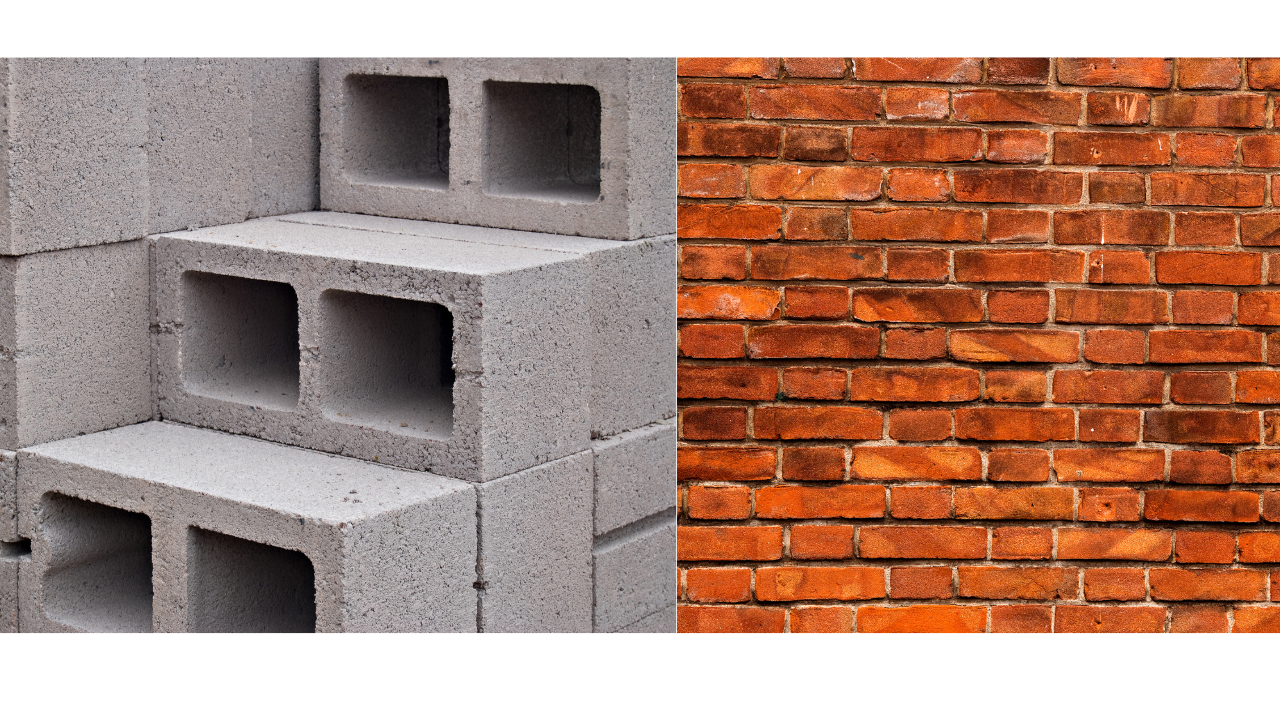
In Nigeria and much of West Africa, for most residential projects, the cost of buying and installing sandcrete blocks is cheaper than that of fired red bricks. But the lowest unit price does not always mean the lowest construction cost. The final price depends on transport, labor, mortar, plastering, wastage and above all, the quality of the product.
The price up front
Sandcrete blocks are made by mixing cement, sand and water and then moulding and curing. Their main cost advantage comes from scale: a standard 225mm hollow block will cover a much larger area of wall than a single brick. Less units means fewer mortar joints and quicker laying.
They are also produced locally in huge quantities, so they transport networks, suppliers and block-laying skills are well established. Consequently, sandcrete is the cheapest option for standard external and internal walls in most Nigerian markets.
Red bricks are formed from clay and baked in a kiln. The price includes the cost of preparing the clay, fuel, firing, quality control and transport. A brick is a smaller unit, so a wall takes many more units and more time to lay. Thus, even if the price of each brick is low, the consumption of mortar and labour can be higher.
Normally a sandcrete wall will require plastering before painting. That extra step can shrink the apparent price gap. By contrast, quality facing bricks can be left exposed, removing the need for plastering and reducing finishing costs, provided the brickwork is attractive, weather-resistant and laid by skilled labour.
Brickwork may also require more careful detailing of openings and corners. In general, contractors experienced with the material will find sandcrete blocks quicker, while bricklaying pays off with more precision. This may therefore be influenced by local labor rates.
Transport is also a determining factor. Hauling blocks long distances can wipe out their usual advantage.
Poorly made sandcrete blocks may have too much sand or insufficient cement, and inadequate curing can make them weak and liable to crack. If the firing is not uniform, the bricks may also vary in strength, water absorption and dimensional accuracy.
Nigeria’s NIS 87:2000 gives requirements for sandcrete blocks, and BS EN 771-1 covers clay masonry units. Buyers should request test results, inspect samples and avoid any blocks that crumble under handling. A cheap, faulty wall can cost you a fortune in repairs, damp and premature failure.