

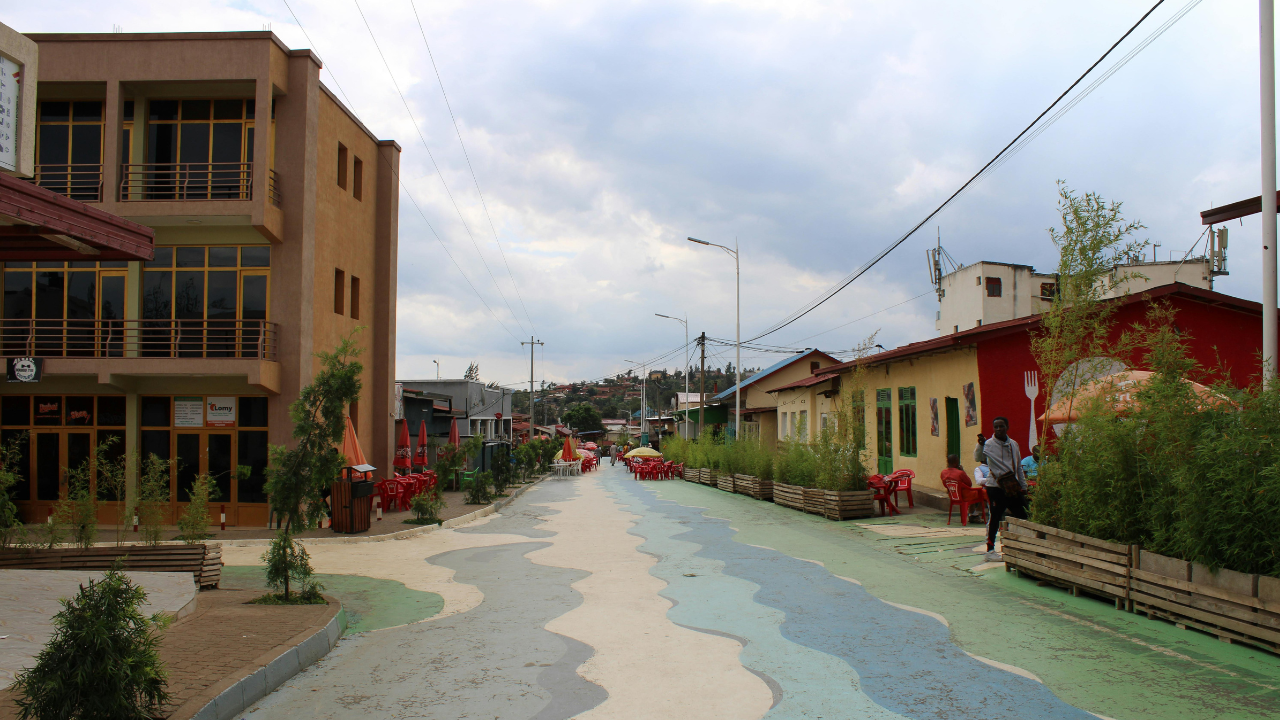
The allure of Kigali is apparent before it becomes profitable. Since 2008, plastic bags have been prohibited, roads are clean, drainage is kept up, and litter is rare. Residents participate in Umuganda, Rwanda’s mandatory community service program, on the final Saturday of every month. As a result, the city is commonly considered to be the cleanest in Africa, not due to a marketing push, but rather because cleanliness is upheld by the law, public involvement, and reliable municipal administration.
A more significant proposal, Kigali as an investment hub, is now being supported by that civic discipline.
The majority of Rwanda’s formal jobs, diplomatic missions, tech firms, and upscale lodging are located in the capital, which serves as the nation’s commercial hub. Rwanda’s National Institute of Statistics estimates that 1.75 million people lived there as of the 2022 census. However, with barely 18% of its population residing in cities, Rwanda continues to be among the least urbanised nations in Africa. Because of this imbalance, Kigali’s housing tale is structural rather than just speculative.
Three places include the majority of the best opportunities. The first is middle-class housing, where demand is fueled by the expansion of the public sector, the returning diaspora, and a burgeoning professional class. Apartments, hotels, and mixed-use buildings that serve business travellers, development firms, and the city’s expanding conference industry make up the second category. Logistics and local retail, especially along growing transportation corridors, rank third.
Another benefit is government planning. In an effort to prevent unplanned sprawl, Kigali’s master plan promotes higher-density development toward designated urban nodes and transportation connections. Additionally, Rwanda has made significant investments in digital land registration, which simplifies title verification compared to several regional markets. Rwanda’s leasehold system allows non-citizens to own property; leases typically last up to 99 years, subject to necessary licenses and land-use regulations.
There is some danger involved in this instance. A building may take some time to sell in Kigali due to the city’s tiny and sometimes illiquid market, especially for luxury properties. Currency fluctuations and imported commodities can have an impact on construction prices. While top businesses and expensive apartments may experience times of excess inventory, affordable housing is still in short supply. Additionally, investors need to understand that property ownership, lease rights, zoning authority, and building approval are four distinct matters that should not be confused with one another.
Rwanda’s economic performance offers a positive context: after a robust post-pandemic recovery, the World Bank reported GDP growth of 8.2% in 2023. However, expansion by itself does not ensure profits. The greatest investments in Kigali are probably those that are appropriately zoned, moderately leveraged, and tailored to local demand rather than just potential international buyers.