

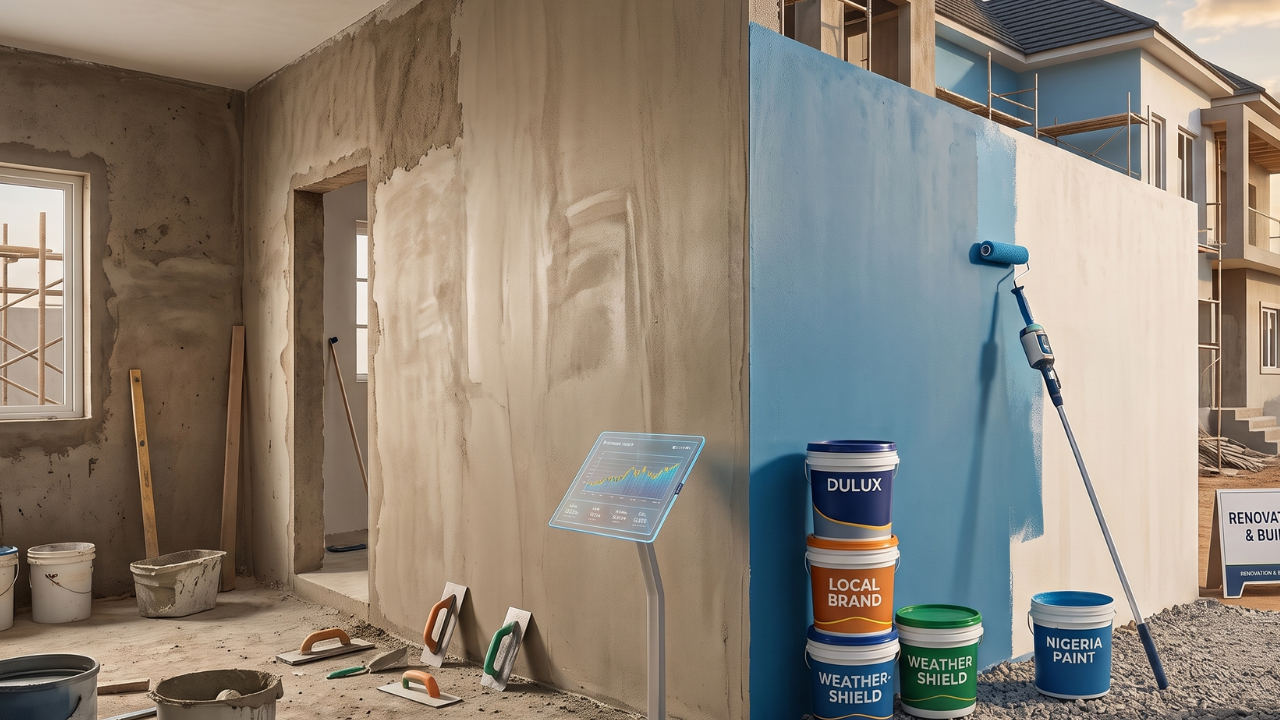
Plastering and painting are still two of the most unavoidable line items in any Nigerian building budget. Understanding current price ranges will help you plan sensibly and avoid being overcharged by contractors who are quoting from outdated figures, whether you’re completing a new build or upgrading an outdated one.
Cost of Plastering in 2026
The cost of plastering in Nigeria depends on whether you are paying for labour only, or a full supply and apply service, and whether the work is internal or external.
Labour-only rates for internal plastering (where the homeowner supplies cement and sand) typically range from ₦600 to ₦1,200 per square meter. If the contractor provides material and labour, expect to pay between ₦1,200 and ₦2,500 per square meter, depending on the mix ratio used and the region. External rendering is more expensive, costing typically between ₦1,400 and ₦2,800 per square meter because it requires a thicker cement mix and better weather resistance for Nigeria’s rainy season.
Skimming or finish-coat work, which smooths a wall before painting, costs another ₦500 to ₦900 per square meter in labour costs alone.
Full house rates add up. For a three-bedroom bungalow, you can get a full plastering job at between ₦350,000 and ₦750,000, while a four-bedroom duplex, covering about 1,200 square meters of internal and external wall surface area, can cost several million naira when materials and labor are combined.
These figures are pushed up or down by a variety of factors: the thickness of the plaster (12mm or 15mm), the ratio of cement to sand used, the location (Lagos, Abuja and Port Harcourt are generally pricier) and the price of cement itself, which in 2026 is an average of between ₦9,000 and ₦10,500 per 50kg bag depending on the region and transportation costs.
2026 Painting Prices
In Nigeria the price of paint is largely dependent on the brand tier. Budget and local brands sell 20-litre buckets for as low as ₦8,000 to ₦30,000, mid-range brands go for ₦30,000 to ₦80,000, and premium brands such as Dulux and Berger can go beyond ₦80,000 to ₦150,000 for speciality finishes like weather-resistant exteriors or silk emulsions.
Standard interior emulsion paint normally costs between ₦2,500 and ₦5,500 per liter depending on the brand. Exterior and weather-shield paints are more expensive, usually costing between ₦3,000 and ₦12,000 per liter, which is justified by their durability and UV resistance.
In practice, the cost of materials to paint a standard three-bedroom flat may range from ₦50,000 to ₦90,000 if you go for a popular brand like Dulux or Sandtex. However, a full professional job that includes labor, primer, multiple coats and finishing on doors and windows could see the total cost rise to ₦850,000 to ₦1.2 million, depending on the quality of products and the experience of the contractors.
What Costs Are Driven
Several factors will be influencing these prices in 2026, including sustained naira volatility that drives up the cost of imported pigments and chemicals like titanium dioxide, rising cement and transport costs, and increasing demand for weather-resistant and low-VOC paint options as more homeowners in Nigeria’s humid, high-rainfall climate opt for durability.
If you are budgeting a build or renovation, it’s worth getting at least two or three contractor quotes, verifying whether pricing includes materials or labor only, and considering regional price differences before finalizing a budget.