

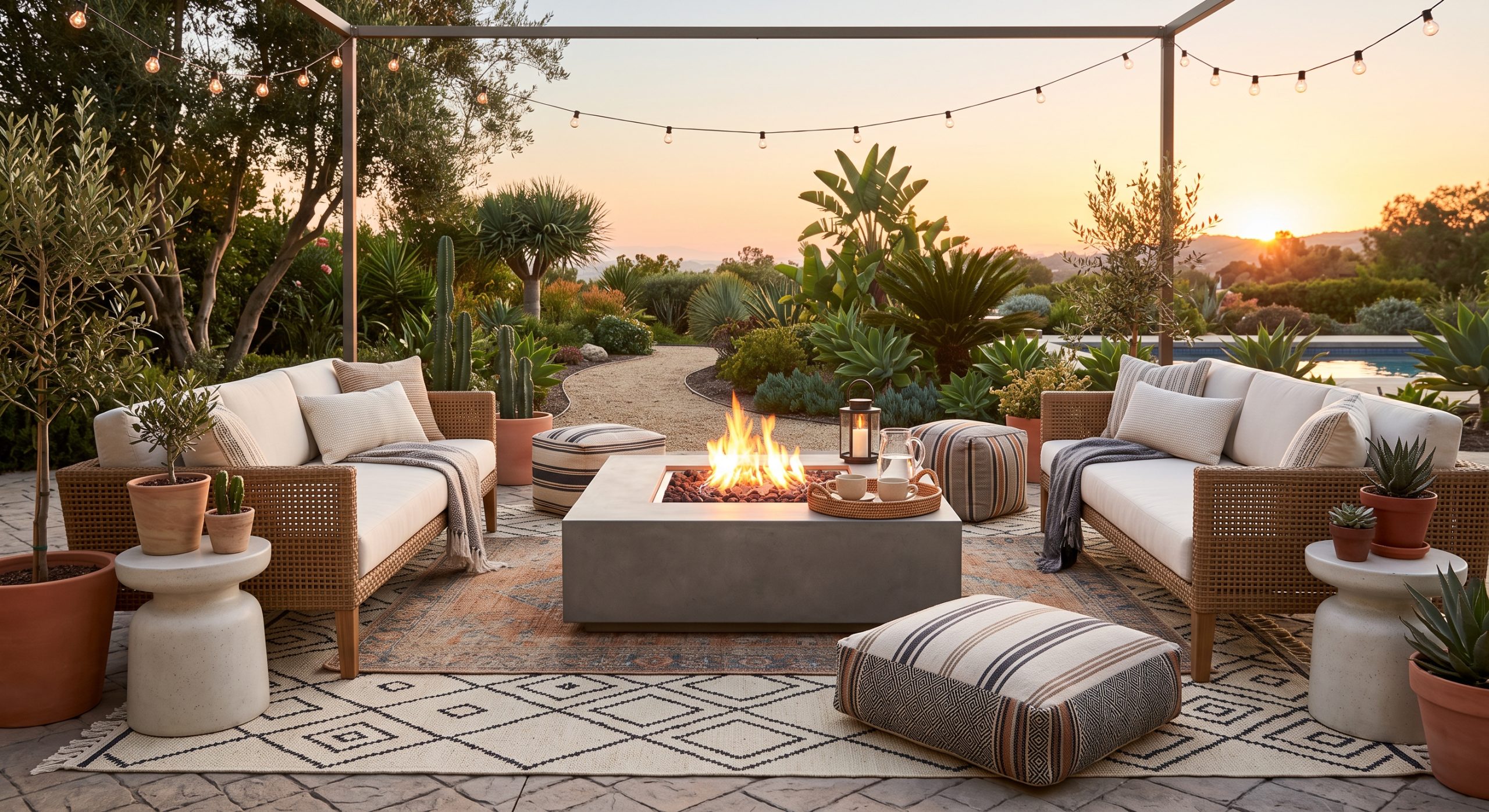
The best outdoor lounges don’t look like they’ve been cobbled together from a catalog. They have the layered ease of an interior room, providing texture underfoot, a strong central object and enough restraint to allow each material to register. A weatherproof Moroccan-style rug and a concrete fire table strike that balance: softness against mass, pattern against mineral simplicity, and comfort without pretending the patio is a living room.
Start with the rug layout. Traditional Moroccan rugs are usually made of wool, but outdoor ones should be specified in solution-dyed polypropylene or polyester, materials that are prized for their resistance to moisture, fading and mildew. Practical options are PET (often recycled ) and other plastics . The difference is important: an indoor woolen rug may absorb water, dry slowly and deteriorate outside, while a rug made for outdoor use is built to withstand sun and seasonal conditions.
Layering is best achieved when the rugs are different in scale rather than in competing patterns. Start with a large, low-contrast base rug under the seating group, then layer in a smaller Moroccan-inspired piece under a pair of chairs or in front of the fire table. Flatweaves are better than thick piles because they drain better, dry quicker and create less trip points. Allow enough of the bottom rug to show to form a border of about 8 to 12 inches for visual impact, and secure both layers with outdoor rug pads or discreet corner anchors.
The fire table should feel like architecture, not an afterthought. Concrete gives weight and a naturally matte surface that works well with the graphic geometry of Moroccan patterning. It also is porous, so a manufacturer-approved sealer can help resist oil, food stains and freeze-thaw damage. If you live in a cold climate, buy a concrete table rated for that environment and follow the care instructions carefully; water trapped in a porous material can expand when frozen and cause cracking.
Proportion is important. A low, broad fire table offers a more relaxed composition than a tall pedestal, but still needs to allow for circulation around the seating. Keep rugs, cushions, umbrellas and other combustibles outside the clearance distances specified by the manufacturer of the table. Don’t store propane cylinders under a table unless you have an appliance for that.
Also, treat view maintenance as a part of the design. Periodically lift rugs to allow the patio to dry out, sweep debris from the weave, and cover the fire table during extended storms. The goal is not to eliminate weather from the outdoor room, but to choreograph it: resilient textiles, honest materials, and a flame that turns a practical terrace into a place people want to stay.