

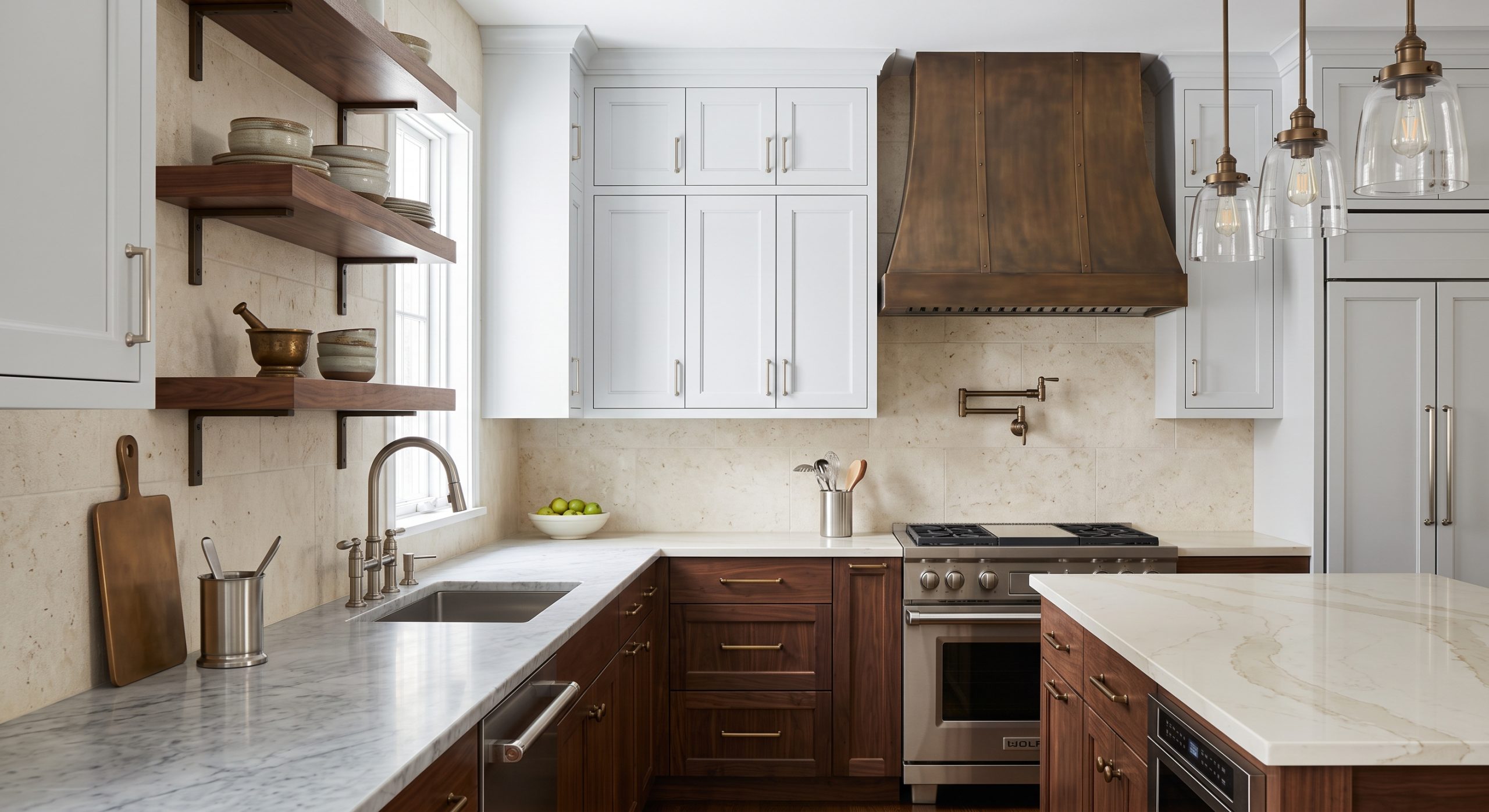
The old rule that all kitchen finishes must match is finally dying. The most inspired kitchens today often mix metals, but the difference between layered and chaotic is all in the strategy. Bronze and nickel are a particularly effective combination, one brings warmth and depth, the other light and precision.
Bronze is an alloy of copper and tin, but the term is also used in a general sense to describe decorative finishes applied to brass or other metals. It can be chocolate brown or tobacco or burnished or almost black, depending on how it’s treated. Un-lacquered bronze patinas over time with use and exposure. The surface reacts with oxygen, moisture and handling. That evolution is part of its appeal, but it’s not maintenance free.
Using abrasive products to clean often can remove the finish unevenly; a soft cloth and mild soap are safer.
Nickel is a cooler counterpoint. In kitchen fittings and plumbing, “nickel” is usually used to describe a finish, usually nickel plating over a brass base, not solid nickel construction. Brushed nickel has a soft satin surface that does a better job of hiding fingerprints and water marks than polished nickel. Polished nickel is brighter and more reflective than chrome, with a slightly warmer tone. It will acquire a muted patina over time, especially in humid environments, but regular care is easy: wipe away water and avoid chlorine, ammonia, and abrasive cleaners, which can damage plated surfaces.
The most effective combinations create a clear hierarchy. Pick one metal for the workhorses of the visual, like the faucet, pot filler, or cabinet hardware, and use the second metal as an accent. A brushed-nickel faucet paired with bronze drawer pulls feels intentional when the bronze appears elsewhere, perhaps on pendant details, shelf brackets, or a range hood trim. A bronze faucet, by contrast, could be a way to anchor a kitchen with nickel knobs and appliances without making the room too warm.
Color is as important as Finish . Brushed nickel with heavily distressed bronze provides a relaxed, textural look; polished nickel with smoother bronze is more tailored. Don’t add more than one version of each metal. Polished, satin, antique and blackened finishes competing at the same time can make even a well-designed kitchen look accidental.
Size is also important. Using a metal more than three times makes it read like a design decision. The distribution does not have to be perfectly symmetrical, but should appear balanced in the room. Maintain undertones in conversation: aged bronze naturally matches well with creamy stone, walnut and warm whites; nickel goes with gray marble, painted cabinetry and cooler whites.
Finally, before mixing the fixtures, check the manufacturer’s care instructions. Finishes vary widely and some warranties exclude harsh cleaners or products not compatible. Bronze and nickel thoughtfully done do more than just coexist. They provide patina, kitchen contrast, and a feeling of permanence, without sacrificing cohesion.