

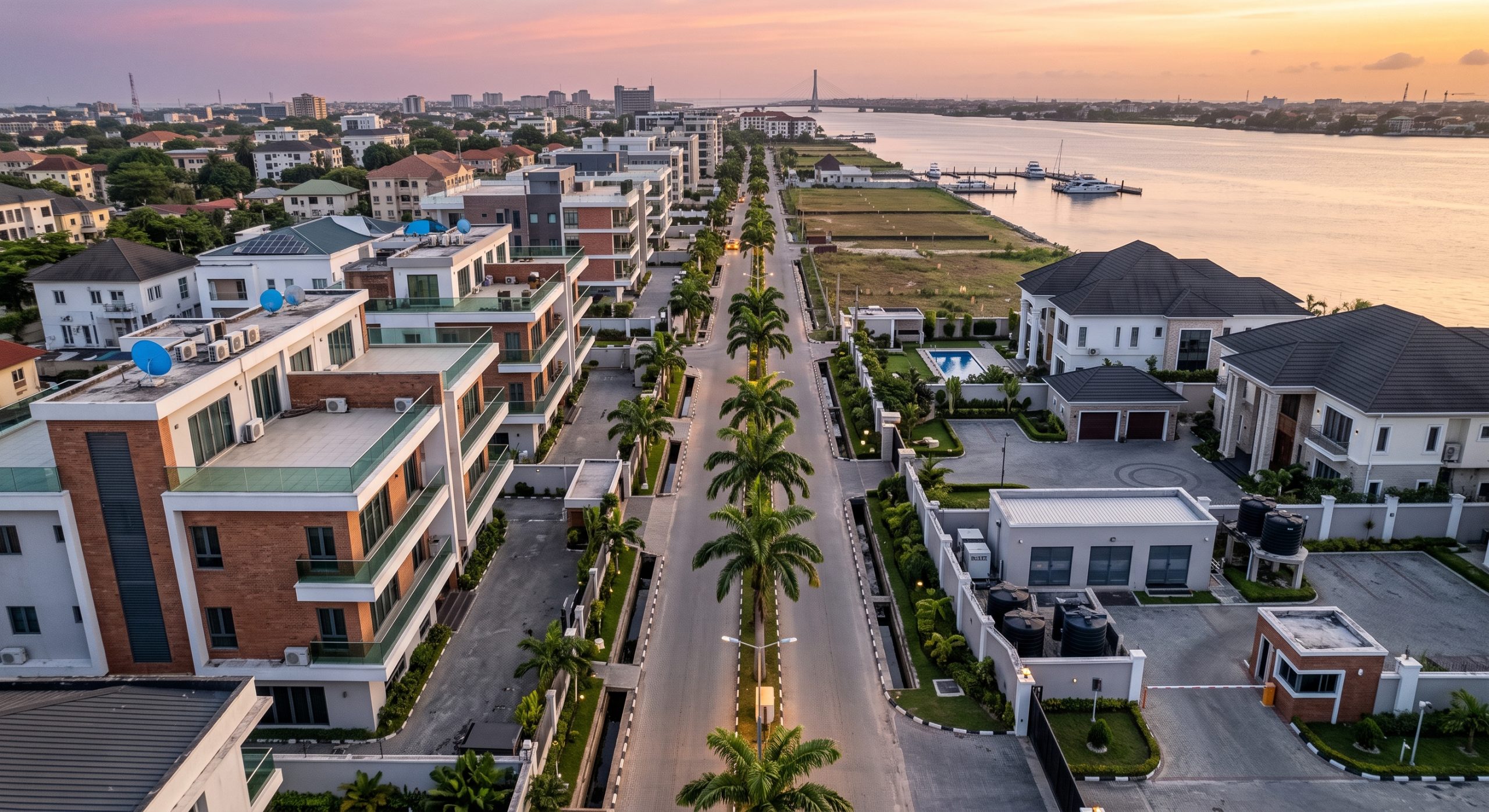
Lekki Phase 1 continues to be one of the most expensive residential addresses in Lagos. Its attraction is simple: access to Victoria Island, Ikoyi and the Lekki-Epe corridor; existing infrastructure; private estates; and access to some of the city’s best schools, restaurants, hospitals and retail spots.
But the market is no longer defined by land alone. Buyers are increasingly paying for security, reliable power, drainage, water systems, parking and professional estate management, features that can add substantially to the cost of ownership.
Average asking prices for a two-bedroom apartment in Lekki Phase 1 are approximately ₦100 million-₦220 million, based on information from Nigerian property platforms, Nigeria Property Center and PropertyPro. A three-bedroom flat can range from about ₦150 million to ₦350 million, with newer developments that have lifts, gyms, backup power, waterfront or high-up views sometimes commanding more than ₦400 million.
Detached houses sit at a different level. Older or heavily renovated properties may be marketed from approximately ₦250 million, but well-positioned four- and five-bedroom homes generally range between ₦350 million and ₦800 million. Large, newly built or exceptionally located houses can pass the ₦1 billion mark.
Land is scarcer still. Advertised prices for a standard residential plot, often between 500 and 600 square metres, frequently range from ₦300 million to ₦800 million. On the most sought-after streets, prices above ₦1 billion are not unusual.
The rental market reflects the same pressure. Annual rents for two-bedroom apartments are often quoted at ₦8 million – ₦20 million, while three-bedroom units can range from ₦12 million to ₦30 million. Detached homes may command ₦20 million – ₦60 million or more per year. Tenants must also budget for service charges, estate dues, power costs, agency fees and legal charges. In some developments, these extras add several million naira annually.
Currency depreciation and construction inflation have been major price drivers. The cost of imported fittings, generators, lifts, air-conditioning systems and finishing materials has risen sharply, while demand for secure, professionally managed homes has remained resilient. Limited land supply gives established parts of Lekki further pricing power.
Yet buyers should not confuse a high price with a clean investment. Lekki’s flood exposure makes drainage, road elevation and storm-water management important due-diligence issues. Purchasers should verify the survey plan, title history, governor’s consent or other registrable interests, planning approvals and any estate restrictions before committing funds.