

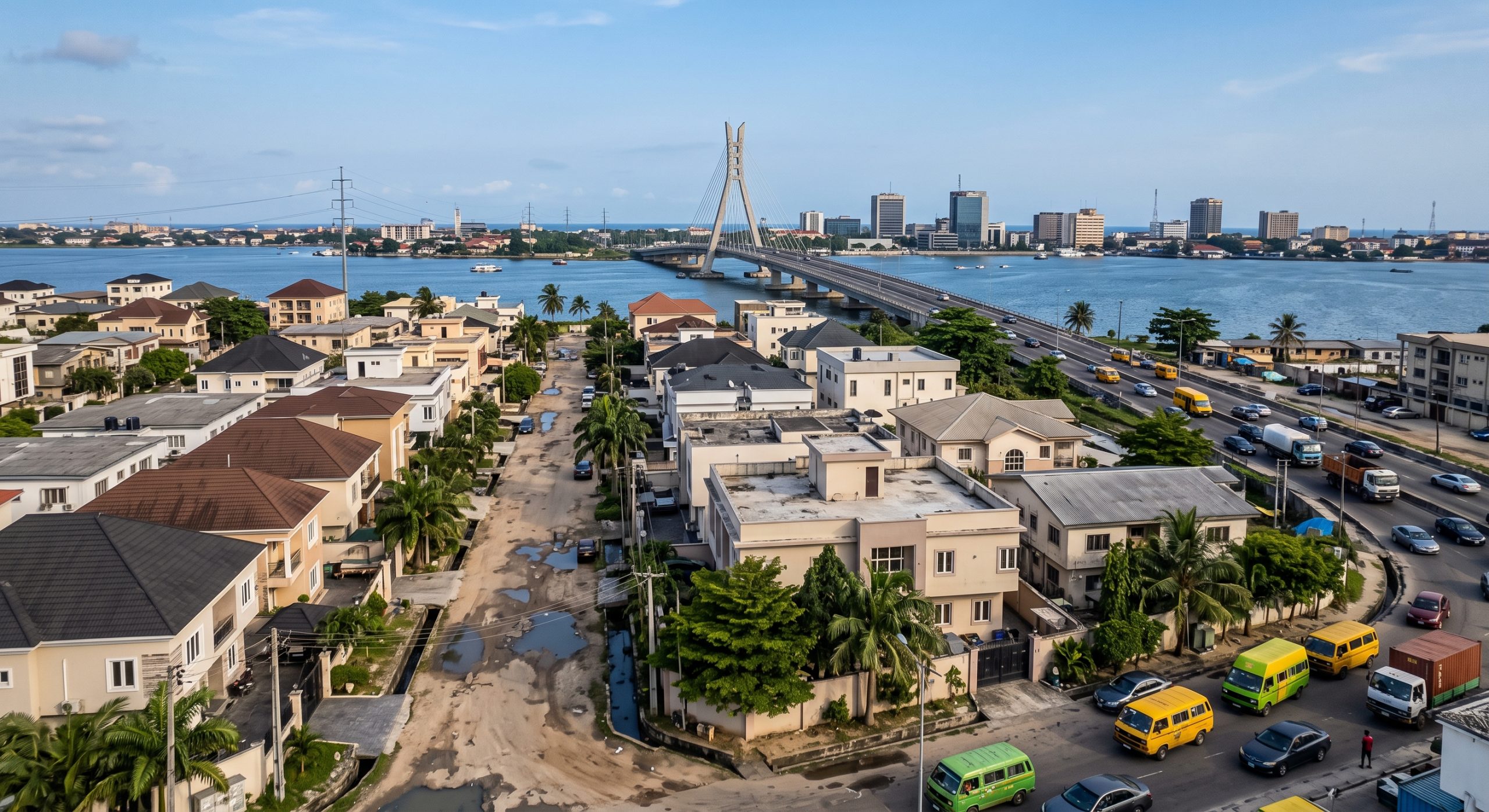
For many Lagos residents, Lekki Phase 1 represents an upgrade in lifestyle: newer homes, better restaurants, private security and proximity to the city’s commercial centres. It is also one of the most expensive and infrastructure-stressed places to live in Lagos.
Located in Eti-Osa Local Government Area on the Lekki Peninsula, the neighbourhood sits between Victoria Island and the expanding Lekki corridor. Its strategic position is a major advantage. The Lekki – Ikoyi Link Bridge provides a direct route to Ikoyi, while the Lekki–Epe Expressway connects residents to growing business, retail and residential districts farther east.
The advantages
Its best selling point is convenience. Lekki Phase 1 has supermarkets, pharmacies, gyms, restaurants, salons, schools, clinics and banks in the neighborhood or nearby. Residents can live in the older, denser parts of Lagos and still have access to Victoria Island, Ikoyi and major employment centers.
There is also a wide choice of homes on offer from serviced apartments and terraces to large detached homes. Many estates have controlled access, perimeter fencing, private guards, backup power and water systems. These features are important to families and professionals who value privacy.
Another attraction is the social infrastructure of the neighborhood. Its restaurants, cafes and leisure spots have drawn a young professional, expatriate and affluent family crowd. The constant commercial development along the Lekki corridor and the location also help to increase the property values.
The disadvantages
The main problem is traffic. Lekki Phase 1 is served by only a few major routes and traffic congestion is especially bad during morning and evening peak periods. A short trip to Victoria Island can be unpredictable when there is flooding, accident, road construction or breakdown on the expressway. The bridge is a good thing for connectivity, but it doesn’t fix the congestion.
Flood risk is a major consideration. The Lekki Peninsula is mostly low-lying and coastal. Heavy rain can flood drains, especially where building has cut off the natural drainage channels. Potential residents should check the roads and buildings during or soon after rain, rather than just a property viewing in dry weather.
Living costs are high. Rents, service charges, security fees, generator fuel, water and estate levies can make the total cost of occupancy substantially higher than the advertised rent. Power supply also varies by street and estate, so residents commonly depend on generators, inverters or shared backup systems.
Finally, development continues to be unequal. Some streets are well paved and maintained. Others are dusty, have drainage problems, construction noise and refuse management problems. Private security can enhance protection but does not replace broader public safety measures.