

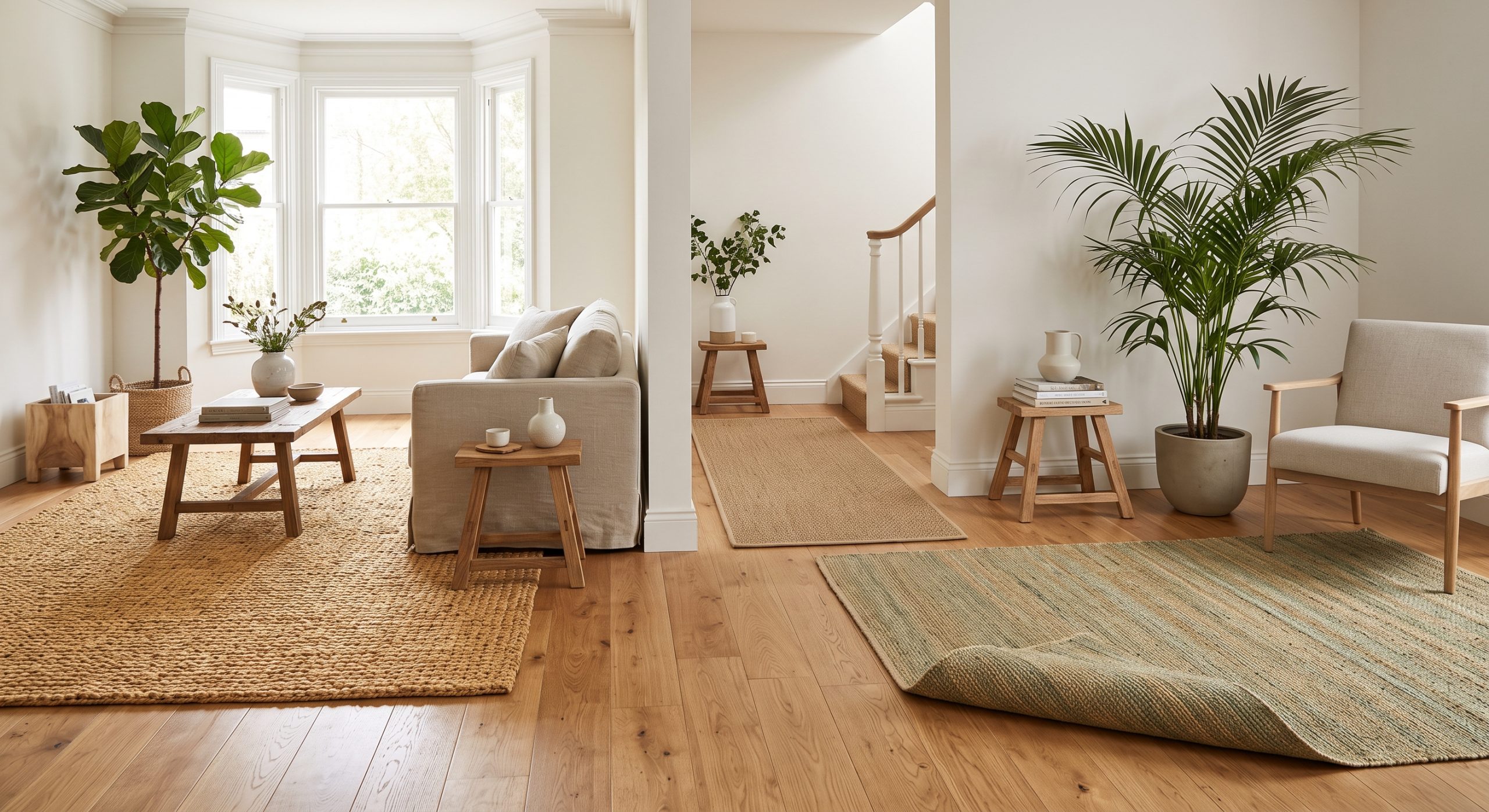
Natural-fiber rugs can do a lot more than just soften a room. The tactile surface, muted color and irregular weave bring the quiet visuals of the outdoors without competing with architecture, art or furniture. But “natural” is not a spec for performance. Jute, sisal and seagrass all have different underfoot qualities. The right choice is matching the fiber to the room.
Jute is the softest of all three. It is spun from the stalks of *Corchorus* plants and is grown mainly in India and Bangladesh. It is one of the cheapest plant fibers in the world. With a warm, golden hue and a relaxed, chunky weave, jute rugs work well in bedrooms, living rooms and low-traffic areas. The downside is that jute is more likely to flatten, stain and absorb moisture than harder fibers. It is not a good choice for bathrooms, damp basements, or homes where muddy shoes are common.
Sisal is produced from the leaves of the plant Agave sisalana . This results in a harder surface and a more tightly woven fabric. It holds up to hallways, stairs and busy living areas, but the pronounced texture might feel a little rough on bare feet. Sisal is absorbent to spills, blot up immediately. Too much water can lead to discoloration or shrinkage. Natural-fiber rugs are less forgiving than synthetic stair runners, and a professional installer can secure the rug properly on staircases.
Seagrass is the best option for households concerned with everyday spills. In the rug trade, the word generally refers to grasses cultivated in wet fields, then dried and woven, not necessarily marine seagrass plucked from the ocean. The naturally waxy finish resists stains better than jute or sisal and its subtle green to honey tones work well in coastal, contemporary and transitional interiors. But it’s not water-resistant, and long exposure to dampness can promote mildew, while the stiff fibers are less comfortable in rooms meant for sitting on the floor.
All three materials are plant-based and in principle biodegradable, but a finished rug is more complex. Recyclability and indoor emissions may be affected by latex or synthetic backings, chemical finishes, dyes and glued borders. Look for transparent fiber and country of origin information, low-emission certifications. If you want to prolong the life of your rug, increase its grip and protect your flooring, a rug pad of natural rubber or felt is good to use.