

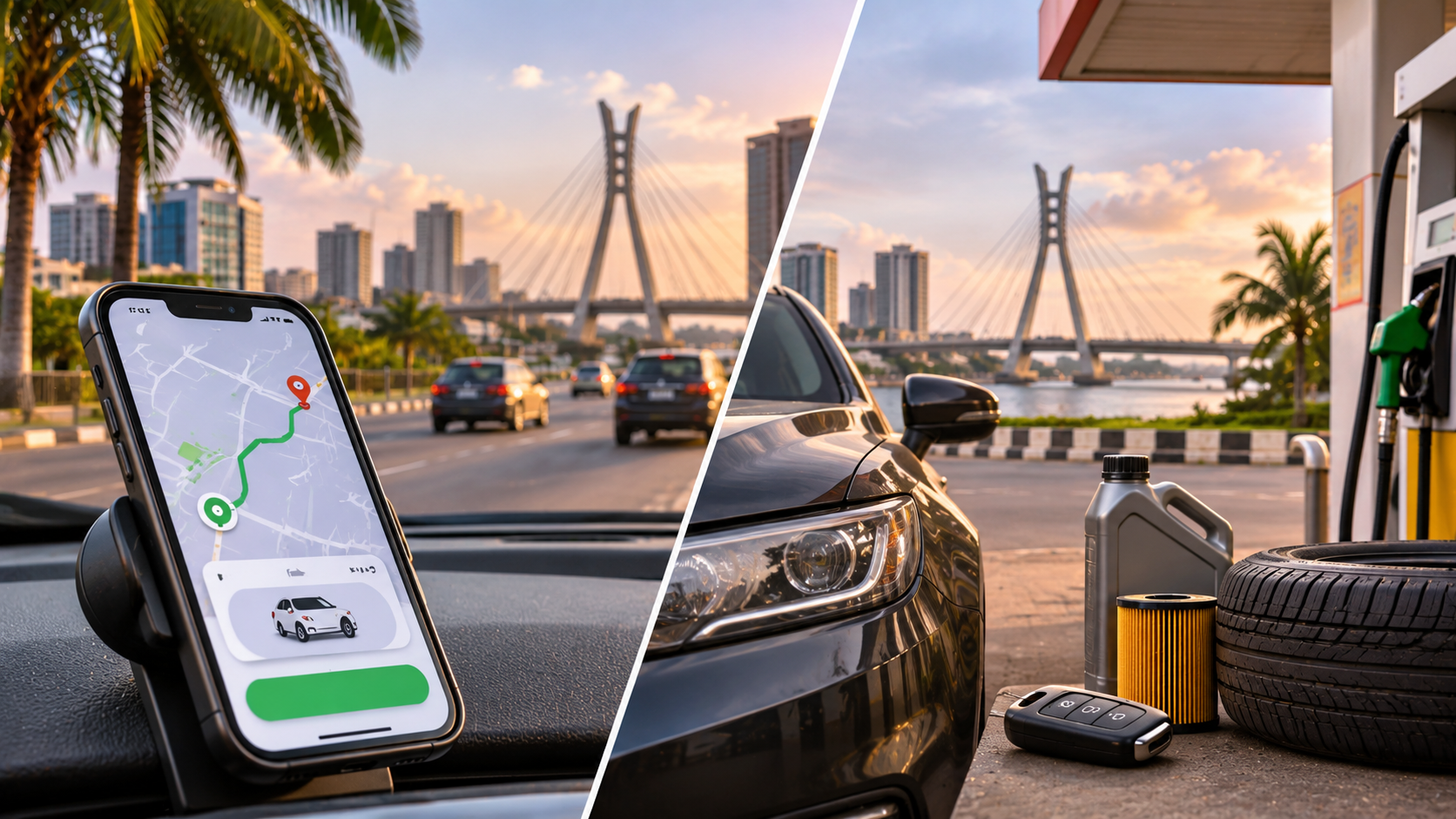
For many Lagosians, the old maths was simple: if you can afford a car, buy one; if you can’t, use Uber or Bolt. That reasoning is less reliable now. The cost of getting around the city has changed due to the cost of fuel, the cost of vehicles, traffic and the volatility of the naira.
The answer is less about the cost of a single journey and more about how often you travel.
Take a regular commuter driving 40 km a day, 22 days a month. A small petrol car that uses 10 liters per 100 kilometers would use around 88 liters a month. At ₦900 per liter, the fuel itself would cost about ₦79,000.
But the cost of owning a car goes beyond fuel. And there are the servicing, tyres, repairs, insurance, registration, parking, tolls, depreciation and, for many buyers, loan repayments. ₦15 million spent on a car is capital that is locked up even when parked. Spread across those costs a Lagos commuter’s monthly ownership bill can easily be ₦150,000 – ₦300,000 depending on the vehicle, financing and parking arrangements.
Ride-hailing isn’t inexpensive either. Fares are flexible and based on distance, traffic, weather and demand. A commuter who makes 2 trips per day 22 days a month will make 44 trips. That’s ₦132,000 a month at an average fare of ₦3,000; ₦176,000 at ₦4,000 – and that’s before cancelations, surge pricing or extra trips.
That can make ride-hailing potentially cheaper than owning a car if you don’t travel often, if you work from home or if you use public transport part of the week. If you take 15 rides a month at ₦3,000 each, you’ll pay about ₦45,000, a lot cheaper than owning a private car.
For heavy users, it’s another calculation. For a daily commuter who crisscrosses the city, makes multiple stops or frequently books during peak periods, ride-hailing may cost more than a car owner’s monthly running costs. A vehicle already bought and paid for is especially difficult for ride-hailing to beat: the owner mainly compares fuel and maintenance with fares, not the original purchase price.
There are also costs that do not appear on a receipt. Ride-hailing brings convenience, but not certainty. Drivers may cancel, fares surge during rain, and availability can deteriorate in less central areas. Owning a car offers control and storage space, but Lagos traffic makes time, stress and parking scarce commodities.
The practical verdict is straightforward: ride-hailing remains cheaper for low- and medium-frequency users; ownership can win for high-frequency travellers who already have a reliable, fuel-efficient car. For everyone else, the smartest Lagos transport strategy may be a mix of ride-hailing, BRT and other public transport – not loyalty to either model.