

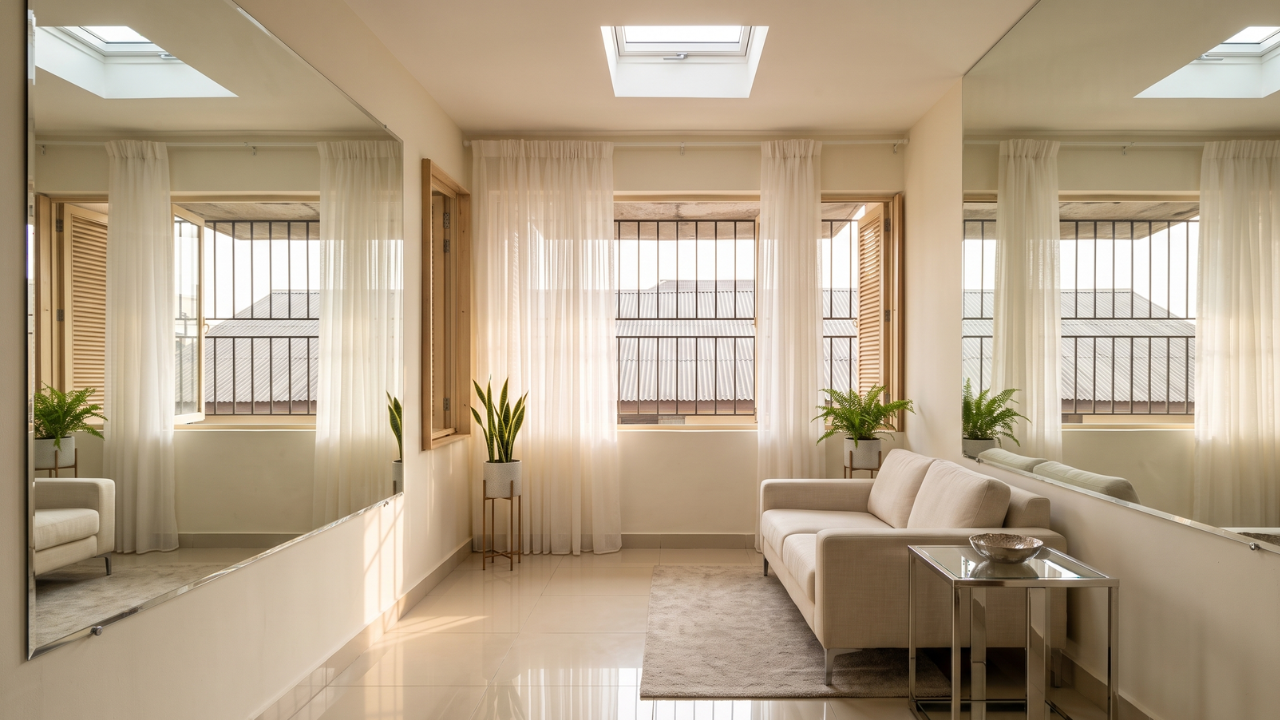
Sunshine is something Lagos has in abundance for most of the year, but many apartments in the city still feel closed in and dim. Instead of allowing in natural light it is often shut out by security bars, tight setbacks and a rainy season that keeps blinds drawn for months. But with a few deliberate changes you can make even a small flat feel light and airy – and save on your electricity and AC bills into the bargain.
First clear the Windows
Begin with what you’ve got. Heavy drapes, security nets or clutter piled on the windowsills are the biggest light-blockers in most homes in Lagos. Heavy curtains can be replaced by sheer or louvered varieties which allow light in, but do not compromise your privacy. Louvered windows are particularly appropriate for Lagos’s climate, because they let light and air in, but do not expose the interior directly to the harsh midday sun.
Use Light Colours and Reflective Surfaces
Light colored walls with glossy tiles and metallic or mirrored accents reflect daylight further into a room instead of absorbing it. An easy and inexpensive way to double the amount of light in a room is to put a large mirror opposite a window. Darker walls and matte finishes do the reverse, absorbing light and causing rooms to feel smaller and darker than they really are—which is a real problem in Lagos apartments that are already tight.
Change the Layout of Your Furniture
Heavy furniture in front of windows or hallways prevents light from coming thru to a flat. Sightlines are kept open, allowing light to travel further into the room by pulling away pieces from the window walls and selecting lower-profile, multipurpose furniture. This is especially useful in the smaller mini-flats and self-contained units common in Lagos where every extra inch of perceived space counts.
Work With Shading Not Against It
The Lagos sun is harsh, so the aim is not to eliminate all shade but to control it. Adjustable options such as louvered shutters, external overhangs will allow you to keep the space naturally lit for most of the day, but give you the ability to control glare and heat during the brightest hours. This balance is more important here than in temperate climates, as uncontrolled exposure to glass can lead to a bright room becoming unpleasantly hot by early afternoon.
If You Can, Look at Structural Fixes
If you have any say in renovations — whether you own the unit or have a cooperative landlord — a few structural additions go a long way. Skylights or ceiling windows are becoming increasingly popular in tropical building design. They provide light from above, not from street level, where there might be fences, generators or other buildings. They can also be adjusted or partially shaded depending on the time of day.
Keep the greenery light, not heavy.
Plants bring life to a space, but plants that are too big near windows can end up blocking light instead of complementing it. Stick to smaller potted plants on stands or shelves away from direct window lines, so they can add color without casting shade across the room.
Small, consistent changes- decluttering windows, choosing reflective finishes and being intentional with shading, can make a Lagos apartment feel noticeably brighter without any major construction. And with electricity prices where they are, reducing dependence on artificial daylighting is not only a design win, but a practical win as well.