

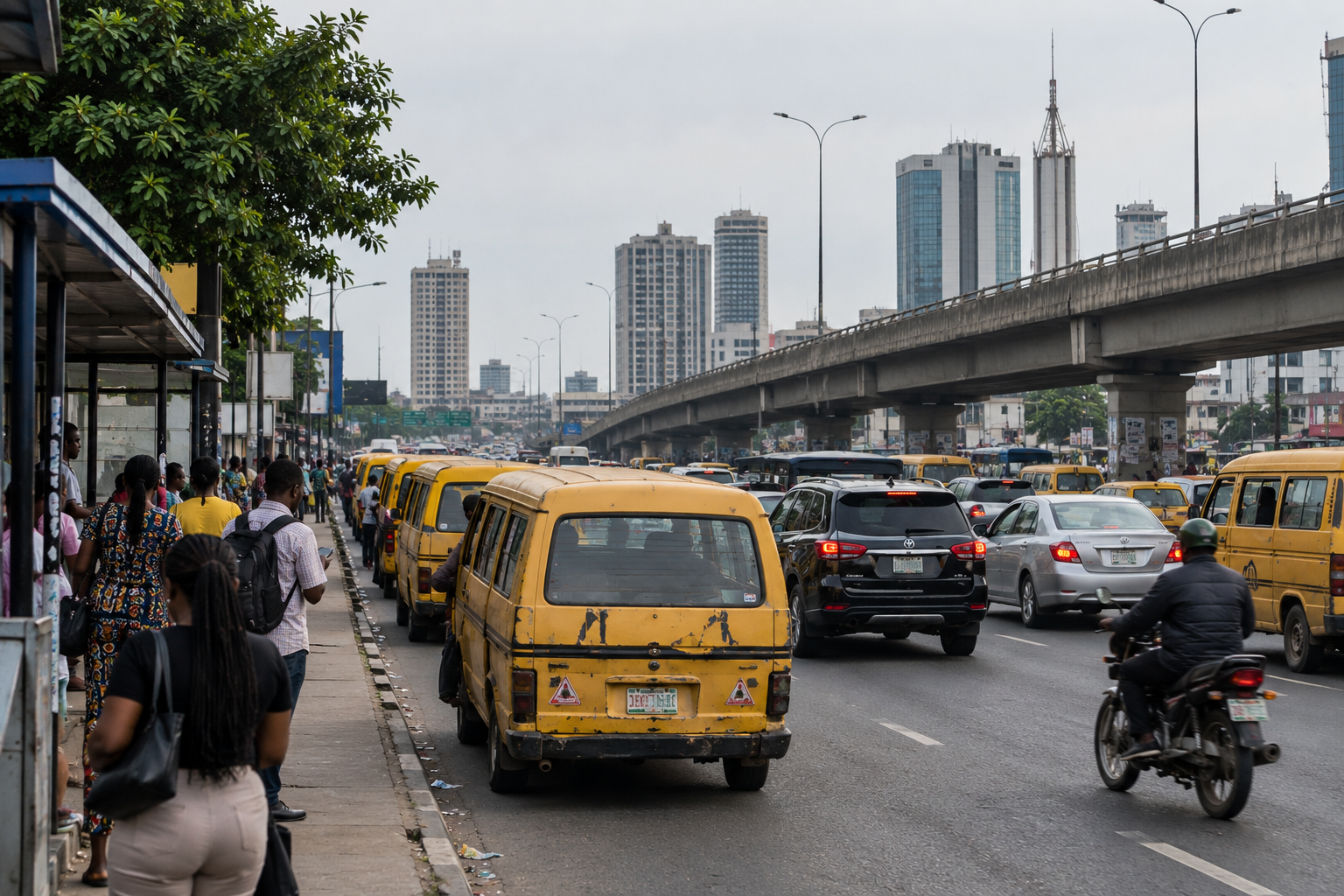
You can still get around Lagos cheaply in public transport, but at a price if you take a private car. How much it costs to get around Nigeria’s commercial capital in 2026 depends less on distance, more on traffic, time of day and mode of transportation.
Most residents still prefer the cheapest option, the danfo, the ubiquitous yellow minibusses linking neighborhoods, markets and major bus stops. A short trip will usually cost around ₦500-₦1,000 and longer trips across the city can cost ₦1,500-₦2,500. Fares are not fully standardized and can be higher during fuel shortages, heavy rain or peak commuting times when conductors can charge more.
Lagos’s bus system is more predictable. The BRT and LAGBUS services usually cost about ₦500-₦1,500 per journey, depending on the route. Payment is through the state’s transport-card system or other approved channels. In light traffic, busses are slower than a private car, but during weekday rush hours, they can be faster in dedicated lanes.
The introduction of the Blue Line rail service has opened a NEW travel option between Marina and parts of the mainland. The cost of a single rail trip ranges between ₦1,000 and ₦2,000 based on the fare class and current tariff. The line doesn’t replace road transport yet: most passengers still need a bus, taxi or tricycle at one end or the other.
Water transport is useful for traveling between waterfront communities and Lagos Island. Generally, Lagos State ferry services charge ₦1,000 to ₦3,000 per trip depending on the route and service provider. Ferries may be faster than road travel, but schedules and weather affect reliability.
Uber and Bolt ride-hailing services are more comfortable but significantly more expensive. A short city trip, outside peak periods, costs ₦3,000-₦7,000. Longer trips, such as from the mainland to Victoria Island, Lekki or the airport, can easily cost ₦8,000-₦25,000, and surge pricing could push the bill even higher. Airport transfers booked through established operators or hotel desks often cost more but provide greater certainty.
Motorcycles and tricycles remain useful for the “last mile”, particularly in areas where cars cannot move through traffic. However, Lagos has restricted their operation on major roads and in key business districts. Availability and legality therefore vary sharply by neighbourhood.
A realistic daily transport budget in 2026 is ₦2,000–₦5,000 for a commuter using buses, ₦5,000–₦12,000 for a mixed public-transport and ride-hailing routine, and ₦15,000 or more for mostly private rides.
These are indicative ranges, not fixed tariffs. Lagos fares move with fuel prices, inflation and state transport announcements. Travellers should confirm current prices through LAMATA, licensed operators and their ride-hailing apps before setting out.