

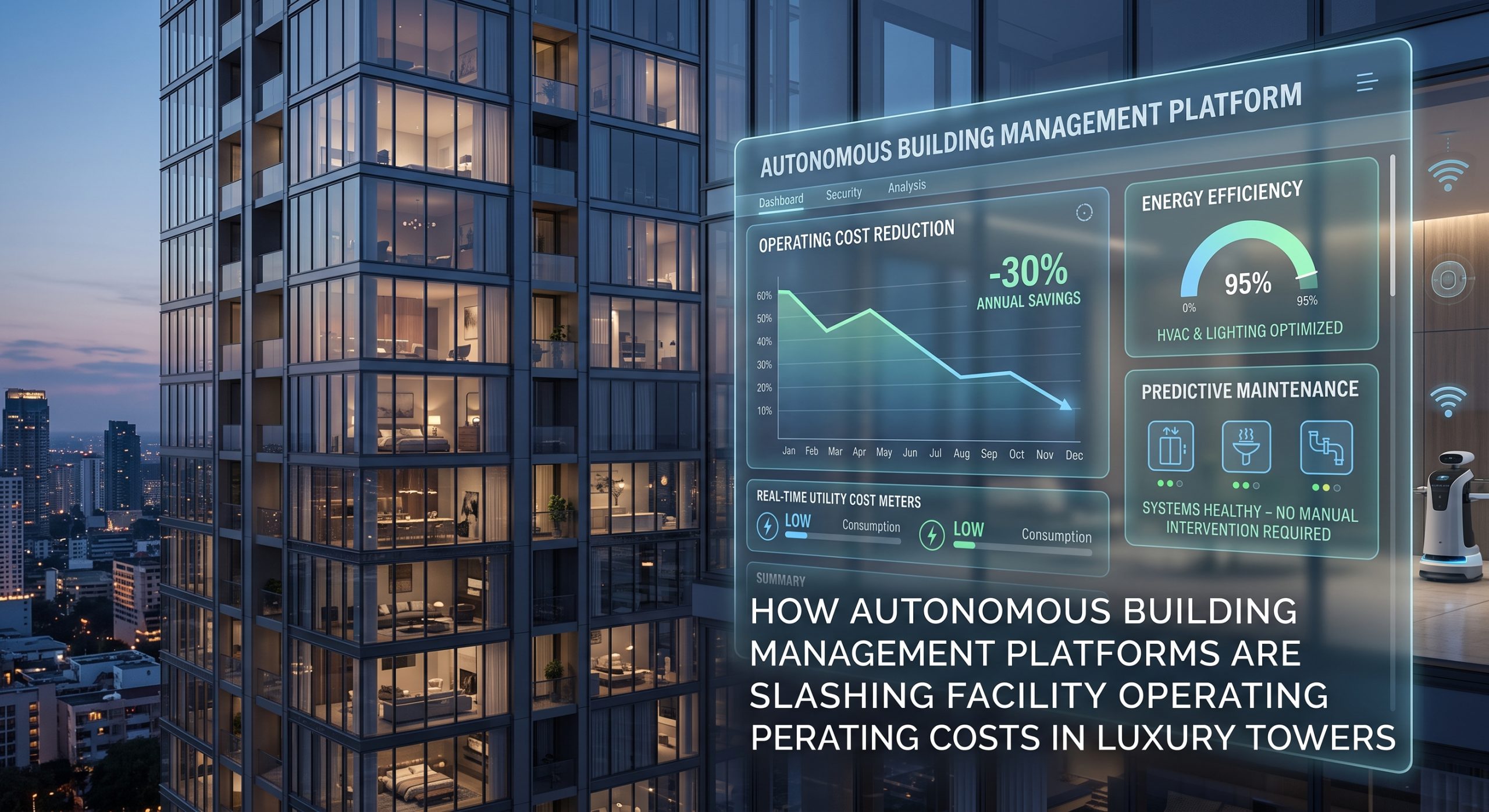
In a luxury high-rise, comfort must be invisible. Quiet apartments, well-tempered lobbies, responsive elevators, hot water, these are all expectations to be maintained whether the building is half empty or full. But that reliability comes with a cost. Now, autonomous platforms for building management are starting to drive those costs down by building responsive, self-correcting systems into towers.
Traditional building management systems offer data and alarms. It takes it to the next level with an autonomous platform. It pulls data from temperature sensors, occupancy counters, utility meters, weather forecasts, elevator and equipment controls. Machine-learning software then continuously modifies set points and schedules, reducing cooling in an empty lounge, pre-conditioning a gym before its peak time, or reducing ventilation in an empty conference room.
We are not trying to automate. It’s closed-loop decision-making. Software detects an inefficiency, makes a controlled change, and measures the results. If a pump starts consuming more power than normal, the system can indicate a possible fault before breakdown occurs. This is especially true in towers where a failed chiller or water pump can affect hundreds of residents and result in emergency repair costs.
The financial case for owners isn’t just the utility bills. Predictive maintenance can help extend equipment life, cut down on overtime callouts and enable more accurate capital planning. For residents the benefits are less obvious but more tangible: stable temperatures, fewer interruptions and quieter machinery.
Autonomy does not get rid of engineers or building staff. The best systems give them better info, put limits on safety, and keep human override. In luxury homes that may be the winning formula: technology that works hardest when you don’t notice it.