

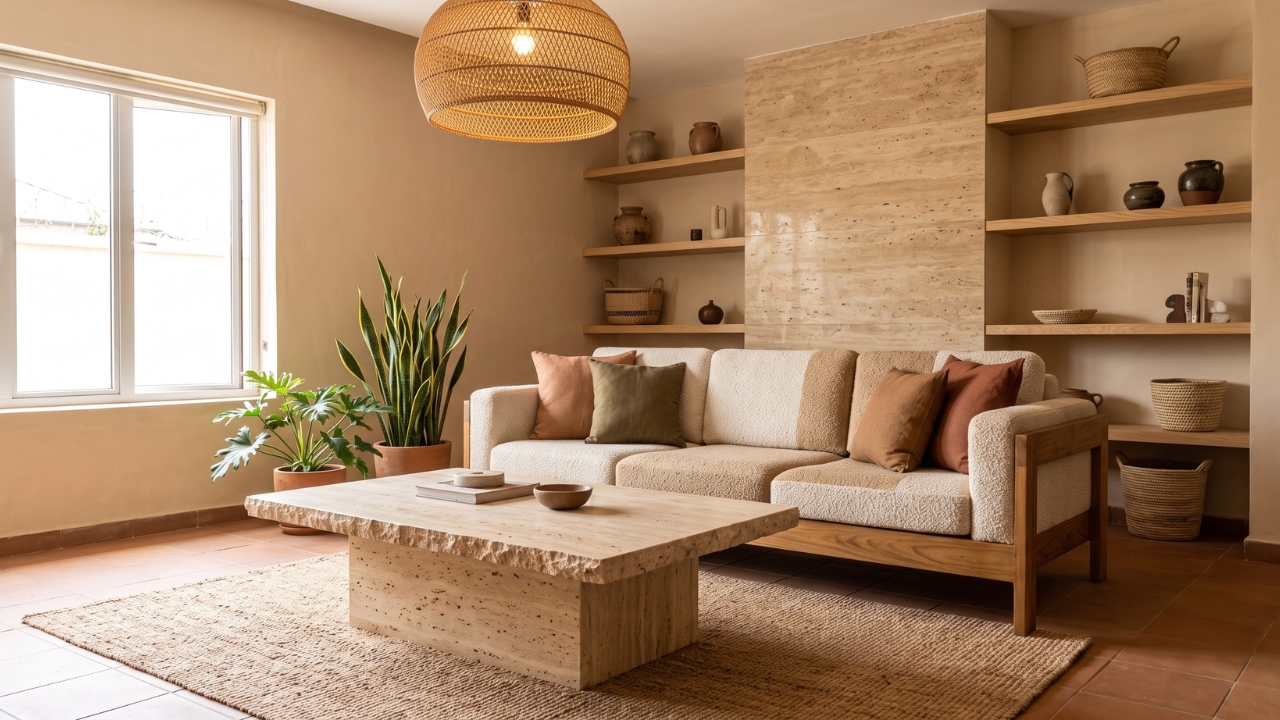
The design pendulum has swung decisively away from the cool greys and stark whites that ruled Nigerian interiors throughout the late 2010s. Instead: warm woods, natural stone and a palette inspired by clay, sand and terracotta. We’re calling it Earthy Luxe; a look grounded in materials that feel luxe not for their shine, but for their feel and their obvious natural origin.
The anchor material is rock. Travertine in particular has become the material of the moment. It is used on coffee tables, side tables and even as a feature wall cladding. Its warm beige tones and soft, porous texture read as understated luxury, not showroom polish. Granite and marble are still in play, but are being used more sparingly as accent surfaces, rather than the entire floor, which keeps a room feeling grounded instead of clinical.
It is the wood that warms. While previous trends were more about dark walnut or high-gloss finishes, the look now is for lighter, more textural woods; oak, ash and locally sourced Nigerian hardwoods such as iroko and mahogany; finished with a matte or lightly oiled surface that reveals the grain rather than hides it. The thing is, furniture with visible joinery and slightly irregular, hand-finished edges says crafted, not mass-produced.
Styling comes together in the layering of these two materials. Offsetting a stone coffee table with a sofa in a wood frame or a stone fireplace surround against timber shelving provides the contrast needed to keep an earthy palette from looking flat. Textiles follow suit; think bouclé, linen and raw cotton in sand, rust and olive shades, avoiding anything too shiny or synthetic looking.
Lighting finishes the look. Warm-toned bulbs (2700K or lower) are a must; cool white lighting will immediately cut the earthy effect, making stone look grey not warm. Woven rattan or paper-shade pendant lights add another layer of natural texture, without competing with the stone and wood below.
Earthy Luxe is not only good to look at for Nigerian homeowners, it’s practical. This look can be created out of locally available materials such as laterite-toned tiles, Nigerian hardwoods and regionally quarried stone, without the import costs that came with past high-gloss, imported-marble trends.
It’s a style that photographs beautifully for Pinterest and Instagram, ages well without looking dated within a few years, and, perhaps most importantly for a market increasingly conscious of cost, can be mostly sourced within Nigeria rather than shipped in at a naira-punishing exchange rate.