


The Dubai versus Lagos question has become one of the most frequently asked of diaspora Nigerians by their financial and real estate advisors and the honest answer depends very much on what an investor is optimising for, yield, liquidity, legal certainty or long-term family ties.
The main point of the Lagos argument is yield. Rental returns from short lets and residential lets in prime Lagos areas, Victoria Island, Ikoyi, Lekki, have been reported in ranges that considerably outperform typical Western or Gulf rental yields, with well-managed short-let units often cited in the mid-to-high teens percentage-wise, compared with the low single digits typical of mature Western markets.
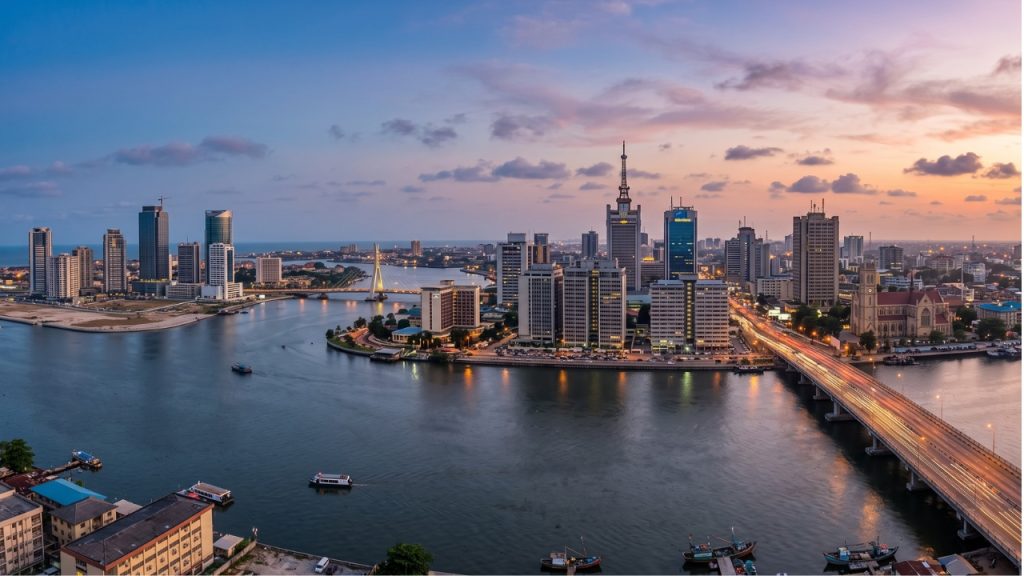
For investors converting foreign currency to buy property in naira, that yield gap is the main argument for buying in Lagos rather than abroad.
Dubai’s case: liquidity, legal transparency and currency stability.
Property deals are underpinned by a mature and internationally trusted title registration system; the market has deep secondary liquidity for resale, and the Dirham’s peg to the US dollar removes the currency risk that makes investing in naira problematic.

Off-plan property in Dubai has also been increasingly popular with Nigerian investors because payment plans and developer protections are more standardised and predictable than much of the off-plan market in Nigeria.
But the comparison gets a little more complicated for Lagos when you account for the trust and verification gap. Diaspora investors buying from abroad face a real distance problem. They can’t easily visit a site, inspect a title in person, or spot red flags that a local buyer would instantly spot.
This has been helped somewhat by Nigeria’s digital land registry tools, with platforms allowing remote title verification in a fraction of the time it once took, but the risk of fraudulent developers specifically targeting diaspora buyers, precisely because of that distance, remains a well-documented problem.
Currency considerations go both ways. The falling value of the Naira has made Nigerian property cheaper in dollar terms for diaspora buyers converting their foreign earnings, sparking a wave of diaspora-driven demand and forcing developers to credit a large share of sales in prime Lagos, Abuja and Port Harcourt markets to diaspora buyers.
That same depreciation risk means returns denominated in naira can be eroded on the way back out, a concern that does not apply to a dollar-pegged Dubai asset.
For most advisers working with Nigerian diaspora clients, the practical answer is not binary. Lagos is appropriate for investors seeking income yield and to remain connected with family and future retirement plans, provided they do rigorous due diligence, preferably professionally assisted, on title and developer credibility.
Dubai suits investors prioritising capital preservation, ease of exit, and a lower-touch ownership experience. Sophisticated diaspora investors are increasingly choosing both, seeing Lagos as the higher-yield, higher-effort leg of a portfolio, and Dubai as the lower-yield, lower-friction counterweight.