
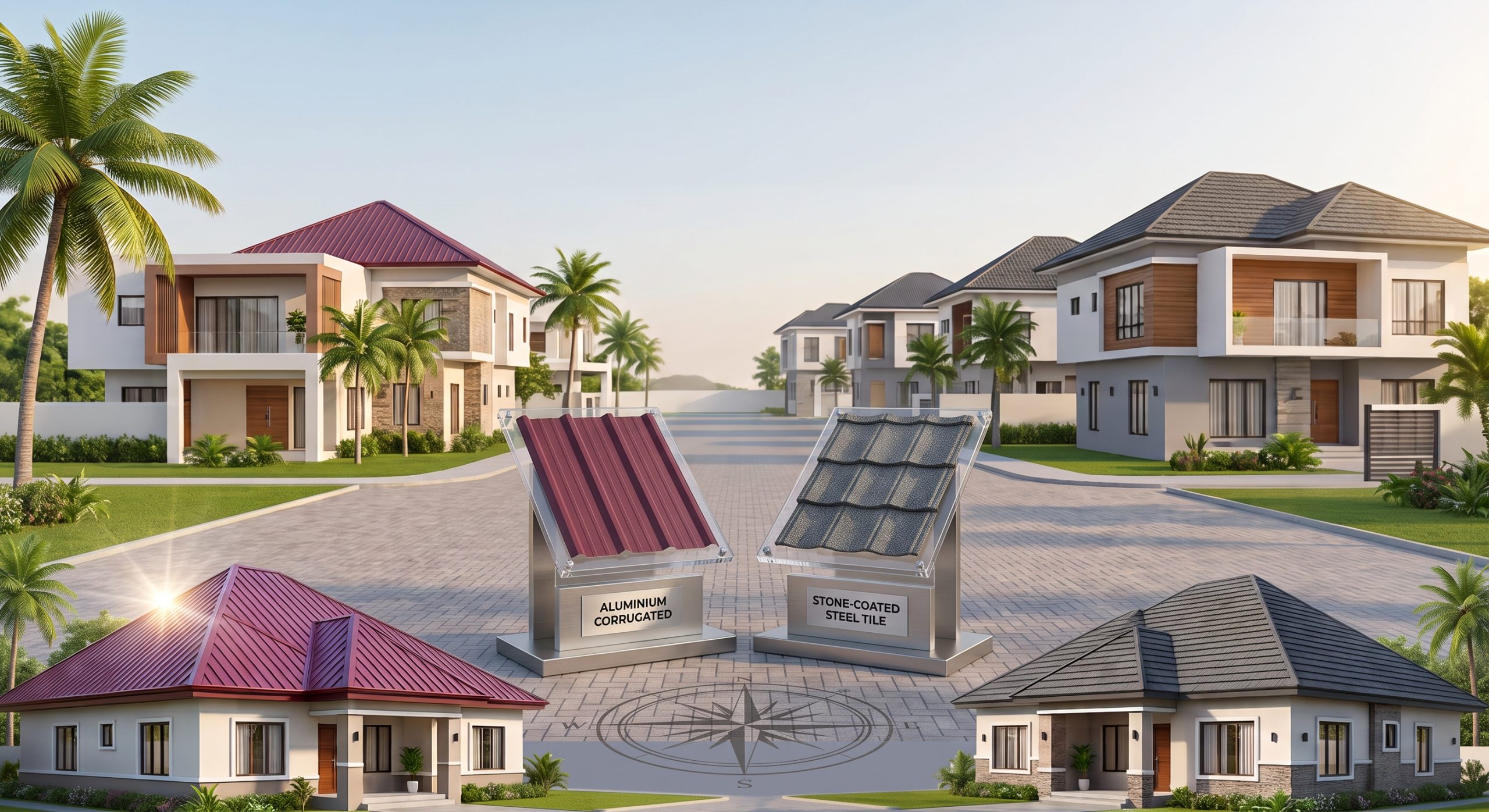
A roof, in Nigeria, has to do more than keep out the rain. It must survive intense ultraviolet radiation, seasonal rains, coastal humidity, airborne dust and in many places strong winds. So the choice between aluminium and stone-coated steel is a choice between the comfort, maintenance and long term cost of a building.
Aluminium: lightweight, corrosion-resistant and heat-responsive
Aluminium roofing sheets are popular due to their lightweight and natural resistance to corrosion. However, aluminium does not rust like steel. Instead, it creates a thin layer of oxide that protects the metal underneath. This makes it especially suitable for coastal cities such as Lagos, Port Harcourt and Calabar where the salt-laden air compounds the corrosion of unprotected steel.
The light weight also means less load on the roof structure. This can be an advantage in renovation or where the supporting timber or steelwork has been designed for lighter materials.
Strength is the main limitation. Aluminium is softer than steel and can be dented by hail, falling branches, careless installation or foot traffic. It also expands and contracts a lot with changes in temperature. That is, if the sheets are poorly fixed, if overlaps are inadequate, or if fasteners are undersized, sheets may leak, and panels may become loose.
Rain can also be heard through aluminium, especially in buildings without insulation or a ceiling. Its performance depends very much on thickness and alloy. Instead of using terms like ‘long-span’ or ‘premium’, buyers should request the actual gauge or thickness.
Stone-coated steel: stronger and quieter
Stone-coated roofing is typically made of profiled steel, coated in aluminium zinc alloy and finished with colored stone granules. The steel core makes it more rigid and impact-resistant than normal aluminium sheets. It can also help to reduce the sharpness of rain noise and give a more traditional look due to its textured surface.
The quality of the base steel and protective coating is what matters. When the coating is cut, scratched, or not properly sealed, exposed steel can corrode, especially in humid or marine environments. That’s why the manufacturer’s coating specifications are important. Products manufactured to recognised standards, such as EN 10346 for continuously coated steel, provide a more reliable basis for comparison than appearance alone.
Stone-coated roofs are typically heavier and costlier to fit than plain aluminium sheets. They also require careful handling; bending panels, dragging them over each other or using incompatible fasteners can damage the protective finish. Losing granules at cut edges is not an automatic failure, but repeated shedding or visible rust is a warning sign.