

Timber poses a challenge for the Nigerian building industry. Agriculture, fuelwood collection, logging and urban expansion are putting pressure on forests as demand increases. Since 1990, Nigeria’s forest area has been drastically reduced. The impact is not only fewer trees: it is more expensive materials, illegal logging and a construction industry vulnerable to supply shocks.
But replacing timber is not simply a matter of substituting one material for another. Concrete and steel are cheap and plentiful but they have a lot of embodied carbon. The more important question is whether Nigeria can develop a portfolio of local, renewable and lower impact materials – without sacrificing safety.
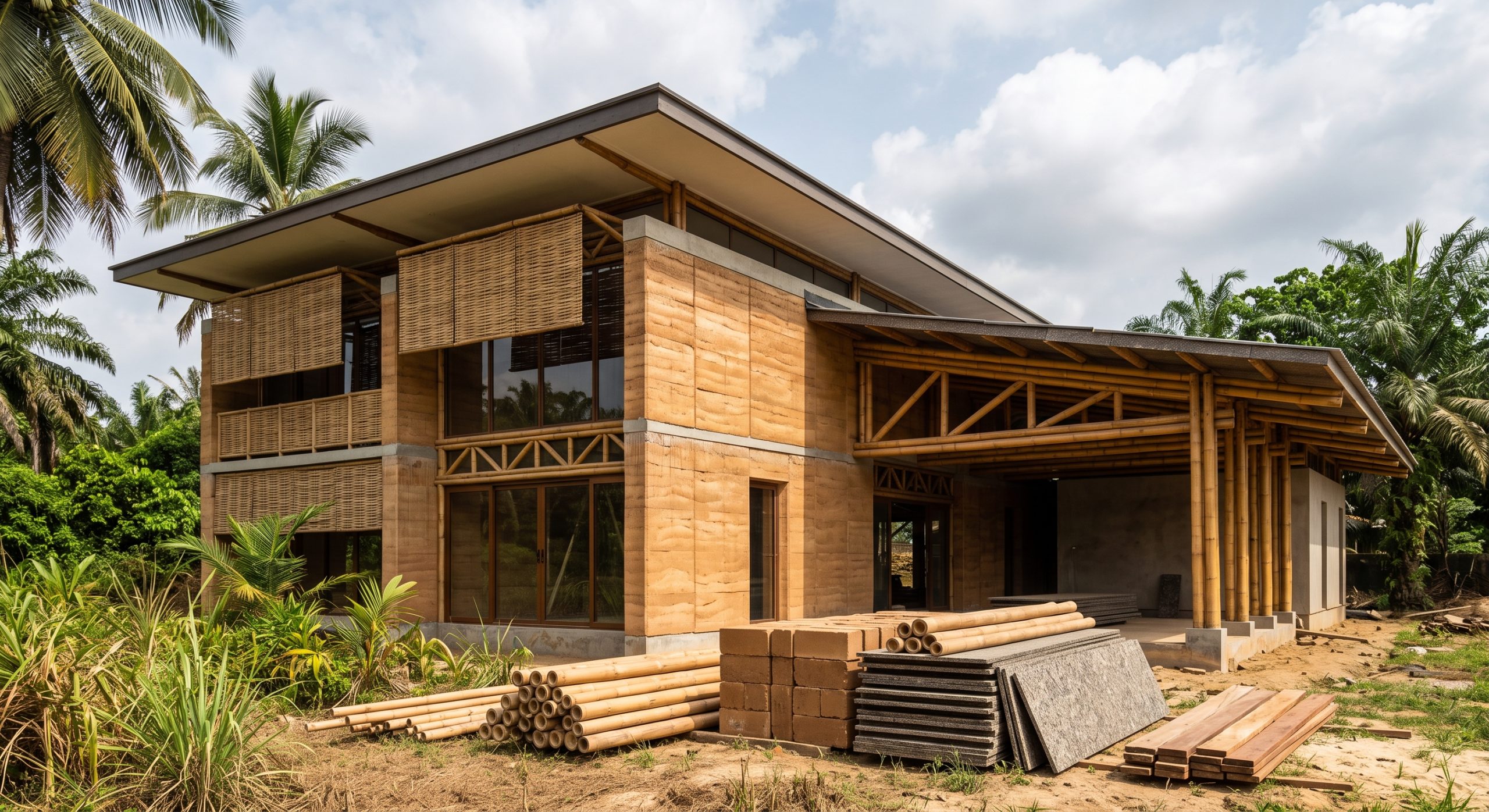
Bamboo is the obvious candidate. It grows quickly and is light to use, and can be used to make panels, flooring, screens and structural members. The species matures in about three to five years, much faster than most construction lumber. Already, Nigerian architects and universities have experimented with bamboo as a material for housing and furniture, especially in the south and Middle Belt.
But bamboo is not sustainable by nature. Poorly treated poles are attacked by insects, fungi and moisture. The construction industry needs reliable grading, preservation and joinery standards that are not yet available in Nigeria’s supply chain. Without certification and quality control, bamboo runs the risk of becoming a pretty but unreliable niche product.
Earth is less hip but maybe more revolutionary. Compressed earth blocks and stabilized laterite are made using local soil, thus reducing the need for fired bricks and imported finishes. The Nigerian Building and Road Research Institute has been carrying out research on earth-based construction for many years. Good design of earth walls can help moderate internal temperatures, an important benefit in a country where demand for cooling is increasing.
The material’s weakness is water. Foundations, roof overhangs, surface protection and meticulous detailing are crucial, particularly in humid coastal cities. Earth construction requires updated building guidance and skilled labor to progress beyond isolated demonstration projects.
Another is agricultural waste. Insulation, boards and composite panels can be made from rice husk, coconut fiber, oil-palm residues and other by-products. These products could create value from waste without putting pressure on forests. But they need factories that can make consistent boards at scale, and architects who will specify them often enough to create a market.
Rattan, already in the Nigerian furniture culture, has similar potential for interiors and lightweight screens. But wild harvesting needs to be controlled; replacing timber with an over-exploited forest product will do little to solve the problem.
Coud the building industry be Timber-free in the future? Probably not. Efficient, repairable, and familiar as ever. Sourced wood responsibly. A more credible goal is a hybrid architecture: certified timber where it works best, bamboo and agricultural composites where supply chains can support them, and earth or low-carbon masonry where thermal mass matters.
Nigeria doesn’t need another imported material trend. It needs standards, testing laboratories, local manufacturers and architects who are willing to specify what the country can grow, recover and sustain. That’s how alternatives will be embraced, not as icons of sustainability, but as solid building systems.