

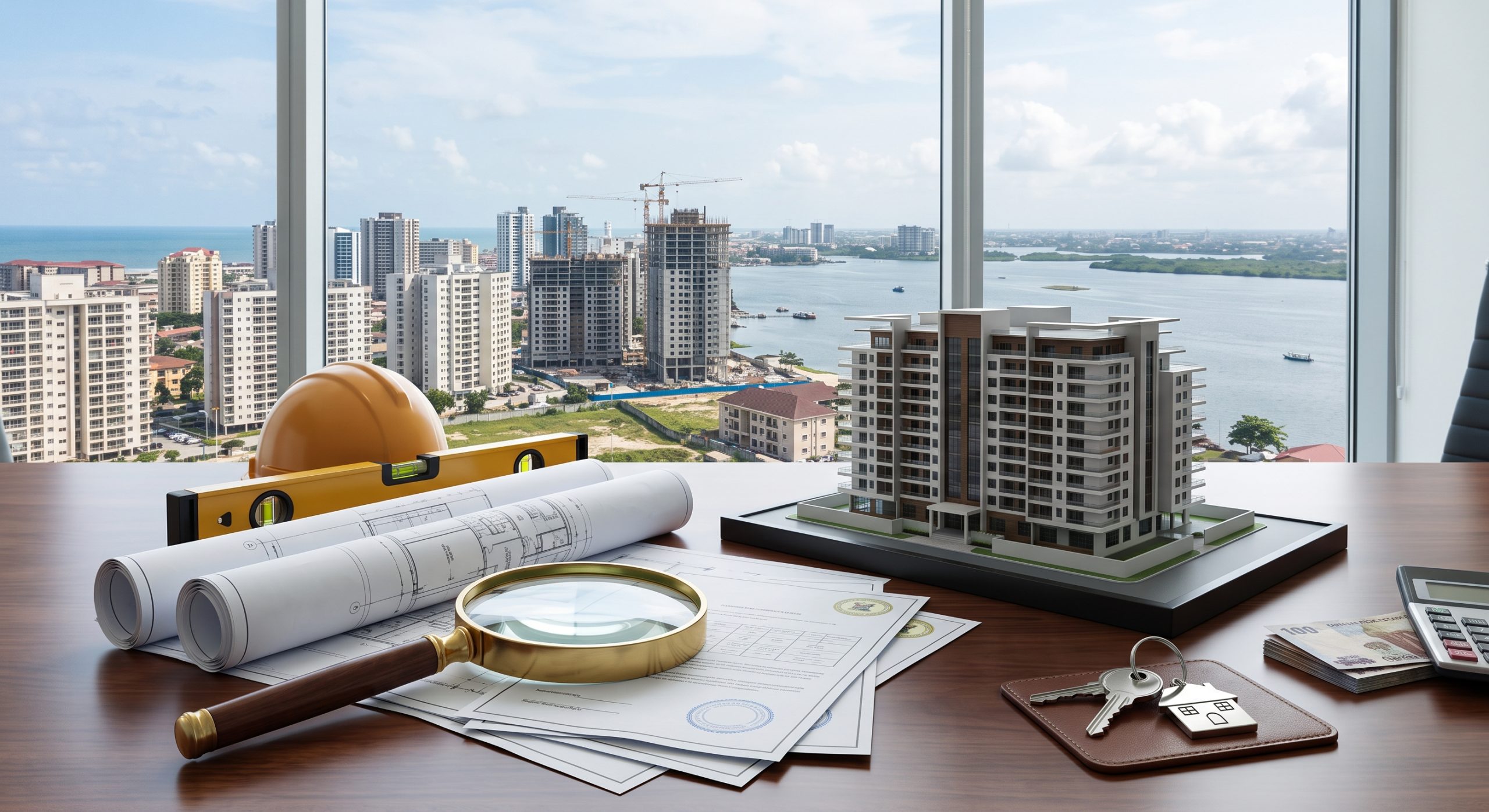
Oniru is now one of the most recognised property addresses in Lagos. The neighborhood is bounded by Victoria Island, Lekki and Ikoyi and offers proximity to offices, schools, hospitality, retail and Atlantic waterfront. But that convenience comes at a price, and makes due diligence a must.
The first task is to define what you are buying. Oniru is not a uniform market. It includes older residential streets, gated developments, serviced apartments, commercial buildings and new high-rise projects. Prices and rental prospects can differ sharply according to title, road access, construction quality, power supply, security, views and the reliability of estate management.
A property near main roads could mean easier commuting for owner occupiers but more traffic and noise. Waterfront or low lying areas may offer better views but buyers will need to check drainage, flood history, corrosion and insurance implications. Lagos coastal environment is very tough on facades, lifts, generators and air conditioning systems. It costs a lot to keep things repaired.
Land dealings in Lagos are regulated by the Land Use Act, 1978. The buyer should also verify the root of title of the property and view the relevant Certificate of Occupancy, Governor’s Consent, registered survey plan and any assignment documents. The Lagos State Lands Registry records should be checked and not relied upon on photocopies given by an agent or seller.
Planning permission is another matter. Just because a title is valid doesn’t mean a building was legally built or is being legally used now. Buyers should watch out for planning and building approvals, evidence of compliance with Lagos State planning rules and confirmation that the property is free from any outstanding notices or government acquisition problems. Lagos State Physical Planning is one of the important verification points.
The financial assessment should consider more than the purchase price. Ask for a written list of service charges, sinking fund payments, parking charges, utility arrangements, diesel or generator costs, management charges and any major works planned. For investment property, compare expected rent to comparable, actually rented properties, not advertised asking rents. Provide for vacancy. Taxes, upkeep, agency fees and furniture
And finally, visit the building at different times of day. Test water pressure, lifts, backup power, drainage, mobile reception, fire exits and security procedures. Talk to residents if possible.