

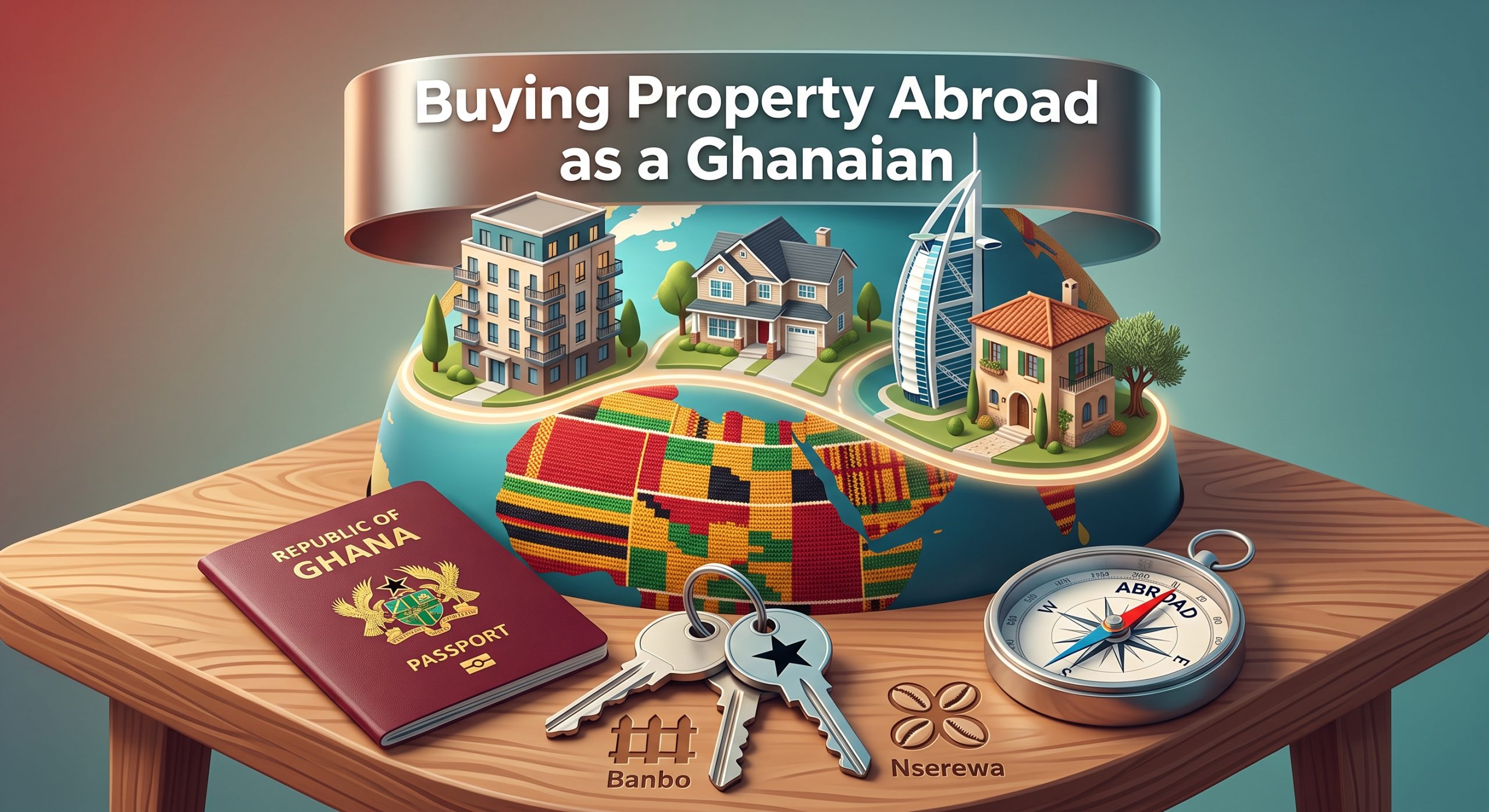
For many Ghanaians, buying property abroad is an investment and a family security strategy. But it is not a requirement because if you hold a Ghanaian passport you will be able to buy land, get a mortgage, or live in the country where the property is located.
The first rule is simple: ownership, residence, and citizenship are separate legal issues.
Start with the country, not the apartment
Foreign ownership rules differ a lot. Countries like New Zealand, Thailand, and Canada heavily restrict foreign ownership of land or residential property. In general the United Kingdom does allow non-residents to buy property.
For example, in the United Arab Emirates, foreign ownership is allowed in some freehold areas, but not in all the emirates.
And rules can change fast, too. For example, Canada’s federal ban on many purchases of residential property by non-Canadians has been extended to January 1, 2027, with exemptions.
But those considering buying should check with the relevant land registry, investment authority, or consulate, not just take an agent’s word for it.
Buying property typically does not grant you a visa. Residence-by-investment schemes are a specific type of immigration scheme, and a number of European countries have excluded real estate from their qualifying investment routes.
Budget at constant prices
And the purchase price is only the beginning. Buyers may have to pay transfer taxes, stamp duty, legal fees, valuation fees, registration costs, estate agent commission, insurance, service charges and property management fees. There could be additional taxes for non-resident buyers. For example, in the UK, non-UK residents purchasing residential property may incur a surcharge on top of the standard Stamp Duty Land Tax.
In some markets you can get a mortgage but non-residents usually have to pass tougher affordability tests, pay bigger deposits and pay higher interest rates. Lenders will want proof of income, assets, credit history and the legal source of funds.
In Ghana, the buyer must obtain a written decision from the mortgage lender before paying the non-refundable deposit.
Be clear in your money movement
Funds should be transferred through regulated banks and recorded with source of funds. Ghana’s foreign-exchange and anti-money-laundering requirements, as well as the receiving country’s banking rules, can affect how money is transferred.
Keep sale agreements, tax records, bank statements and proof of income. Avoid informal transfers or cash arrangements: they can delay completion and create serious legal and tax problems.
Do proper due diligence
Appoint an independent lawyer in the destination country, one who does not represent the seller or estate agent. The lawyer should verify title, planning permission, outstanding debts, zoning, building compliance, lease length, service charges and any restrictions on renting or resale.
For apartments, examine the owners’ association accounts and planned major works. A local surveyor should inspect the building; glossy photographs are not a structural report.
Understand tax after completion
Rental income, capital gains, inheritance and annual property taxes may arise in both countries.
Ghanaian tax residents may have Ghana tax obligations on foreign income, subject to applicable rules and foreign-tax relief.
Tax treaties, where available, can affect the final bill. Obtain advice from a Ghana-qualified tax professional and a tax adviser in the property’s country.