

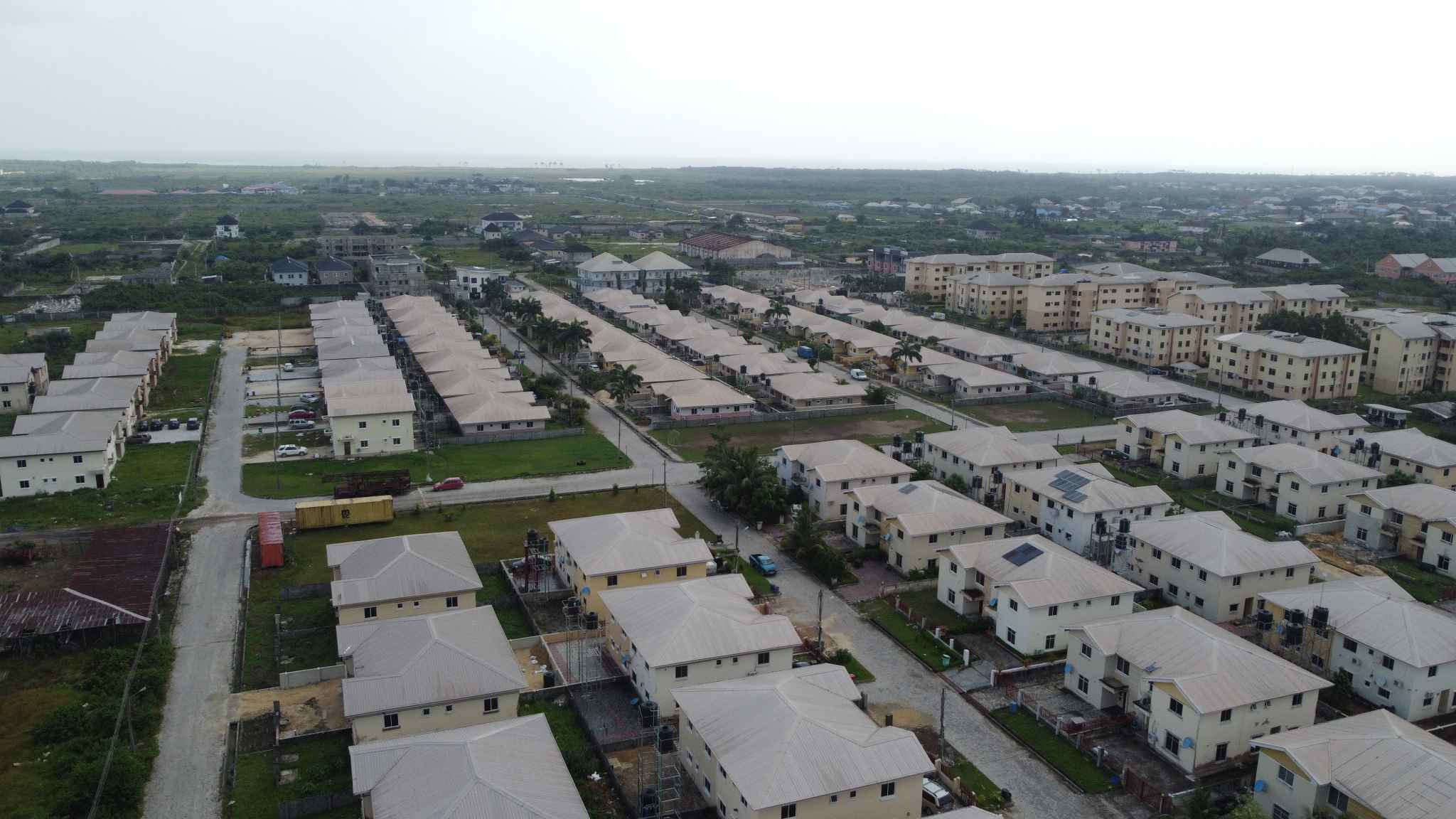
There is a point along the Lekki–Epe corridor where Lagos begins to loosen its grip. Traffic thins, at least by Lagos standards, plots become larger, and the skyline gives way to palms, wetlands and low-rise housing. This is Abijo GRA, a rapidly developing residential district in Ibeju-Lekki.
Abijo’s appeal is about control: controlled access, quieter streets, and the promise of a more ordered domestic life. Its gated communities appeal to families seeking space away from the density of Lekki Phase 1, Ikoyi and Victoria Island, but close to Lagos’s commercial and educational hubs.
The district is located on the Lekki–Epe Expressway, east of Sangotedo and west of Lakowe. Its chief virtue is its location. The expressway links Abijo to Ajah and Victoria Island, while the wider corridor links it to the Lekki Free Zone, Lekki Deep Sea Port and Dangote Refinery, major projects reshaping the economic geography of eastern Lagos.
And the infrastructure story is both interesting and incomplete. Population growth has been followed by better roads, new estates, shopping facilities and expanding telecommunications. But residents still face peak-hour gridlock, drainage problems, and patchy public infrastructure. Many estates rely heavily on private management rather than municipal provision for electricity, water supply, waste collection and internal road maintenance.
“GRA” is a term often used in Lagos property marketing, but Abijo’s experience is less one of a singular, uniform government-planned neighborhood than of a patchwork of gated developments of various standards. Buyers and tenants need to check the title documents, drainage and power arrangements, service charges for the estate, security protocols and reliability of access roads, not just the name on the signboard.
But for families the argument is compelling. Compared to similar properties nearer to the traditional business hubs of the island, homes typically provide more space. Estate layouts offer playgrounds, communal spaces and a level of pedestrian safety difficult to find on busy urban streets. Supermarkets, schools, healthcare facilities and recreational amenities are available in nearby Sangotedo and the wider Lekki axis, although residents may still travel west for specialist medical care, premium retail or corporate offices.
Abijo GRA, right now, occupies a valuable middle ground: close enough to Lagos’ next economic frontier, but far enough that family life feels intentional. Its greatest strength is not luxury, but livability, the chance to trade urban pressure for gates, greenery and a little more breathing room.