

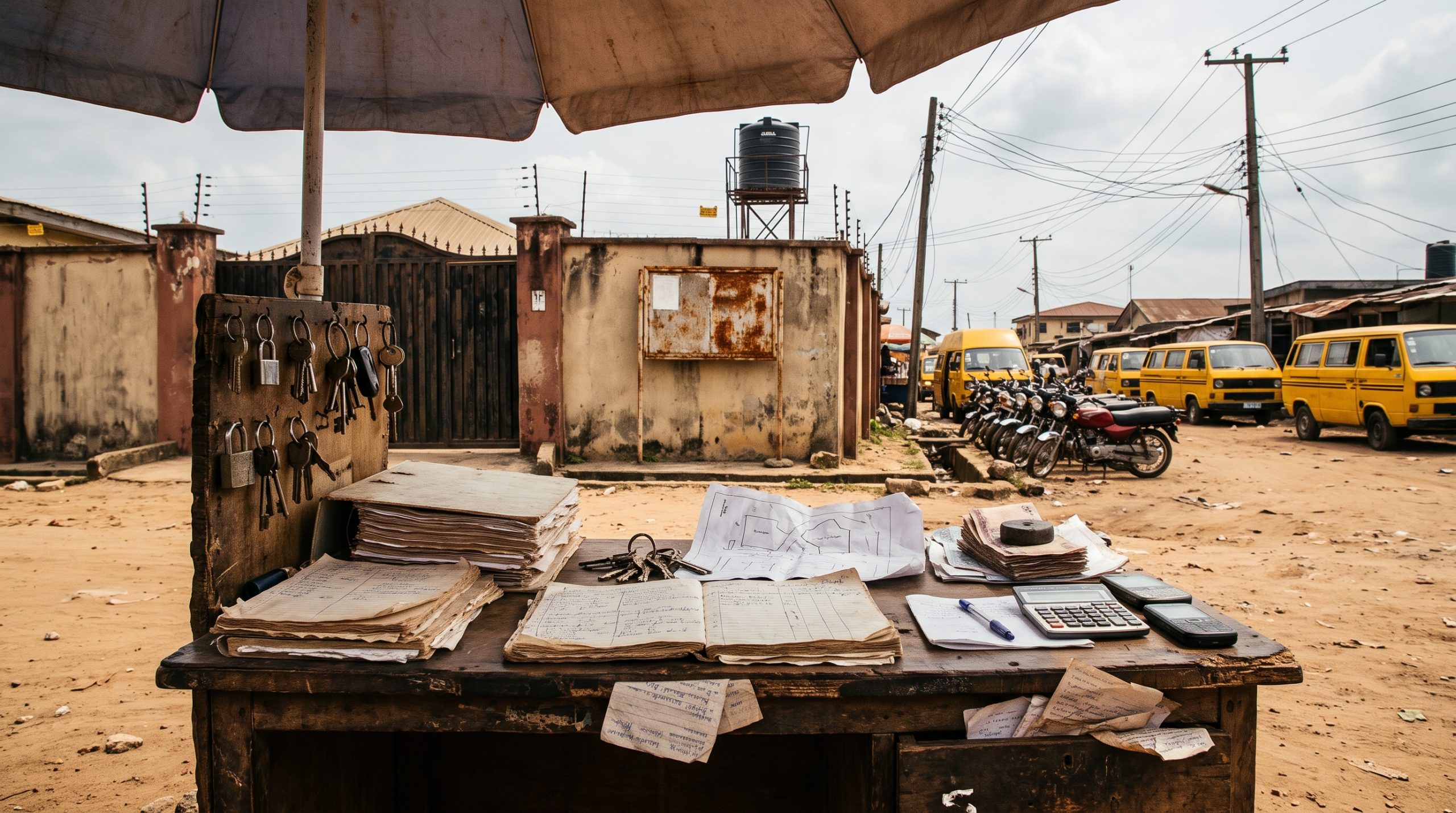
In Nigeria, finding a home often begins with a phone call to an agent and ends with another fee paid to one.
This dependence is not merely a matter of convenience. It demonstrates how difficult, opaque and risky the country’s property market remains for ordinary buyers and tenants.
Nigeria has no central, universally accepted database of property detailing what’s on offer, who owns it, its cost and whether the title is clean. Property listings are found on social media, informal networks, roadside signs and property websites. Many are out of date, duplicated or deliberately misleading. Agents bridge that information gap.
They also give access. In Lagos, Abuja and other fast-growing cities, a lot of the available homes don’t even make it onto a formal public listing. Landlords often employ agents to find tenants, collect inquiries and screen potential occupants. But buyers rely on agents to search for homes in areas they may not be familiar with, negotiate with owners and schedule inspections.
The deeper reason is legal complexity. Nigeria’s Land Use Act of 1978 vested land in state governors, making documentation and transfers dependent on state-level processes. Buyers may need to verify a Certificate of Occupancy, survey plan, deed, governor’s consent or other title documents. The relevant records can be incomplete, difficult to access or slow to verify. In practice, agents often become the first line of guidance, although they are not substitutes for independent lawyers or official searches.
The stakes are high. The perennial problems are fraudulent listings, multiple sales of the same property, fake documents and undisclosed family or community claims. The buyer’s requirement is therefore not just to find a house, but to establish that the person offering it has the right to sell or let it. Trust is a rare commodity and personal recommendations are of great importance.
Finance further supports the agent’s role. Mortgage lending is still small relative to the size of the economy and most transactions take place off a transparent, institutional marketplace. Nigeria’s housing shortage, affordability constraints and limited access to housing finance have been repeatedly identified by The World Bank as structural challenges. Government estimates have placed the housing deficit at over 20 million units, though the exact number is disputed because the measurement methods are different. Whatever the number, demand for affordable homes that are delivered in a formal manner far outstrips supply.
Regulation is getting better, but unevenly. For instance, Lagos State set up the Lagos State Real Estate Regulatory Authority to register practitioners and discipline misconduct. Other states have less robust enforcement arrangements. However, registration alone cannot create a reliable record of title or a national system of listings.
Technology may one day break the agent’s monopoly. Better transaction data, online identity checks, electronic land registries and platforms for digital property could help make prices and ownership more transparent. However, technology alone cannot solve problems of defective titles, informal development or weak enforcement.
Until those foundations are improved, Nigerian agents will never be more than mere intermediaries. They are the informal infrastructure of the market, useful because the formal one is still under construction.