

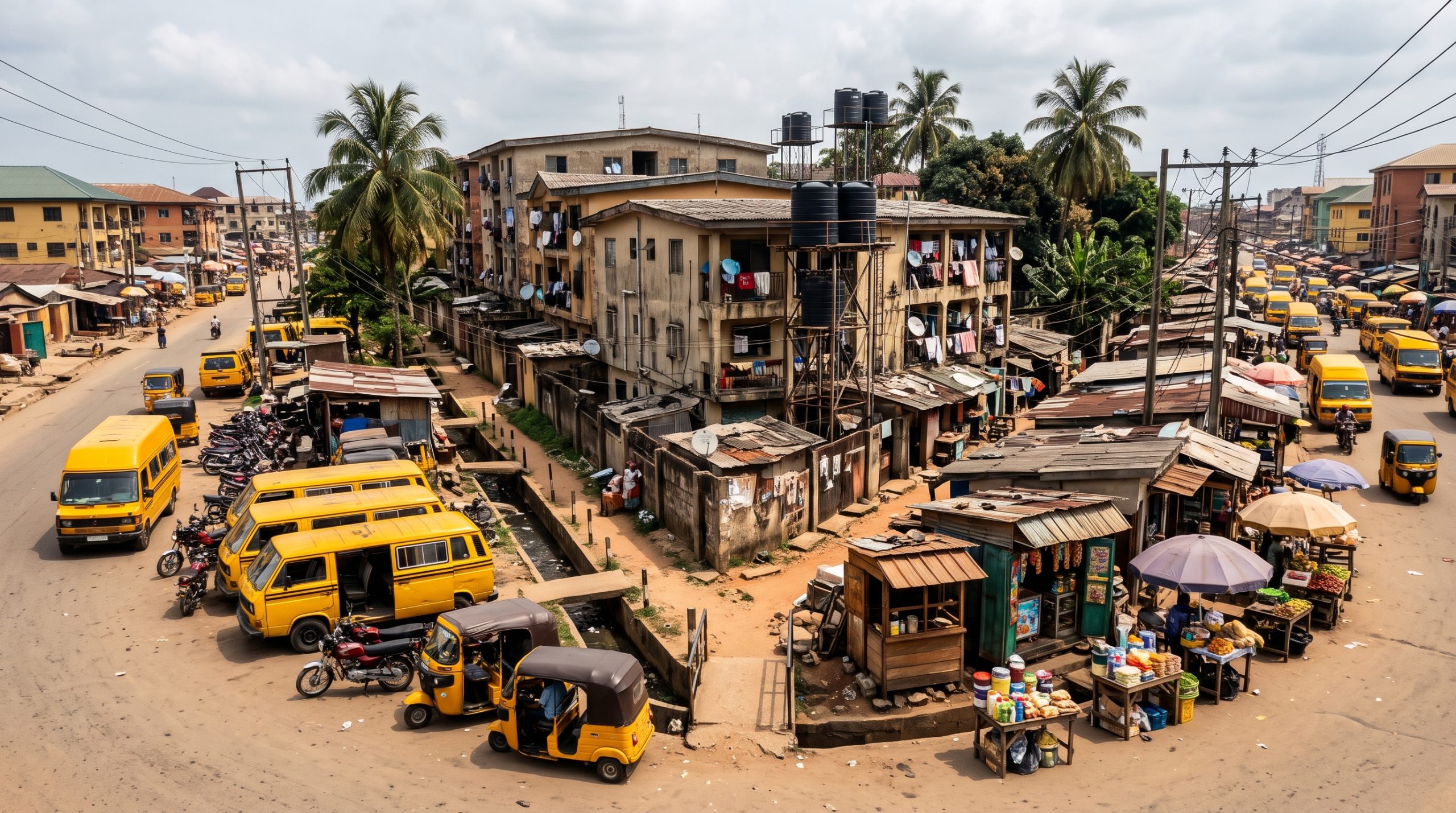
In Lagos, a car is a practical thing to own rather than a symbol of prestige. Without one your quality of life is very location dependent. The best neighborhood is not always the most trendy or the most affordable. It’s the one that gets you close to good public transit, everyday essentials and, hopefully, your job.
The transport network of Lagos is improving but still patchy. The Lagos BRT Bus Rapid Transit system runs through major corridors such as Ikorodu Road, Oshodi, Mile 12 and Lagos Island. Blue Line rail connects Mile 2 with Marina while Red Line connects parts of the mainland with Oyingbo. Ferries offer a handy alternative across the lagoon, though routes and timetables may be subject to weather and operational changes.
Yaba: Ideal for being connected
For residents without cars, Yaba is one of the best options. It is near the Red Line’s Yaba station, accessible to busses along Herbert Macaulay Way and Ikorodu Road and relatively walkable by Lagos standards. The area is also home to supermarkets, restaurants, banks, schools and a large student and technology community.
Its major disadvantage is congestion especially around Tejuosho, Jibowu and University of Lagos axis. That said, Yaba offers some of the best balance of access and amenities for professionals who work on the mainland or commute to Lagos Island in the city.
Surulere: Central and practical
On the mainland, Surulere is still a safe bet. It is served by busses and danfos on major roads like Adeniran Ogunsanya, Ojuelegba and Western Avenue. Residents can reach Yaba, Ikeja and Lagos Island without having to travel across the whole city.
The neighbourhood is established, lively and rich in everyday conveniences. However, transport can become painfully slow during peak hours, especially around Ojuelegba. Choose a home within walking distance of a major road but not directly on one, where noise and traffic are constant.
Ikeja: Best for airport and mainland workers
For anyone working in Ikeja, Alausa, Maryland or near the airport, living in Ikeja can eliminate one of Lagos’ most punishing commutes. The Red Line serves the wider Ikeja corridor, while buses and taxis connect the neighbourhood to other mainland districts.
Ikeja is more expensive than many mainland areas, but its concentration of offices, malls, hospitals and restaurants reduces the need for long journeys. GRA is quieter and more polished; Allen Avenue and Opebi offer more activity but can be noisier and costlier.
Lagos Island and Marina: Best for central business districts
If your job is on Lagos Island, Marina, Victoria Island or Ikoyi, living nearby may be worth the premium. Marina is now connected to the Blue Line and has access to buses and ferries. Lagos Island also offers dense retail, markets and services within relatively short distances.
Victoria Island and Ikoyi are less consistently served by mass transit, and many residents still rely on ride-hailing services. For a car-free lifestyle, choose the edge of Victoria Island near reliable bus routes, or live closer to Marina and use short rides when necessary.
The rule that matters most
Before signing a lease, test the journey at 7:30 a.m. and 5:30 p.m. Check the walking route, flood risk, street lighting and distance to the nearest BRT, rail station or ferry terminal. In Lagos, living three kilometres from work can be easier than living 20 kilometres away but only if the transport corridor works.