

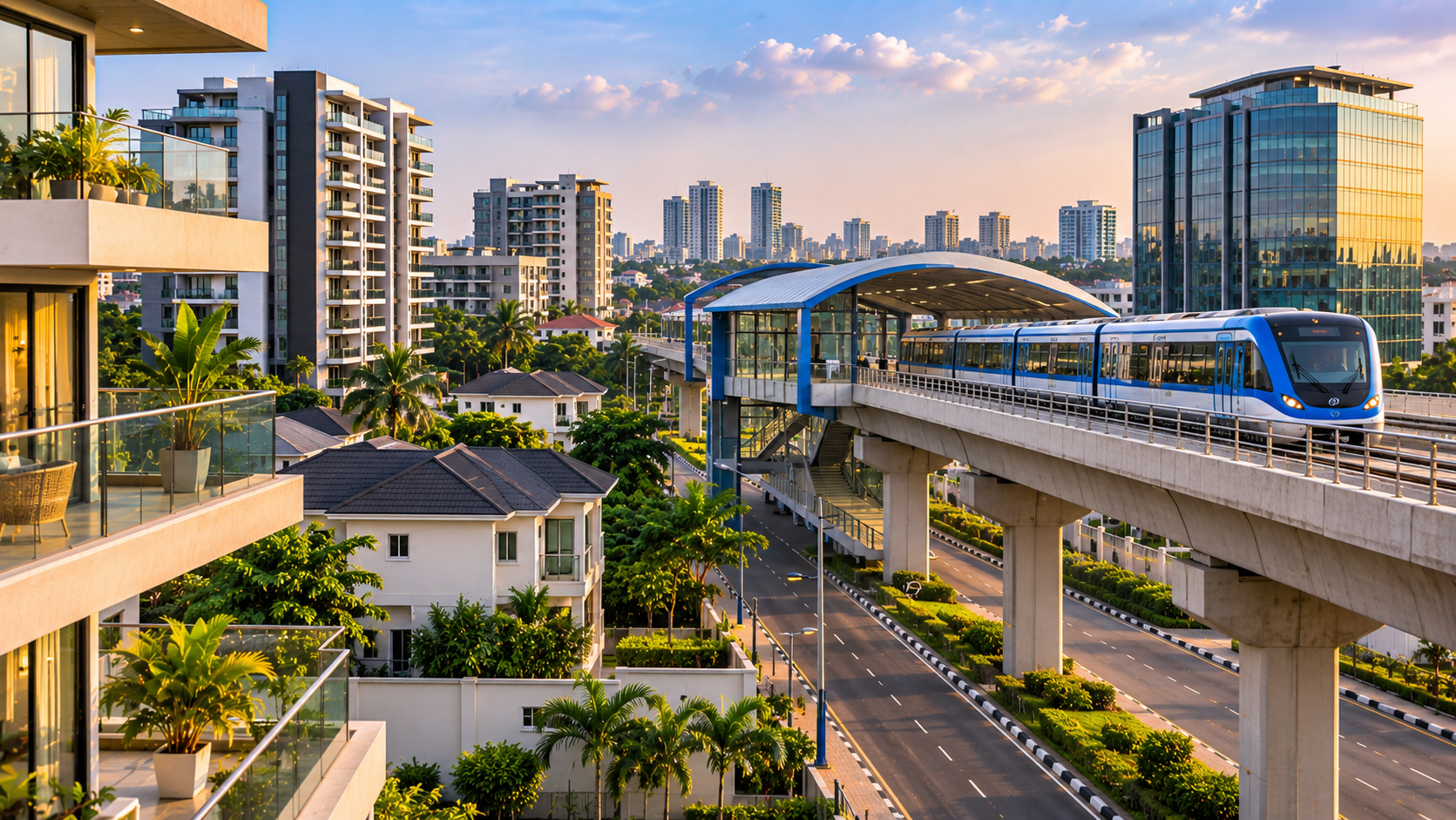
Lagos’s Blue Line has transformed the housing conversation along the mainland-Island axis. The first phase is about 13 kilometers from Mile 2 to Marina with stations at Mile 2, Alaba, Orile Iganmu, National Theater and Marina. It began passenger service in September 2023 and is the first rail line in Lagos to span the lagoon.
The problem for residents is not just that they live “near the Blue Line.” The question is whether the travel time savings are worth the cost, density and trade-offs of each neighborhood.
Marina: convenience is expensive
Marina is the main commercial district of Lagos and the eastern end of the line. Living here means that offices, banks, ferry services and major bus routes are all within easy reach. The downside is supply. Marina is overwhelmingly commercial so residential options are limited to serviced apartments, converted office buildings and a handful of high-end flats.
It is the top choice for professionals who like a short commute and can pay higher rents. It is less suited to families looking for large, quiet accommodation or a wide range of local amenities.
National Theater & Iganmu older, mixed use and central
The National Theater and Orile Iganmu stations are located within an existing urban corridor of warehouses, workshops, markets and older residential streets. Rents are more affordable than in central Lagos and the area is well connected to Surulere, Yaba, Apapa and mainland.
But prospective renters should do their homework on buildings. Ask about power backup, water supply, drainage, parking and security, and not just distance from the station. A property advertized as “close to the Blue Line” might still require a bus, motorcycle or long walk to the platform.
Alaba and Mile 2: more space, more congestion
The Alaba and Mile 2 corridor offers a broader range of lower- and middle-income housing, including older flats and compounds. Mile 2 is also a major road-transport interchange, making it practical for commuters travelling beyond the rail corridor.
The trade-off is intensity. Traffic around markets and transport hubs can be severe, while noise, flooding and infrastructure quality vary sharply from street to street. Festac Town and parts of Amuwo-Odofin are nearby alternatives for residents who want more organised layouts, though they may require a feeder trip to the station.
The sensible strategy: live near, not necessarily beside, the rail
The Blue Line is most valuable when paired with reliable “first- and last-mile” transport. A home within a short walk of a station offers the clearest benefit, but a well-priced property a few kilometres away may provide better space and still work if buses, taxis or personal vehicles can connect reliably.
Before signing a lease or buying, test the journey during peak hours. Confirm the station entrance, ticketing arrangements and evening service. Also check the title documents, flood history and actual travel time. LAMATA’s route map and service notices should be treated as the definitive sources, especially as the planned extension westward from Mile 2 remains separate from the currently operating section.