

In Lagos, owning a car is often a matter of survival. Distances are vast, traffic is legendary, and the public transport system patchy. But for many residents, life without a private car is not only possible, it’s normal.
The question isn’t so much if you can get around Lagos without a car but where you live and where you work and how much uncertainty you can tolerate.
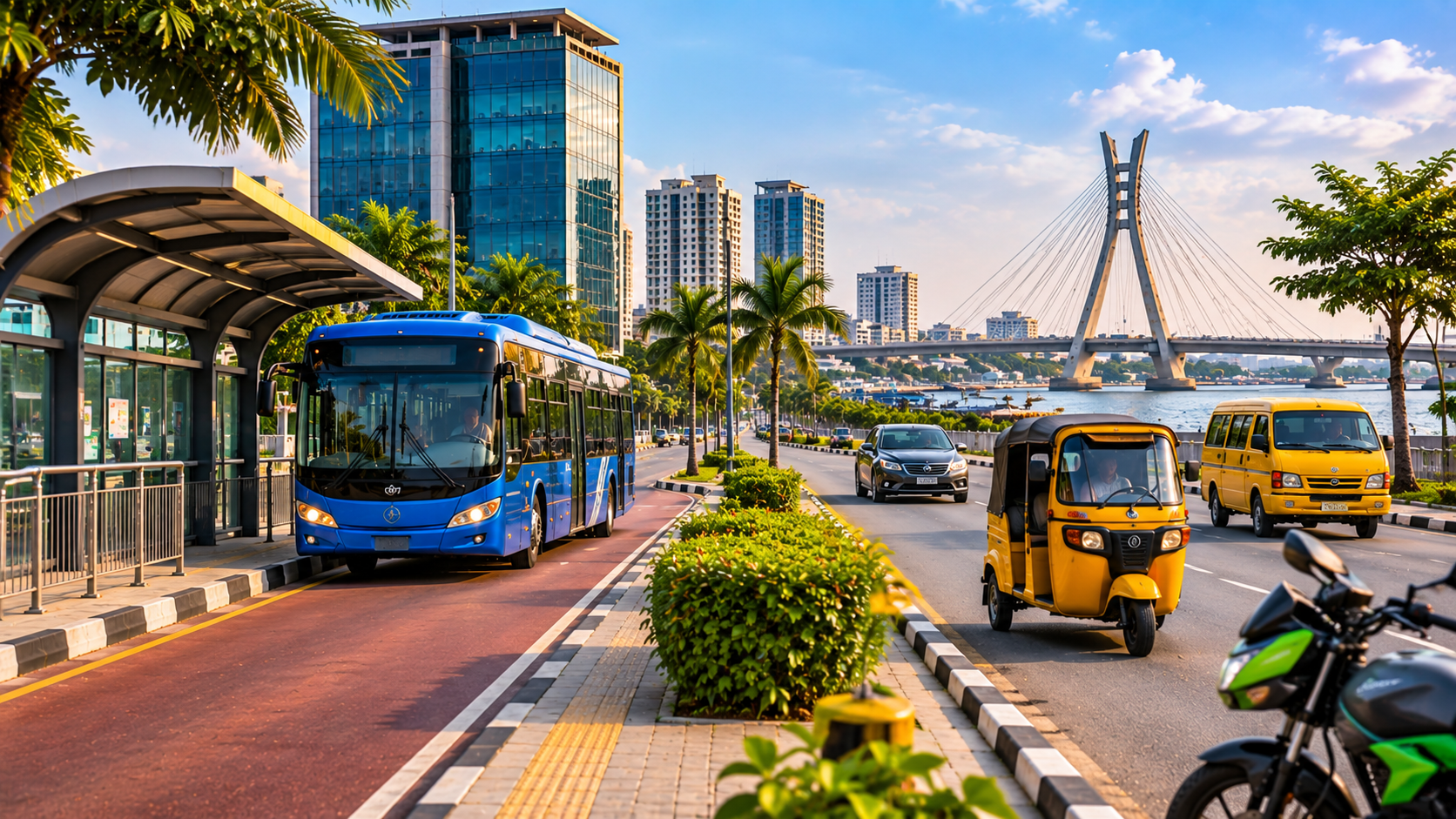
Lagos has several levels of public transportation. Shorter or less formal routes are filled by Keke (three-wheelers), motorcycles and ride-hailing services, with ubiquitous yellow danfo minibusses reaching almost every major corridor. Budget and versatile but comfort, safety and reliability vary a lot. Regulations also vary by local government and corridor; motorcycles and tricycles have been banned on major roads in parts of the metropolis.
The more organized option is the Bus Rapid Transit system, which is managed by the Lagos Metropolitan Area Transport Authority (LAMATA). BRT, launched in 2008, has become a backbone of the city’s public transport network, especially on routes such as Ikorodu Road and Lagos–Abeokuta Expressway. But busses can still be crowded and queues long, though dedicated lanes can make a big difference at peak traffic times.
Rail is getting better, but it’s not a city-wide solution yet. The Lagos Blue Line, the first phase of which runs from Mile 2 to Marina, began passenger operations in September 2023. The Red Line linking the mainland to Agbado commenced phased operations in 2024. These services are a faster option on some routes, but most commuters still require a bus, taxi or walk at either end of the trip.
Water transport is another practical but underutilized option. Lagos State runs ferry services connecting the mainland to places like Victoria Island and Ikoyi. Ferries can be an alternative to congested roads but the schedule, weather, fares and access to terminals is important. They’re no replacement for a compact rail network.
For a car-free resident, location is decisive. Living near a BRT stop, rail station, ferry terminal or a cluster of daily needs can turn a punishing commute into a manageable one. Areas with shops, schools and services within walking distance are far easier than estates designed around driving.
Walking, however, is not always simple. Heat, flooding, poor pavements, open drains and unsafe road crossings can make short distances exhausting or dangerous. A realistic car-free routine usually combines walking with buses, rail, occasional ride-hailing and careful trip planning.
So, yes: living in Lagos without a car is possible. It is cheapest and most practical for people whose homes and jobs align with the city’s transport corridors. But it requires flexibility, and a willingness to spend time navigating a system that is expanding faster than it is becoming seamless.