

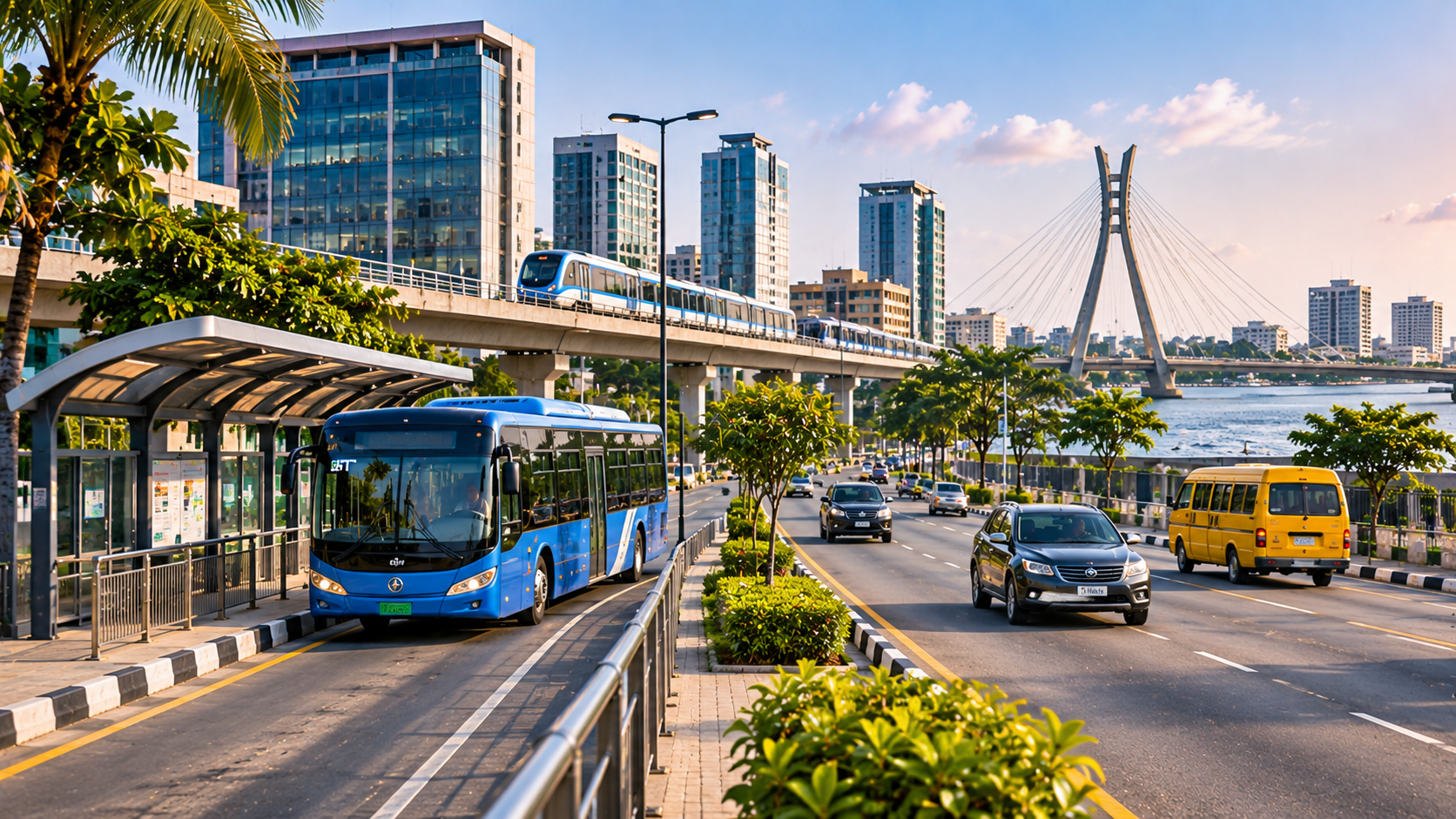
In Lagos, closeness is not equal to accessibility. A neighborhood can be close on a map but two hours’ drive by road. In the best connected districts there is a mix of rail, BRT, busses, ferries and the traditional “danfo” services.
Marina & CMS
Lagos’s central waterfront is the city’s multi-modal transport hub. Marina is the western terminus of the Lagos Blue Line, the city’s first modern urban rail line. The 13-kilometre first phase connects Marina to Mile 2, passing stations such as National Theater, Orile-Iganmu and Suru-Alaba.
Commuters from CMS and Marina can also take BRT services, yellow busses, taxis and Lagos Ferry Services routes to waterfront communities like Ikorodu and Badore. The location is very suitable for workers in Lagos Island, Victoria Island and parts of Lekki, though the roads are still badly congested at peak times.
Yaba
Yaba is one of the areas most served by transport in Nigeria. It is on the Red Line that connects Agbado corridor to Oyingbo with a station in Yaba. The district is served by busses and danfos to Lagos Island, Surulere, Maryland, Ikeja and the mainland suburbs.
Its proximity to major arteries such as Herbert Macaulay Way and the approaches to the Third Mainland Bridge makes Yaba one of the most useful bases for commuters on the mainland. The downside is congestion. Busses fill up quickly around Tejuosho and Yaba markets, especially at peak hours.
Ikeja
As Lagos’s administrative and commercial capital, Ikeja is served by several transport systems. The Red Line has a station in the district, while Ikeja Bus Terminal provides formal bus connections to different parts of the metropolis. The neighbourhood also sits near the airport corridor and major routes to Agege, Maryland, Ojota and Oshodi.
For frequent travellers, Ikeja’s advantage is not a single route but the number of alternatives available when traffic disrupts one corridor. The area is also a practical base for airport access, though journey times vary sharply with traffic on the Airport Road.
Oshodi
Oshodi is one of Lagos’s most important transport interchanges. It connects the mainland to the airport corridor, Apapa and the eastern suburbs through BRT, standard buses, danfos and the Red Line, which serves the Oshodi area.
The Oshodi Transport Interchange consolidated several bus operations under one large facility, improving passenger movement compared with the former roadside loading system. It remains busy and can be overwhelming, but few locations offer as many onward connections.
Mile 2
Mile 2 is the western gateway to Lagos’s mainland transport network. It is the Blue Line’s eastern terminus and a major BRT and bus interchange for commuters from Festac, Amuwo-Odofin, Okota and Badagry-bound corridors.
Its strength is direct access to rail and road transport; its weakness is congestion around the interchange and the heavy commuter volumes moving towards Lagos Island each morning.