

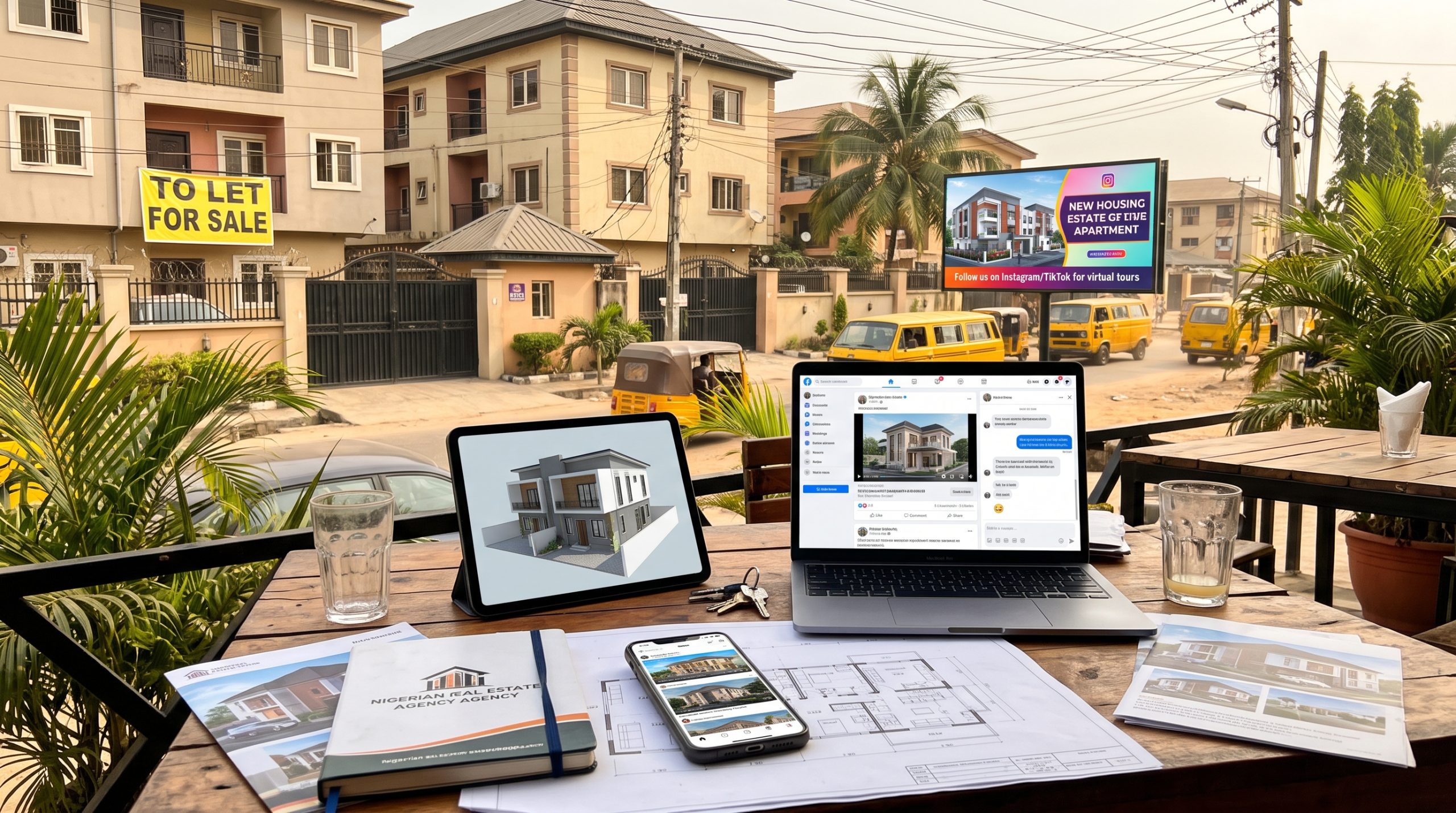
The signboard is no longer the first port of call for Nigeria’s real estate agents. Increasingly it is a smartphone screen.”
The DataReportal report, Digital 2024: Nigeria, indicated that Nigeria had around 103 million internet users and 36.8 million social-media user identities as of January 2024. That audience has made Instagram, Facebook, TikTok and WhatsApp powerful property-marketing channels—and has changed what clients expect from agents.
Now a property can be photographed, filmed and marketed to thousands of potential buyers or tenants in minutes. Short videos provide virtual tours of homes in Lagos, Abuja, Port Harcourt and growing markets like Ibadan and Uyo. WhatsApp means agents can share listings, answer questions and set up viewings without the cost of a conventional office campaign.
The entry barrier has been reduced. All an agent needs to vie for attention with established firms is a smartphone, reliable data connection and basic marketing skills. It has also put personal branding at the center of the business. It’s not just about selling properties anymore for agents, it’s about selling credibility, local knowledge and responsiveness. Regular video explainers on topics such as neighborhoods, title documents, service charges and financing will generate trust much faster than a printed brochure.
But verification is not the same as visibility.
Social media has made it easier for unlicensed operators and fraudsters to duplicate legitimate listings, advertize properties they don’t own or collect inspection and “commitment” fees and then disappear. Good images can disguise bad access roads, disputed ownership, unpaid ground rent or the true state of a property. Viral posts are not proof of ownership in a market where land and title disputes remain a risk.
The most professional agents are responding by making due diligence part of their online offer. They publish clear agency identities, physical addresses, inspection terms and documentation requirements. They use dated videos, disclose whether a listing is direct or co-brokered, and explain the difference between an agent’s marketing claim and a formal title search. In Lagos, prospective clients can also check practitioners through the Lagos State Real Estate Regulatory Authority (LASRERA), which regulates real estate practice in the state.
The shift is also producing better data. Digital enquiries reveal which locations, price bands and property types attract attention. Agents can track views, clicks and messages, then adjust campaigns instead of spending blindly on newspaper adverts or roadside signs. Yet engagement metrics can mislead: thousands of views do not guarantee qualified buyers, completed transactions or secure titles.
Social media has not replaced the core work of real estate agency—inspection, negotiation, documentation and professional judgment. It has moved the front door online. In Nigeria’s increasingly mobile property market, the agents most likely to succeed will be those who combine digital reach with verifiable information and disciplined due diligence.