

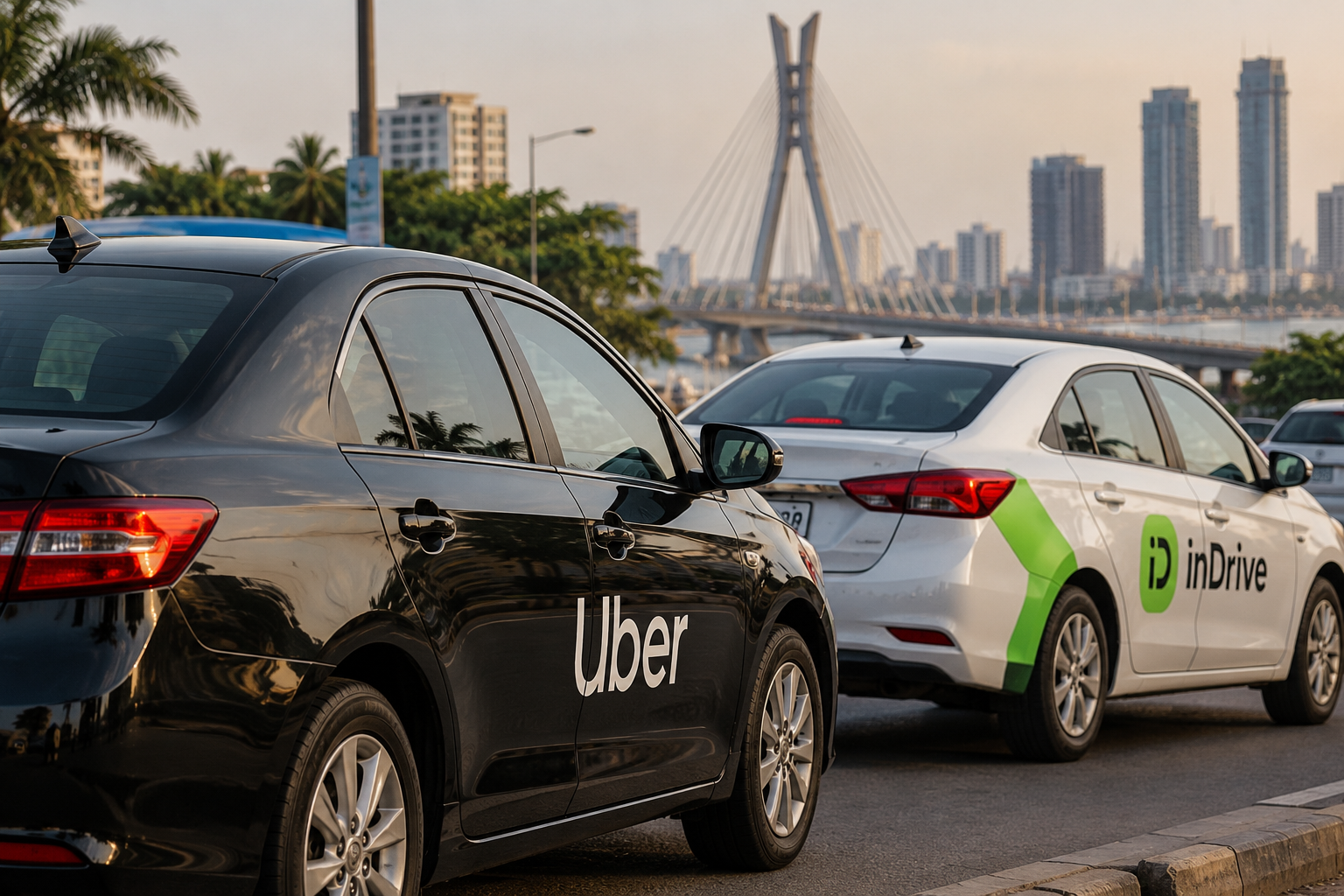
Lagos has no ride-hailing map. The metropolis is home to Bolt, inDrive and LagRide, but the services don’t have the same driver networks, pricing models or coverage. Availability can fluctuate based on the time of day, traffic conditions, and driver supply, especially outside the city’s heaviest traveled corridors.
Bolt: the largest mainstream network
Bolt is the simplest of the three to locate across metropolitan Lagos. It cuts through major mainland districts like Ikeja, Yaba, Surulere, Gbagada and Maryland as well as the Island, Lekki, Victoria Island and parts of Ajah. The densest population and commercial activity receives the most complete coverage.
Formerly known as Taxify, the company launched in Nigeria in 2016 and currently offers regular categories of cars in Lagos. The app estimates passenger fares before they book and connects them with nearby drivers. The final cost can change based on route changes, waiting time, and demand.
Bolt is usually the best choice for a cross-city trip, but during peak congestion a driver may not want to accept long trips. Airport pickups and drop-offs are available, but at Murtala Muhammed International Airport, passengers are advised to follow the app’s designated pickup instructions, rather than assume drivers can stop anywhere.
InDrive: more options, negotiated prices
InDrive covers the whole urban area of Lagos, including both the mainland and Island districts, but its coverage can seem less reliable than Bolt’s as it relies on drivers selecting which requests they want to accept.
Its main feature is price bargaining. A passenger proposes a fare and drivers can accept, reject or counter. This can be useful for longer trips or journeys at unusual hours, when a driver may agree to a price that differs from the platform’s initial market rate. It also means the cheapest offer is not always the fastest to secure.
The app is particularly attractive to passengers who want more control over pricing. However, negotiated fares should not be confused with a guaranteed lower price: during rain, rush hour or periods of scarce supply, drivers may demand more.
LagRide: Lagos-focused and more structured
LagRide is the Lagos State-backed option. Launched in 2022, it was designed specifically for Lagos rather than as part of a nationwide ride-hailing network. Its service is concentrated in metropolitan Lagos, with vehicles most visible along high-demand routes and around major residential, business and transport hubs.
Unlike inDrive, LagRide does not operate primarily through passenger-driver bargaining. The app displays the applicable fare under its service structure, giving users more price certainty. Its fleet and operating footprint are smaller than Bolt’s, so a booking may take longer or be unavailable in peripheral areas such as parts of Epe, Badagry or the far edges of the state.