

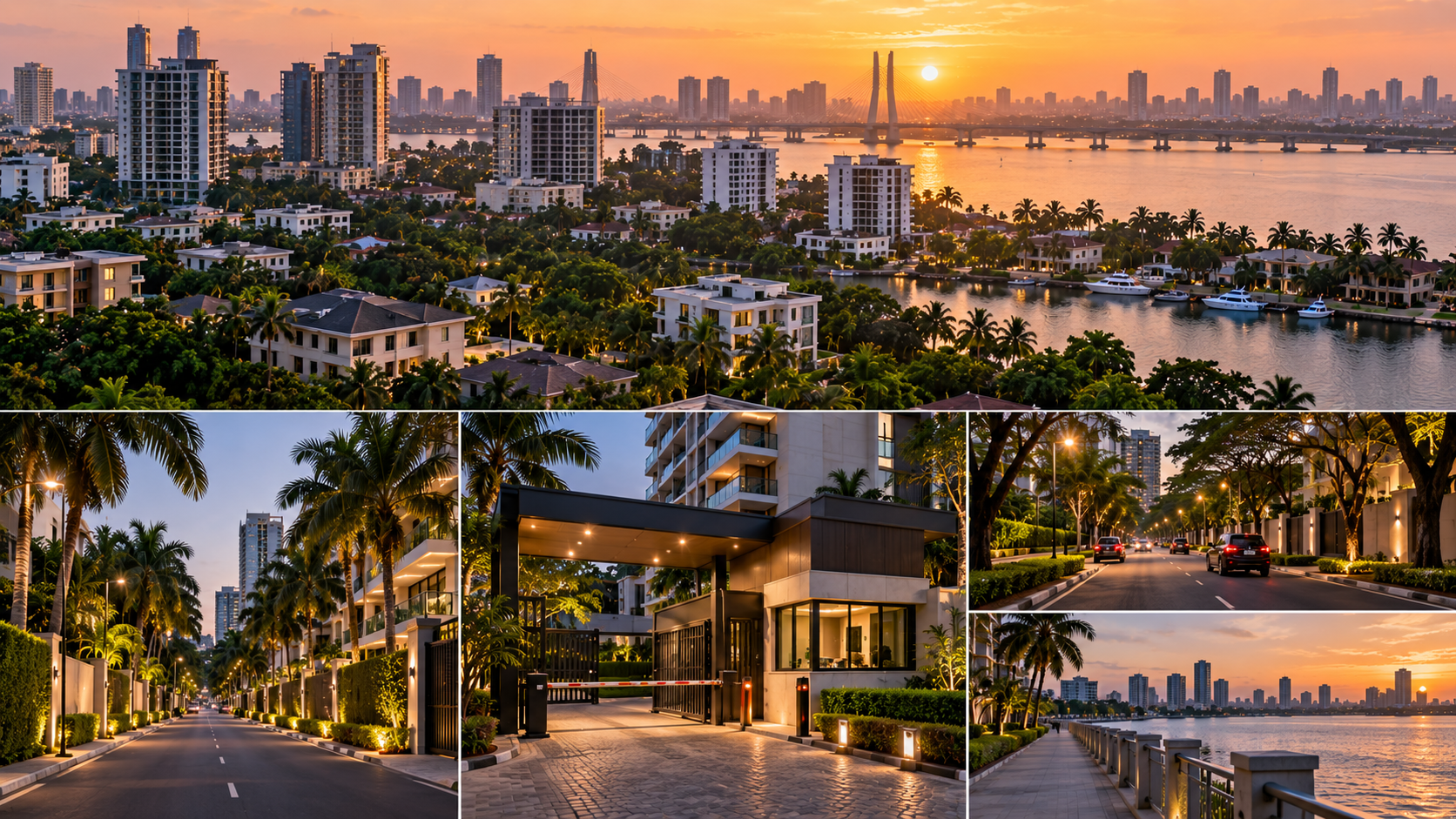
Ikoyi is one of Lagos’s most secure, and most closely watched neighborhoods. It is also a place where wealth, traffic, inequality and urban risk sit side by side. The short answer is yes, Ikoyi is relatively safe by Lagos standards, but it is not risk-free.
The peninsula houses embassies, private clubs, luxury hotels, high-end apartment blocks and some of Nigeria’s wealthiest residents. Many streets are patrolled, buildings have access control and you have private security firms all over the place. Those layers of protection make Ikoyi feel much safer than many other parts of Lagos, particularly after dark.
But perception can be deceptive. There is no reliable public crime rate for Ikoyi, as Nigeria’s official crime data is not comprehensive and is rarely divided by neighborhood. Travel advisories issued by foreign governments generally advise increased caution in Lagos due to robbery, kidnapping, scams and violent crime. These wider risks are not excluding Ikoyi.
Robbery in the streets is still an issue, especially if you are carrying a phone or a bag, if you are on a quiet road or if you are alone at night. Carjacking and “one-chance” robberies, in which criminals prey on victims on fake taxis or public transport, are also reported risks throughout Lagos. Visitors should use reputable ride-hailing services or trusted drivers, keep vehicle doors locked and not display valuables.
Kidnapping is a more serious national concern, but the risk varies sharply by location and circumstance. Well-known residents and expatriates may draw attention, and homes that are not well protected and routines that can be predicted may increase vulnerability. The security-minded residents often employ guarded entrances, perimeter lighting, visitor logs, cameras and backup power.
The greatest daily dangers in the neighbourhood may be less dramatic. The road from Ikoyi to Victoria Island and Lagos Island can be very busy. Pedestrians have to contend with uneven pavements, few crossings and fast-moving vehicles. Heavy rains can make roads impassable and expose weaknesses in drainage, flooding. Anyone renting or buying should ask about flood history, building maintenance, generator safety, water supply and emergency access, not just the quality of the lobby.
The best practice is not paranoid; it’s practical. Travel in the daylight hours if you can. Don’t be on your phone distracted while walking. Keep accommodation details to yourself. If staying long term, change your routine. Check visitors before opening a gate. Hotels and residential compounds should be able to describe their procedures for evacuation and medical care.