

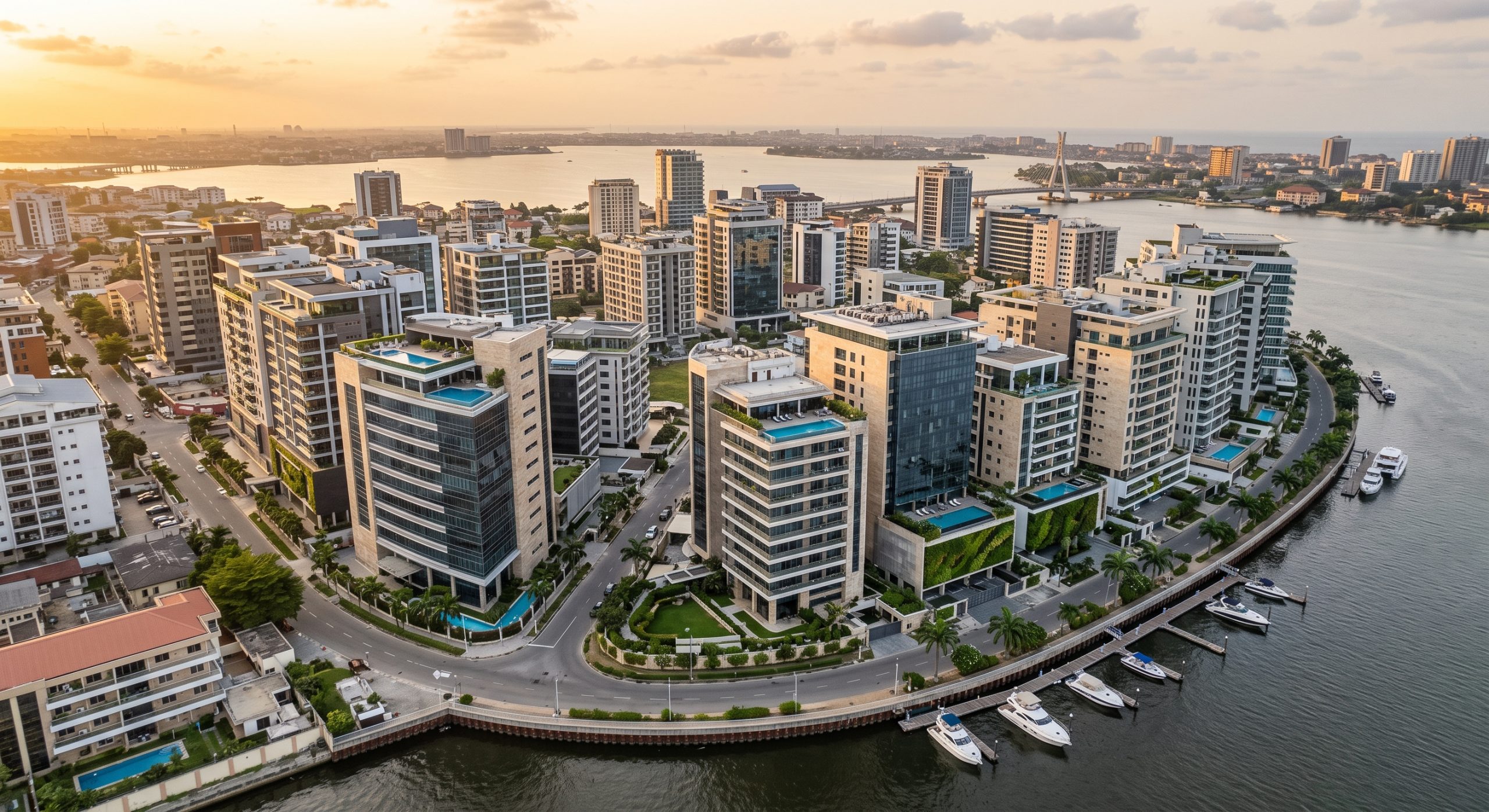
In Lagos, few addresses carry the pricing power of Ikoyi. The neighbourhood’s appeal is familiar: proximity to Victoria Island and Lagos Island, relative security, mature infrastructure, and a concentration of embassies, corporate offices and luxury developments. What is less familiar is how sharply prices now diverge by building quality, tenure and location.
Finished apartments are typically advertised between ₦300 million and ₦1.5 billion on Nigeria Property Centre and the leading agencies in Lagos for 2024–25, while bigger or brand-new apartments can reach ₦2 billion and more in Ikoyi. The bottom end consists of older flats and properties requiring refurbishment. Elevators, backup power, underground parking, gyms, pools and professional facility management add a heavy premium.
The market’s upper tier is priced in dollars by convention, even when transactions are settled in naira. Luxury four- and five-bedroom apartments commonly ask $1 million–$3 million, while full-floor residences and larger detached homes can exceed that range. In the most prestigious enclaves, particularly around Banana Island and waterfront-facing developments, asking prices can rise considerably higher. Banana Island is technically distinct from Ikoyi, but its prices are often used as a benchmark for Lagos’s prime residential market.
Rentals tell the same story. Annual asking rents for well-finished three-bedroom apartments can range from roughly ₦25 million to ₦60 million, while premium serviced residences may exceed ₦70 million.
Detached homes and large duplexes can command ₦80 million – ₦150 million a year, before service charges, agency fees and legal costs. These are advertised figures, not a substitute for verified transaction prices.
Three forces explain the market’s resilience. First is scarcity: Ikoyi is a largely built-up peninsula, and opportunities to assemble sizeable development sites are limited. Second is replacement cost. Imported finishing materials, generators, lifts, mechanical systems and construction finance have all become more expensive as the naira has weakened. Third is the preference of high-income buyers for assets that can preserve value in a volatile currency environment.
Yet Ikoyi is not a risk-free bet. Flooding, traffic congestion, inconsistent public utilities and uneven building maintenance remain material concerns. Service charges can also materially alter the cost of ownership, particularly in high-rise developments dependent on generators, water treatment and security systems.