

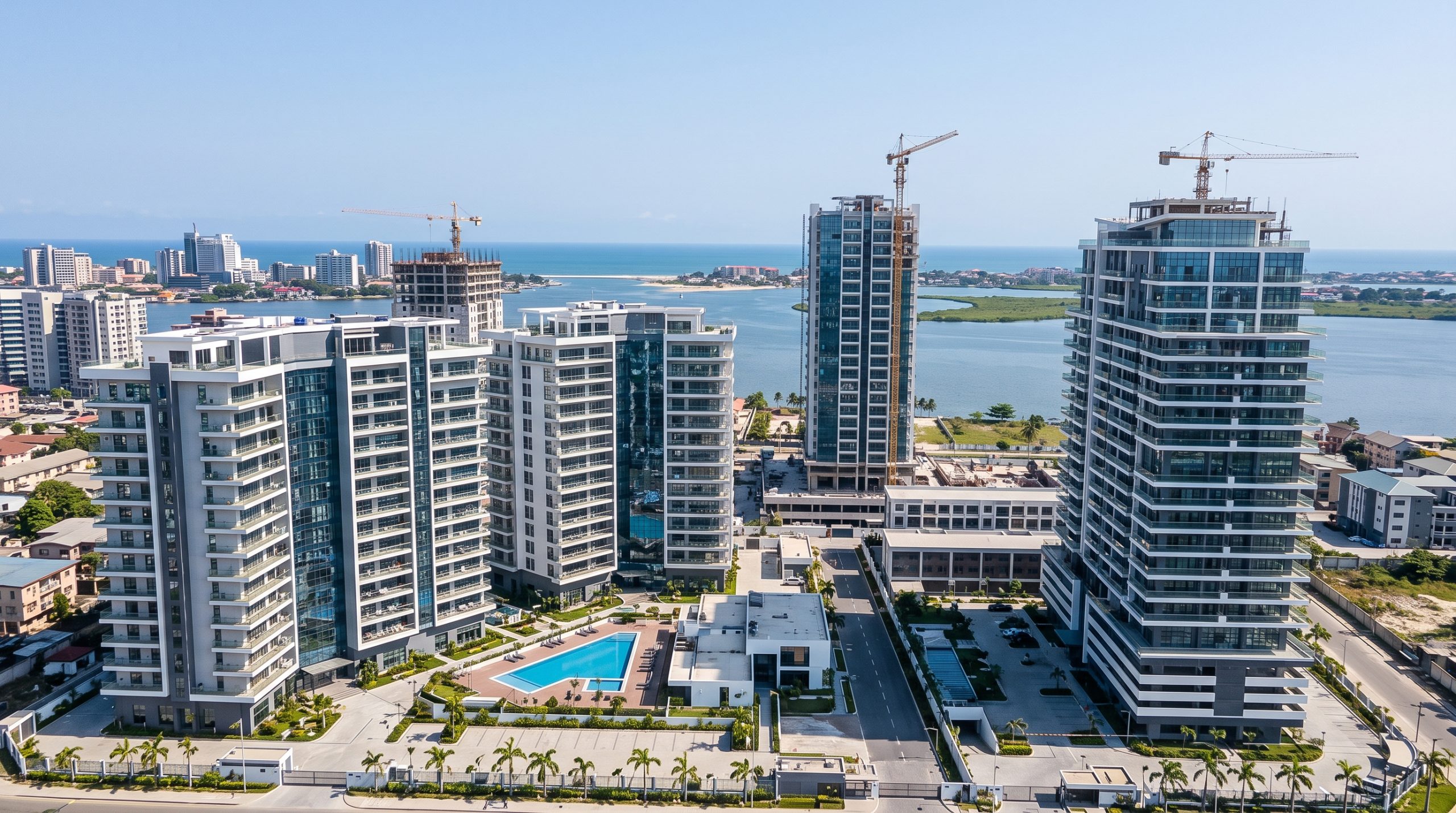
Oniru is quickly becoming one of the most watched residential areas in lagos. Located in the Eti-Osa Local Government Area, the neighbourhood sits between Victoria Island and Lekki, with Atlantic Ocean to the south and some of the city’s most important commercial corridors within close proximity. The attraction is simple: central location, coastal setting and sufficient scope for re-development to accommodate a new generation of apartments.
Many of these are two to four bedroom apartments, penthouses, terraces and serviced residences, with the older low rise homes and institutional plots making way for mid and high rise developments. The target market is mostly comprised of executives, expatriates, investors and Lagos residents who desire proximity to Victoria Island without paying the price or enduring the density of Ikoyi.
Most of the new schemes cropping up in Oniru are developed as managed communities and not traditional blocks of flats. Typical amenities include 24-hour security, backup power, water treatment, gyms, pools, underground or structured parking, and shared lounges. Those benefits are a reflection of Lagos, where reliable electricity, water and access control are not givens but selling points.
The development of Oniru is also tied to the overall growth of the coastal corridor of Lagos. The demand for accommodation around offices, restaurants, retail, hospitality and entertainment spots across Victoria Island, Landmark and the Lekki axis has been steady.
For professionals, the distance you travel is just as important as square footage. Professionally managed apartments can offer investors long-term leases and short-stay income, but occupancy, regulation and management quality are key.
But with growth comes responsibilities. Oniru is a low-lying coastal area, and drainage, road capacity, erosion control and flood resilience should be core infrastructure not afterthoughts. Lagos’s planning authorities require building approvals and compliance with development controls, but buyers still need to check title, planning permits, drainage arrangements, service charges and the developer’s track record before handing over their cash.
This is especially important in a market where glossy renders are often appearing before the infrastructure is even complete. A credible development should be able to explain its land documentation, construction status, power strategy, waste management and sinking fund arrangements. For multi-unit buildings, the quality of the residents’ association or facility manager can be the difference in whether a property maintains its value.