

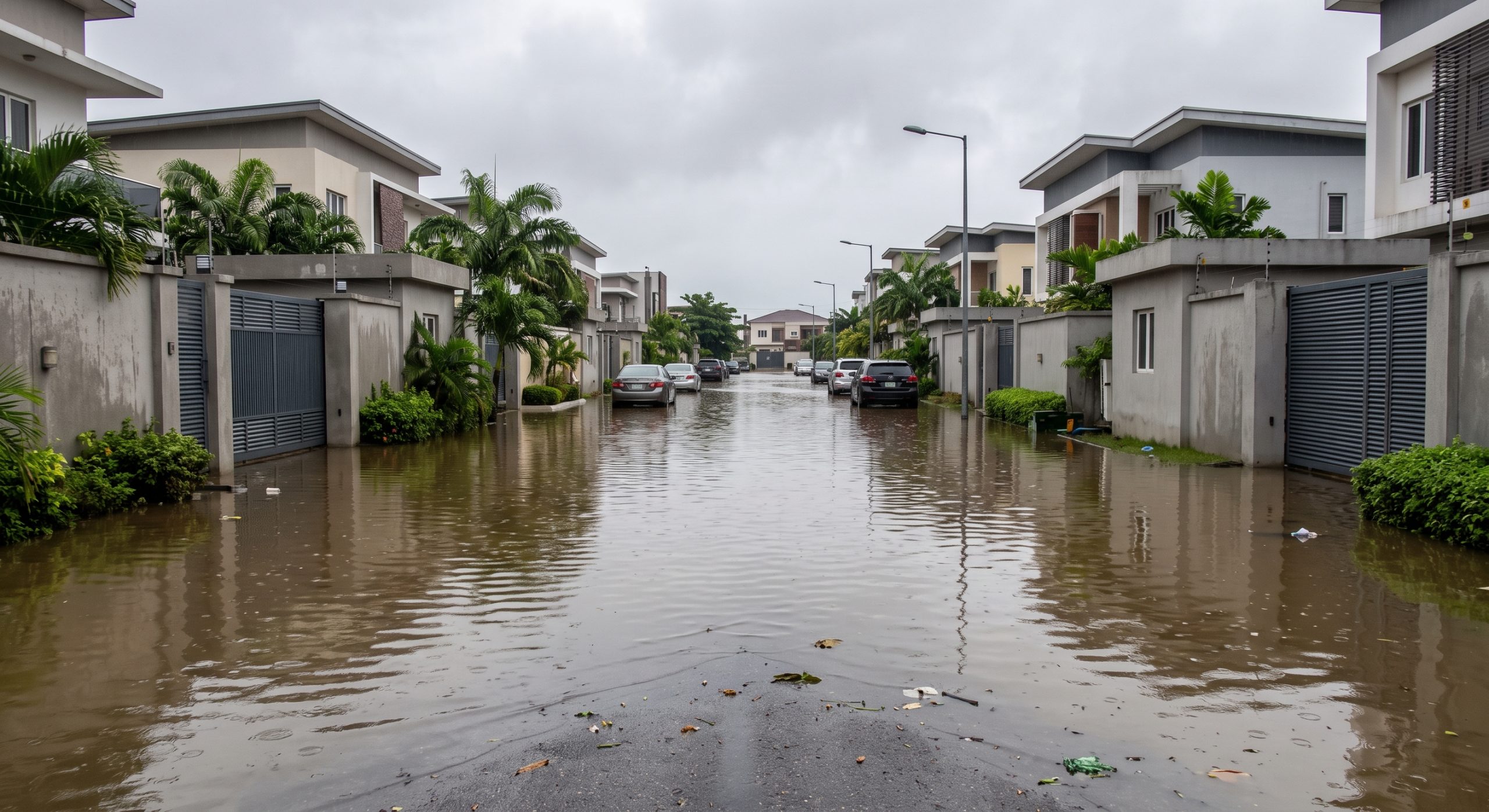
Yes, but not always and not after every rain. Flooding in Lekki Phase 1 is a consistent hazard of the urban environment especially during extreme or prolonged rainfall. This reputation for flooding in the neighbourhood is not anecdotal. Local authorities, residents, and Nigerian news media have reported floods on roads and around properties in the Lekki corridor repeatedly.
The problem, in the end, is geography. Lekki lies on the low-lying coastal plain of Lagos between the Atlantic Ocean and the Lekki Lagoon system. Most of the larger peninsula is barely above sea level. This means there is little natural fall for rainwater to drain away, especially in heavy rain when there are high tides or high lagoon levels.
Urban development has compounded the challenge. Roads, roofs and paved surfaces keep water from soaking into the ground. Wetlands and natural drainage paths have also been paved over or altered. Where drains are undersized, poorly connected or clogged with silt and refuse, heavy rain can quickly overwhelm the system. Water then accumulates on roads before draining into adjacent compounds and buildings.
The risk is most acute during Nigeria’s rainy season, when short, high-intensity storms can produce more water than the drainage network can handle. The flooding is often reported around heavily trafficked roads and low points in and around Lekki Phase 1 including sections near Admiralty Way and Freedom Way. But the conditions are very different from street to street. A property remains dry but adjacent roads become impassable.
The coastal influence adds another layer. Lagos floodings are more than a drainage issue: high tides can stall stormwater, and rising sea levels and coastal erosion increase the risk of long-term exposure. The Intergovernmental Panel on Climate Change has named Lagos as one of Africa’s key coastal cities facing growing risks from rising sea levels and more intense rainfall. Lagos is frequently mentioned among the states that are vulnerable to flooding in the wet season by Nigeria’s meteorological and hydrological agencies.
We must not confuse a flood-prone neighborhood for a permanently flooded one. Lekki phase 1 has working roads, drainage projects and properties with varying degrees of elevation and flood protection. However, the presence of modern estates or costly real estate does not eliminate physical risk. But the increased runoff from development hasn’t always been matched with the capacity to drain it.
The practical question for anyone buying or renting there is not just, “Does Lekki Phase 1 flood? It is: Which street, at what height, with what drainage, and how did it hold up in the last big rainfall? Prospective residents should check the property during or shortly after heavy rain, ask neighbours about past incidents, check drainage outfalls and see if access roads remain usable.