

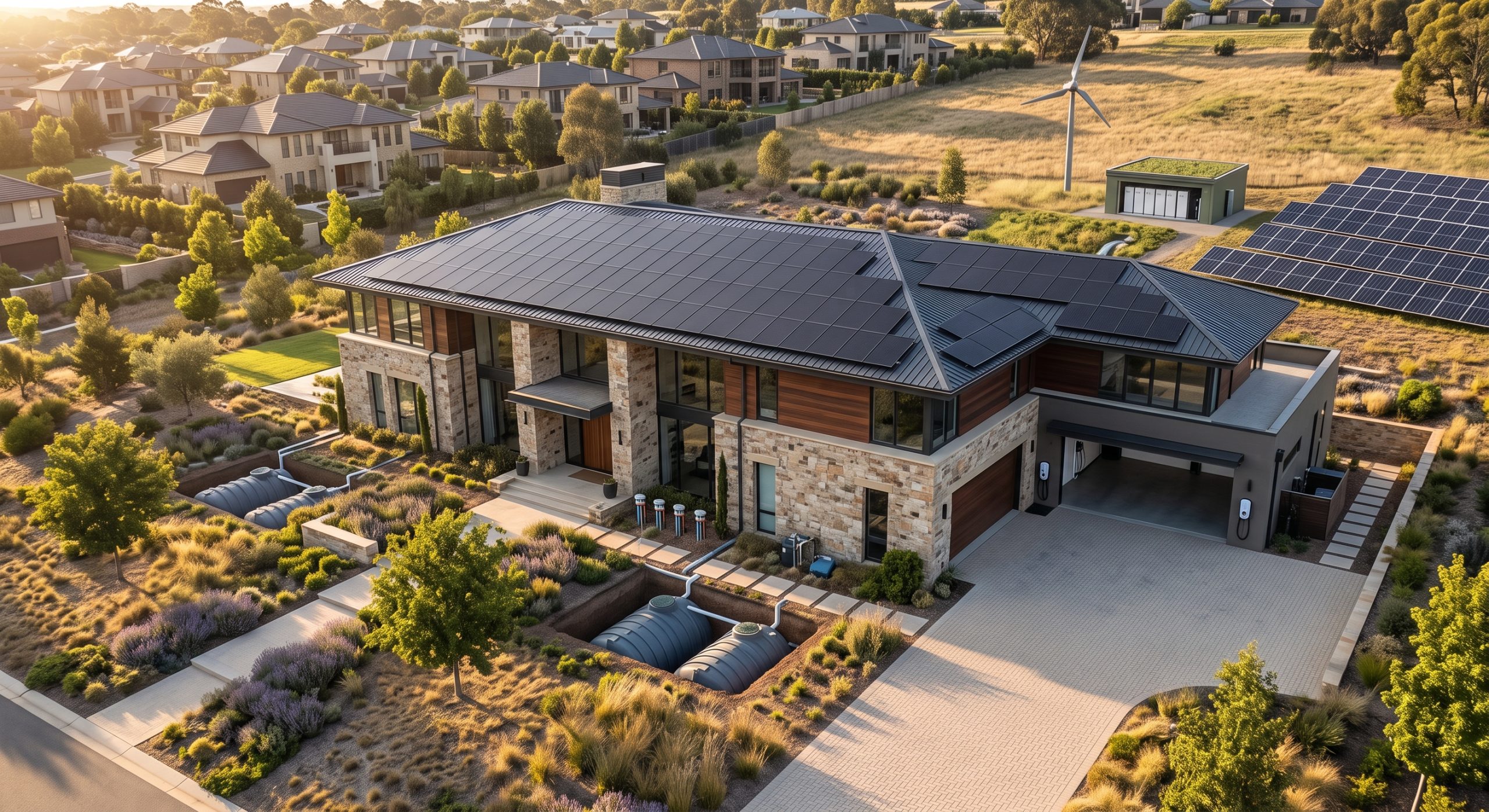
A mansion can go off-grid, but it cannot escape physics. The first rule of an off-grid home is to reduce demand before adding equipment. You might need a giant, expensive energy system to power a 10,000-square-foot home built to look like a typical luxury home.
The winning recipe begins with a smaller thermal and electrical load, airtight construction, high-performance insulation, LED lighting, induction cooking, and heat pumps instead of fossil-fuel boilers.
Reverse engineer the energy system
The right sequence is to measure demand, model the site, and then size generation and storage. Energy modeling should be based on the worst month, not the average year.
The primary supply will typically be provided by solar photovoltaic panels. Batteries can provide short-term resilience, but they are not a substitute for generation. A more serious design might involve lithium iron phosphate storage sized for two to three days of essential loads. A back-up generator using propane, renewable diesel, or some other stored fuel is still wise for extended winter storms or wildfire smoke. “Off grid” is not the same as “single point of failure.”
Think of water as public works
A private well requires a properly tested aquifer, a treatment system, pressure tanks, and an emergency reserve. Rainwater can supplement supply: one inch of rain falling on 1,000 square feet of roof yields about 623 gallons before collection losses. Cisterns should be sized around local rainfall patterns and household demand, not optimism.
Low-flow fixtures, leak detection, efficient irrigation, and drought-tolerant landscaping matter more than decorative water features. Wastewater typically requires a permitted septic system engineered for the site’s soil and occupancy. Greywater reuse may be possible, but regulations vary widely.