

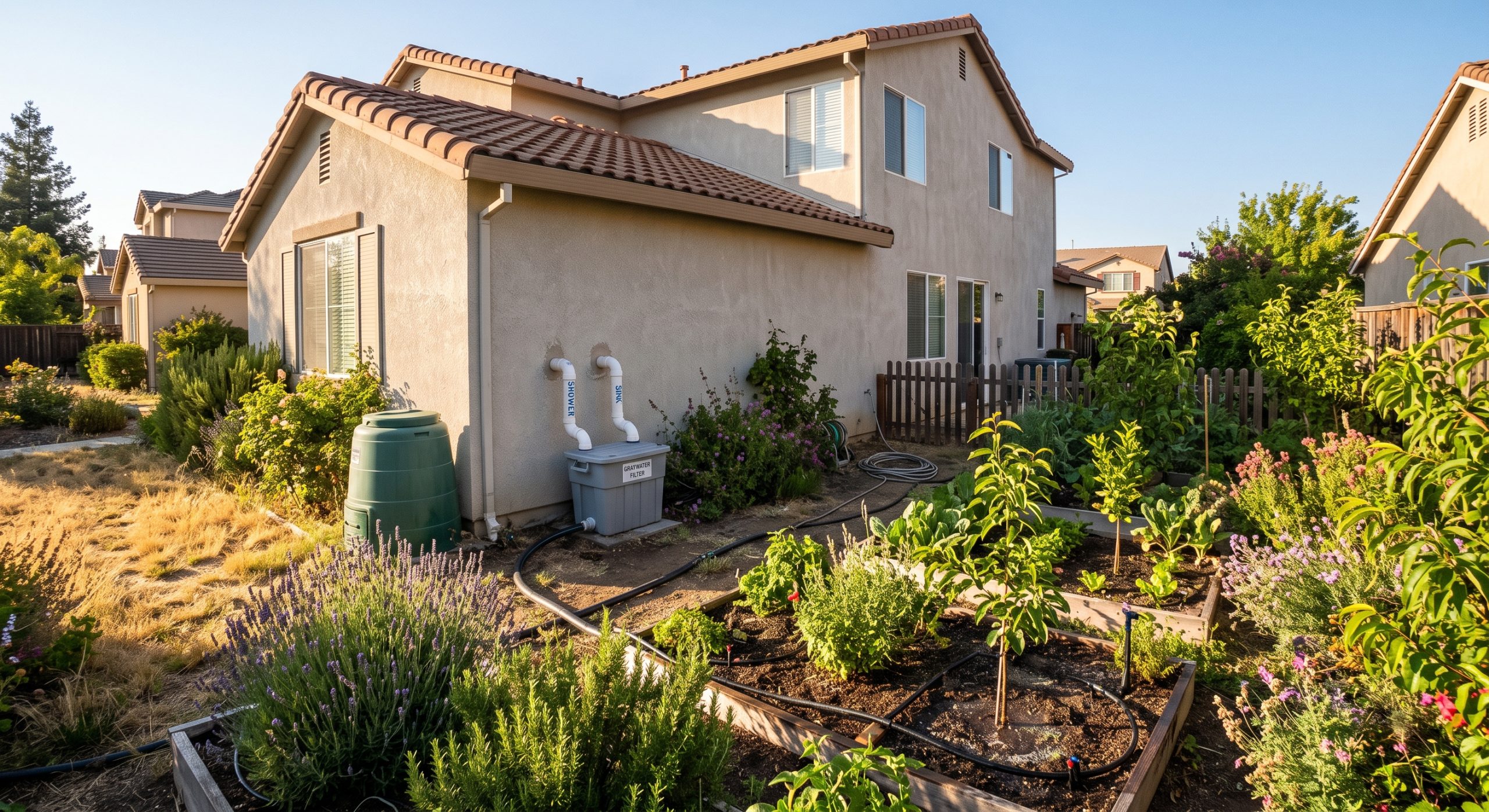
All the showers drain usable water. So does the bathroom sink. That lightly used wastewater, known as greywater, can often be used to irrigate a landscape instead.
It should not be confused with blackwater which is waste from toilets and in some regulations may also include kitchen wastewater . It typically contains traces of soap, skin, hair, oils and household chemicals. It has fewer pathogens than toilet wastewater but it is not clean water and must be treated with the same precautions.
The environmental case is a no-brainer: greywater diversion can cut the need for treated drinking water, especially in drought-prone areas. But working systems depend more on restraint than plumbing ingenuity: use the right water, send it to the right plants, and follow local rules.
Begin with the source
The easiest sources are often showers, bathtubs, and bathroom sinks. Laundry water may qualify as well, but some jurisdictions treat it separately. Grease, food particles and higher pathogen loads can clog systems and attract pests, so kitchen sink and dishwasher water are typically excluded.
Basic laundry-to-landscape systems may discharge through a flexible hose onto mulch beds. More complex systems use plumbing diverters, filters, and subsurface distribution. In either instance, water should be delivered below the soil surface or under a generous layer of mulch, not by way of sprinkler that can aerosolize contaminated water.
Do not keep untreated grey water for long periods. It can get anaerobic and stinky in a day. Systems should either use water quickly or automatically direct it to the sewer or septic system when irrigation is not needed. A diversion valve is particularly useful in heavy rain, freezing weather, if there is illness in the house, or when using harsh cleaning products.
Protect soil and plants
The chemistry of household products is important. Use liquid, low sodium, low boron, readily biodegradable soaps and detergents. Do not use products containing chlorine bleach, borax, high levels of sodium, solvents, or antibacterial compounds unless local guidance specifically allows it. Repeated contact with salts and boron can affect the soil structure and vegetation.
Greywater works best for established ornamental trees, shrubs, perennials and lawns. Keep it away from edible portions of crops. Root vegetables and leafy greens are particularly risky because soil or splash water can contact the part that is eaten. If greywater is used around fruit trees, it should never touch fruit or the edible surface, and local health regulations should be followed.
Never cross-connect a greywater line with drinking-water plumbing without approved backflow protection. The best greywater system is quiet, simple and reversible. It captures water that would otherwise be discarded, distributes it beneath mulch, and sends questionable flows back to the sewer. Done properly, it is not a substitute for conservation, but a practical extension of it.