

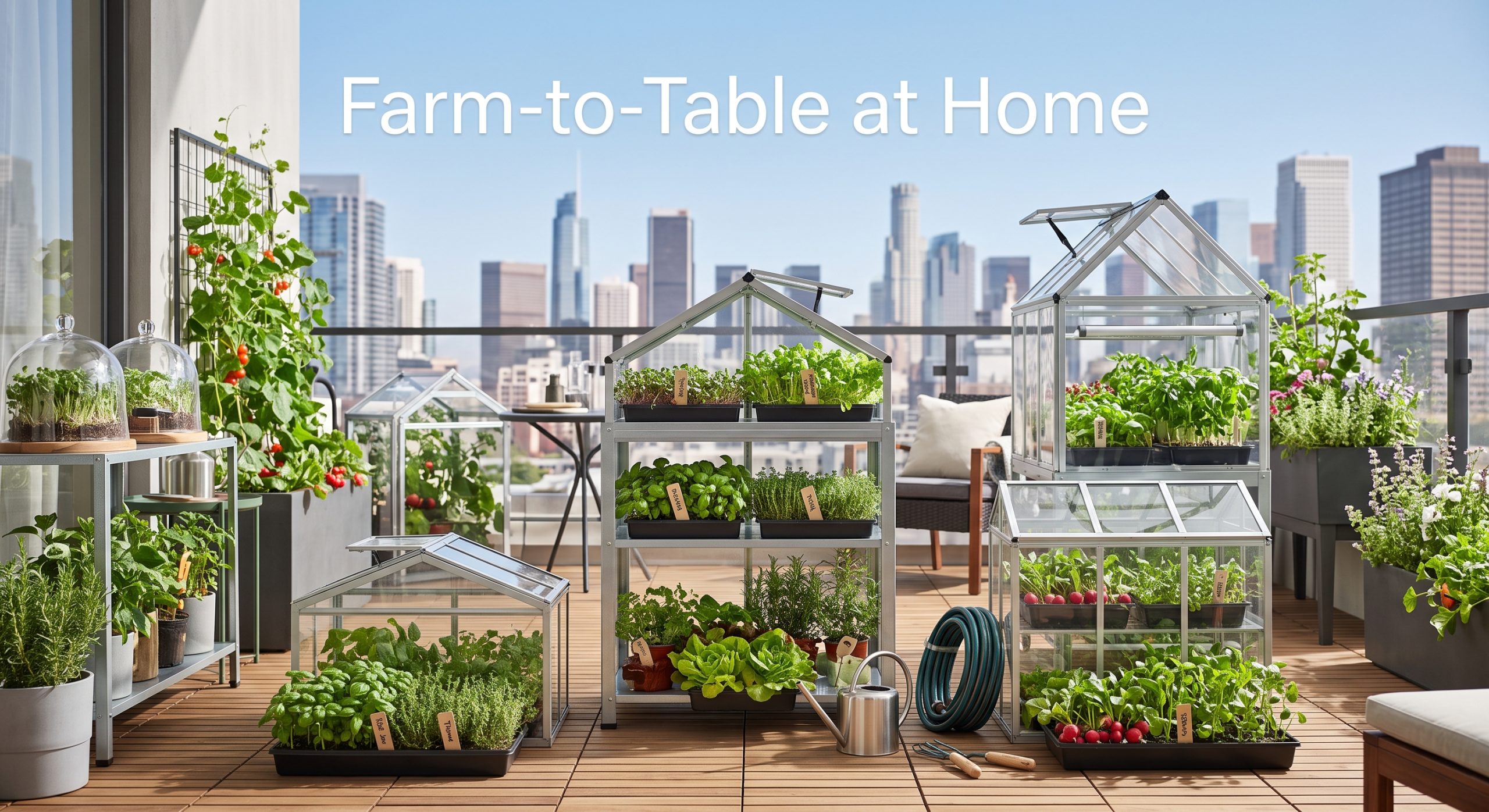
The most useful city greenhouse isn’t a full tomato glasshouse. For a terrace the best model is smaller, lighter and more productive. A ventilated growing cabinet or lean-to for herbs, salad leaves and compact vegetables.
Get a structural assessment before you buy. The roof or balcony must support the greenhouse, shelving, containers, people, snow if applicable, and saturated growing media. Water alone weighs about 5.2 pounds per square foot per inch of depth, before you add soil or planters. Another serious problem is wind, greenhouse is like a sail. Do not use loose paving slabs but anchor them to a suitable structure. Check local planning, fire-access and landlord requirements.
Choose the right crop
Leafy greens and herbs give the quickest, most consistent returns. Basil, coriander, parsley, chives, mint, Asian greens, lettuce, rocket and mustard can all be grown in containers and picked many times. You can grow dwarf cucumbers, compact tomatoes and chilies, but they need more light, heat, water and support.
A greenhouse does not make the sun. And that’s what it does. The Royal Horticultural Society recommends that you ventilate greenhouses before they get too hot, on sunny days, an enclosed structure can become dramatically hotter than the air around it. Fit roof or high level vents, insect mesh and an automatic vent opener if possible. In summer, use an external shade cloth, not just whitewash (less convenient on a small urban installation).
Winter crops not summer vegetables. Leafy greens like it cool, but basil and tomatoes love heat and light. If you live in a northern climate, you may need a small LED grow light in the winter. Choose a garden fixture with a timer. Keep electrical connections away from water.
Design Efficiency
Use narrow benches or vertical shelving with space to look over and pick the plants without brushing against them. Improvised materials are best avoided in favor of inert, food-safe containers. Lightweight peat-free mixes reduce the structural load but still get heavy when wet. Drainage needs to be well considered: collect runoff so it doesn’t stain façades, damage waterproofing or drip onto neighbors.
Use narrow benches or vertical shelving with space to look over and pick the plants without brushing against them. Improvised materials are best avoided in favor of inert, food-safe containers. Lightweight peat-free mixes reduce the structural load but still get heavy when wet. Drainage needs to be well considered: collect runoff so it doesn’t stain façades, damage waterproofing or drip onto neighbours; inspect for blocked emitters and heat waves can destroy a crop quickly. Feed plants according to the label, and avoid excessive fertilizer, which can raise salt levels and pollute drainage water.
Good hygiene matters in a close, warm environment. Use clean pots, remove diseased leaves promptly and inspect the undersides of leaves for aphids, whitefly and spider mites. Avoid spraying pesticides casually, particularly where pollinators, children or edible crops are present.
The final principle is succession planting. Sow a small quantity every one to three weeks rather than planting everything at once. With careful ventilation, lightweight infrastructure and crops matched to the season, a terrace greenhouse becomes less a miniature farm than a disciplined, year-round kitchen garden, one that puts fresh leaves within arm’s reach.