

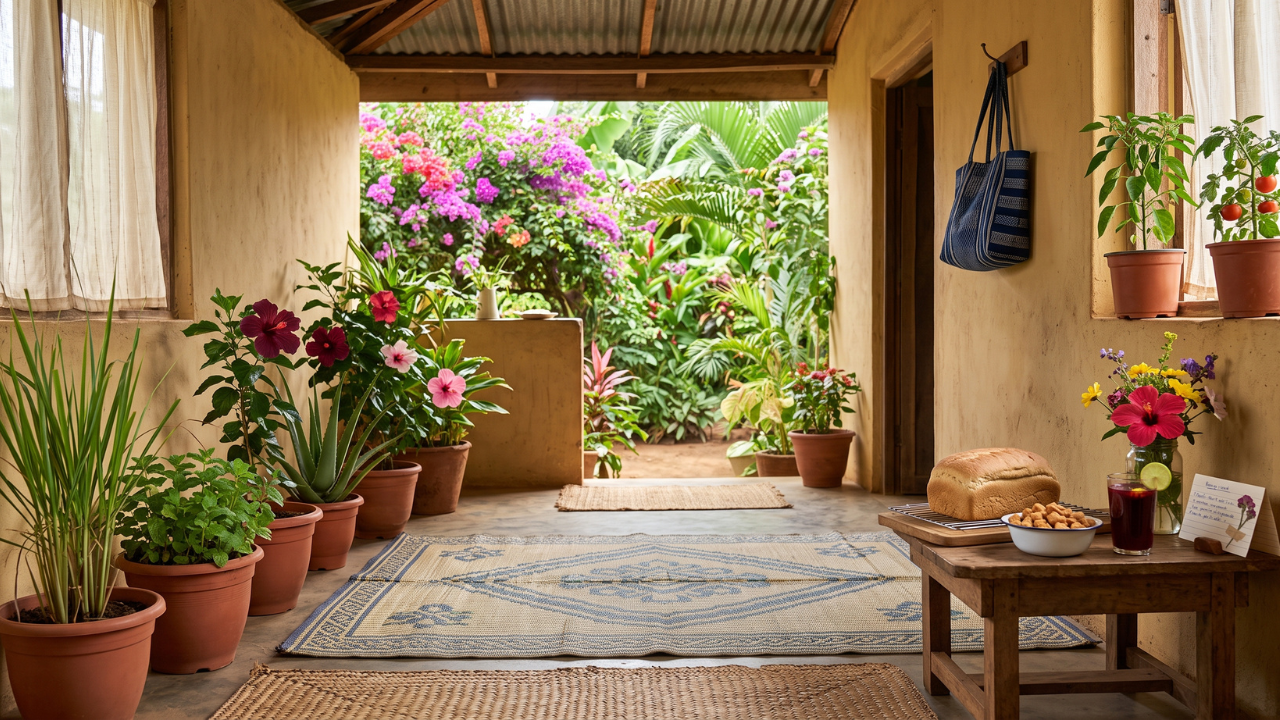
Cottagecore is less a dress code than a fantasy of slower living on TikTok. Think wildflowers in glass jars, bread cooling on a windowsill, linen dresses, handwritten recipes and gardens that seem untouched by modern pressure. The aesthetic took off online in the mid-2010s and exploded during the COVID-19 lockdowns, when domestic rituals provided an appealing alternative to uncertainty and screen fatigue.
But in Nigeria, recreating cottagecore cannot be a copy of an English country cottage. The climate, architecture and cultural history are diverse. An interesting alternative starts with local materials, indigenous craftsmanship, and the realities of tropical life.
Begin with fabric. Light cotton and linen and adire, a Yoruba resist-dyeing tradition especially associated with indigo, are more suitable for Nigeria’s heat than heavy wool and layered florals often seen in European cottagecore imagery. A loose adire blouse, wrapper skirt or a simple cotton dress will give the look without heat being a styling obstacle. Aso-oke, the handwoven textile of the Yoruba, is better used as an accent: a head tie, bag or table runner that adds texture, while respecting its cultural value.
Colour can be taken from the Nigerian landscape, not a Pinterest palette. Think clay, palm green, hibiscus red, indigo and sun-bleached yellow. Raffia, woven mats, terracotta pots and locally made ceramics bring warmth to interiors without imported décor. Open windows, shaded verandas and breathable curtains are not merely aesthetic choices; they are functional responses to a hot climate and, in many homes, a need to control electricity costs.
Another place to localise the fantasy is the garden. Don’t plant English roses in a tropical setting. Grow herbs and plants that suit the environment: scent leaf, lemongrass, mint, aloe vera, hibiscus or bougainvillaea. For example, you can grow potted peppers, tomatoes, or leafy greens on a balcony. The point is not to do rural self-sufficiency, but to create a more intimate relationship with food and place.
Food is key to the aesthetic’s appeal, but Nigerian cottagecore shouldn’t limit itself to sourdough and jam. A homemade loaf can sit next to zobo, kunu, chin chin, roasted plantain or a pot of pepper soup. It’s less about the visual language, the wooden boards, the enamel bowls, the natural light, and more about the act of making and sharing food.
And behind the prettiness, as must be, there is a question. Cottagecore can romanticise rural life, but ignore the labour and poverty and the environmental cost of constant consumption. A considered approach to fashion in Nigeria is buying less but better, supporting local makers, repairing clothes and reusing thrifted or inherited objects whenever possible.