

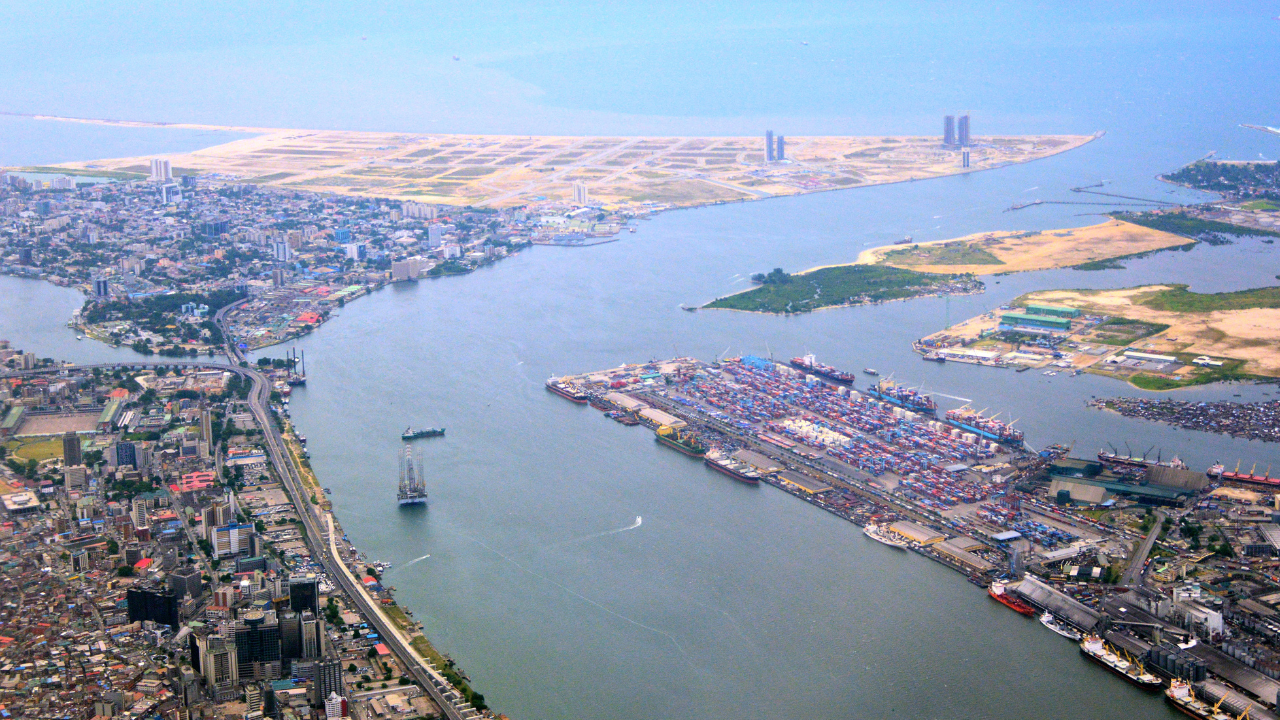
Banana Island, a man-made island reclaimed from the Lagos Lagoon off the coast of Ikoyi, has become known for Nigerian wealth itself. A home here is more than a mailing address; it’s a statement of arrival at the very pinnacle of the country’s economic ladder. The ultra-wealthy’s ongoing commitment to this artificial peninsula says more about Nigeria’s overall investment psychology than it does about real estate.
Manufactured Scarcity!
Banana Island is a man-made island created through land reclamation from the early 1990s and developed by the Banana Island Development Company. Its scarcity, unlike organically grown neighborhoods, was contrived from the start: a finite, gated landmass with controlled entry points, private security, and underground utilities that keep residents from seeing the visible chaos of Lagos infrastructure. It’s this manufactured exclusivity that is key to its appeal. In a city of more than 20 million people dealing with power outages, flooding and traffic gridlock, Banana Island offers something money cannot buy in other parts of Lagos: predictability.
A Home, But More Like a Store of Wealth
For Nigeria’s billionaire class, property on Banana Island is less a place to live than a hard asset, like gold or dollar-denominated holdings. Real estate in prime dollar-denominated locations offers a hedge against the persistent volatility of the naira and inflation eating away at savings in the local currency. Land and villas are usually quoted and traded in US dollars, insulating owners here from local currency depreciation. A plot that cost a couple of hundred thousand dollars a decade ago can now fetch several million. Banana Island is one of the few domestic assets that has reliably beaten inflation.
Power in Proximity
Banana Island is minutes from the financial and diplomatic center of Lagos, including Ikoyi, Victoria Island and the Lekki-Epe corridor, which hosts banks, oil majors and multinational headquarters. For business leaders who spend their days building relationships, doing deals and getting quick access to boardrooms, that proximity is something of real value. It reduces travel time for people whose hours are worth vast amounts of money, and it brings them physically close to peers, partners, and potential investors, an ecosystem effect that feeds on itself as more wealthy residents arrive.
Communication and Social Capital
There is also an inescapable social dimension. Nigerian wealth, particularly the first generation wealth built thru banking, oil, telecoms or fintech, often craves a visible validation. An address on Banana Island is a credential, proof that you have “made it”, and it resonates in elite social and business circles. This signaling value is self-reinforcing. As more billionaires and prominent families move there, the cachet of the island compounds, making it harder and harder for outsiders to break in and more and more attractive for insiders to stay.