
Across Lagos and Abuja living rooms, there’s a quiet design conversation happening about how you honour Nigerian heritage without turning a home into a museum. “Modern Heritage” is the answer of the moment, an interior sensibility that pairs contemporary, comfort-first furniture with carefully curated traditional and antique pieces that allow each to shine, not compete.
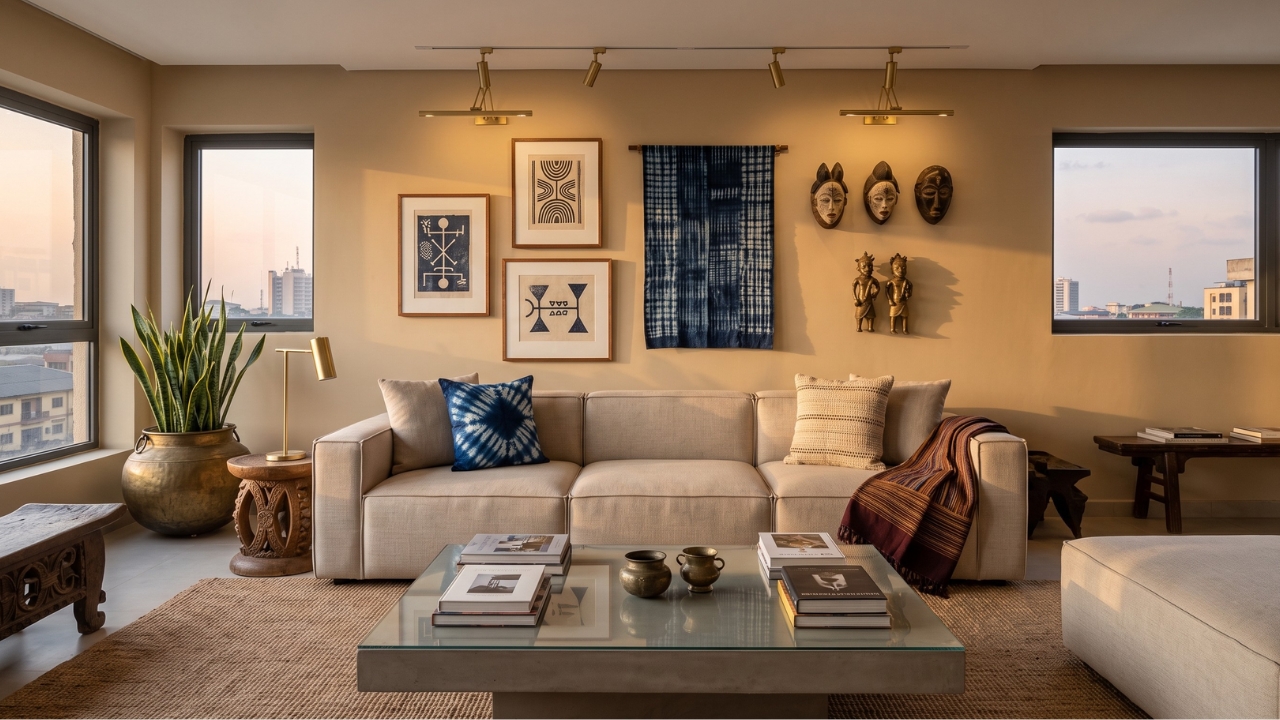
Usually the base layer is the starting point: clean-lined sofas, low-profile coffee tables and neutral wall colours that feel modern rather than dated. The restraint is important because Nigerian antiques and heritage objects often have a strong texture and pattern of their own – carved stools, brass Benin-style figures, Adire textiles, hand-woven Aso Oke throws. If the background is busy or patterned, they are lost. They are the center of the room, set against a calm, modern shell.
The easiest entry point for anyone starting this style is with textiles. A single Adire-dyed cushion cover or Aso Oke table runner can add a pop of colour and a nod to craft history, without needing to re-decorate the whole room. From there it’s often furniture. Carved wooden stools used as side tables, or a traditional low bench turned into a coffee table base with a glass top added for practicality. The trend is all about the idea of “repurpose, don’t replicate” – antique pieces get new functional lives instead of sitting as untouched relics.
It is most often in the wall treatments that the heritage element is most visible. A whole room can be dedicated to framed Nsibidi-inspired artwork, textile wall hangings, or a curated collection of traditional masks and carvings (ethically sourced, ideally from known artisans rather than unverified antique dealers). Lighting is important too; warm directional lighting on textured wall pieces gives them the gallery treatment, rather than letting them read as clutter.
Metal and brass accents bridge the two periods nicely. A traditional brass pot for a planter, or old-school hardware on otherwise modern cabinetry, allows the old and new to touch without clashing.
The practical appeal of Modern Heritage is that it does not require anything to be imported for Nigerian homeowners. The source material is found in local markets, from the Balogun and Yaba markets of Lagos to family collections passed down through generations. It’s a style with real longevity for interior designers building portfolios around Nigerian identity and for homeowners tired of interiors that could be from anywhere in the world: it photographs well, it tells a story, and keeps a home rooted in something more lasting than a fleeting trend.